Once a fixture in American cities, then falling into obsolescence, streetcars appear to be seeing a comeback. In cities such as Tucson, investment in light rail has catalyzed substantial economic development in its downtown.


“Operations will not start until next year…but local business leaders say the streetcar has already revived the center of this sprawling, artsy city,” writes Daniel C. Vock, speaking of Tucson’s new streetcar line.
“Two dozen cities already operate light rail and streetcars. Many are considering expansions, while dozens more are studying proposals to build their own.”
“In fact, light rail (including streetcars) is by far the fastest-growing mode of transit, carrying 2.5 times as many passengers as they did in 1990.”
But not everyone is such a big fan. Light rail comes at a pricey premium when compared to bus service, rousing some detractors such as Cincinnati’s mayor-elect John Cranley who has vowed to kill that city’s planned streetcar project.
Read the full story: Cities Turn to Streetcars to Spur Economic Development
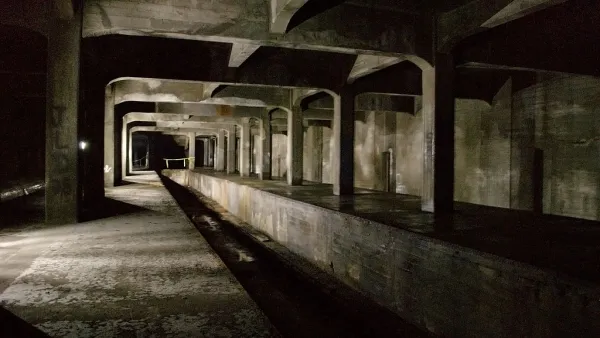
Cincinnati Seeks to Repurpose Its Unused Subway Tunnel
City officials are looking for proposals to use Cincinnati's long-abandoned subway tunnels, but not for transit; they already tried that.
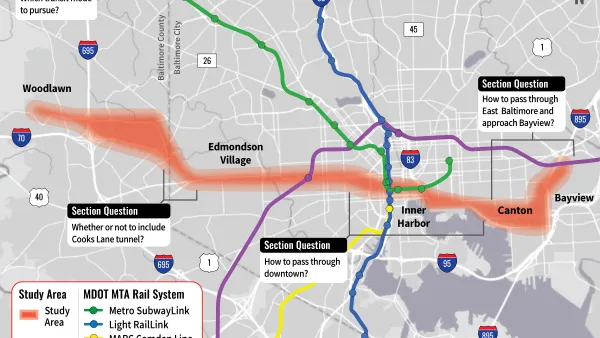
Maryland to Restart Planning for East-West Transit Line Through Baltimore
A plan for the Red Line, an east-west light rail line notoriously canceled by former-Governor Larry Hogan in 2015, is back on the table in Baltimore.
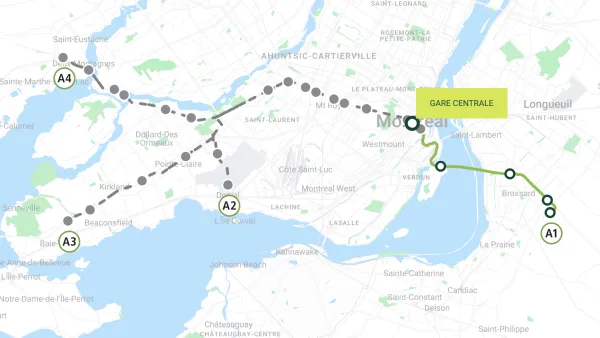
New REM Light Rail Launches in Montreal
The first day of public service on the Réseau Express Métropolitain (REM) light rail route was marred by a closure and delays.

Planetizen Federal Action Tracker
A weekly monitor of how Trump’s orders and actions are impacting planners and planning in America.

Eastern Nebraska is running out of electricity
Data centers and electrification are straining eastern Nebraska’s grid, throttling economic development.
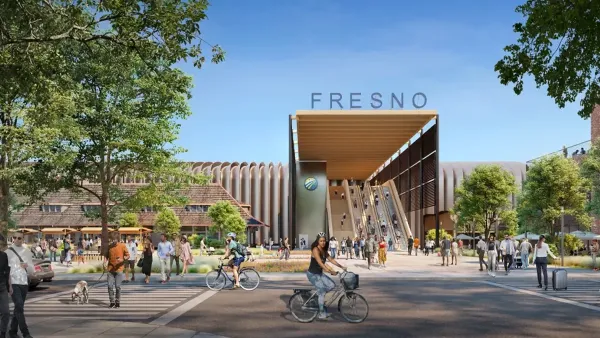
California High-Speed Rail Authority picks trainset manufacturer
The California High-Speed Rail Authority aims to start servicing passengers by 2033.

Massachusetts bogs generate both power, and cranberries
Putting solar panels above farmland is one way Massachusetts is advancing toward its goal of net-zero carbon emissions by 2050.

What could the future of LA transit look like under Raman?
The mayor-elect views broken sidewalks and potholes as crises that can be fixed with better governance.

States are counting on battery farms. Some towns don’t want them.
While fire safety has improved, some communities are still wary.

FREE Course: Walkable City 1: Why Walkability?
After describing his path towards focusing on walkability as the essence of good planning, Jeff Speck marches through his five principal reasons for making more walkable places.
Reinventing Malls: Planning Alchemy—Turning Gray Fields Into Gold
The course focuses on the opportunities and imperatives that shape reinvention of mall sites.

City of Rosemead
Rutgers University, Edward J. Bloustein School of Planning and Public Policy
One Hundred Miles
University of Michigan School for Environment and Sustainability (SEAS)
Hunter College, City University of New York (CUNY)
The Architects Foundation
City of Cambridge
The Pocatello Development Authority
The Urban Renewal Agency of the City of Pocatello