If you liked the pace of development during the Bloomberg administration, you're going to love Bill de Blasio. Development-related revenues will be necessary to fund the new mayor's priorities and inherited challenges explains Josh Barro.


"Mayor-elect Bill de Blasio will be New York's most pro-development mayor in decades," writes Barro. "He'll have no choice but to be."
Though he's proposed a tax increase on people making over $500,000 a year, that won't generate nearly enough revenue. "If he hopes to buy labor peace and fulfill his progressive missions, de Blasio will have to find another way to get more money coming into the city's coffers. That's where development comes in."
But encouraging new development - and the fees, transfer taxes and property taxes that go with it - through additional upzoning won't be easy. "The next round of upzonings will have to come in neighborhoods full of existing residents and all the political resistance they bring," notes Barro.
"If de Blasio hopes to achieve his broader progressive agenda, he'll have to get the real estate issue more or less right — and that bodes very well for development, affordability and growth in New York City."
Read the full story: Get Ready For The De Blasio Construction Boom In New York City

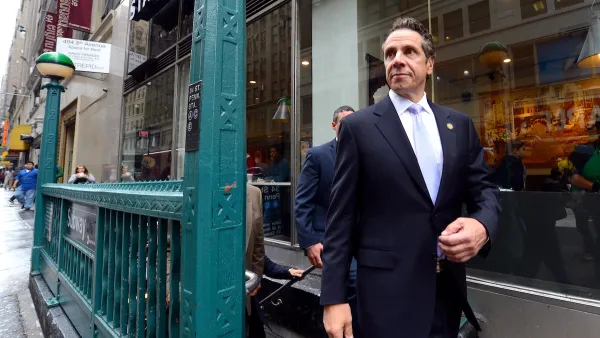
Cuomo Is the Candidate of Both NIMBYs and Developers. What Gives?
In the New York City mayoral race, odd bedfellows align to preserve the housing status quo.
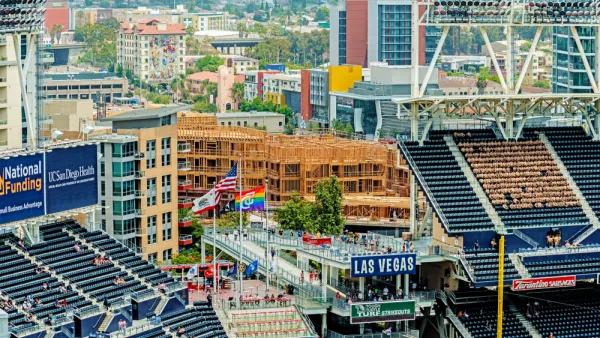
Former San Diego Mayor Leaves Pro-Development Politics Behind for Recall Race
While Mayor of San Diego, Republican Kevin Faulconer made a name for himself as a prominently YIMBY politician. He's abandoned those views now that he's running for Gov. Gavin Newsom's spot in the state's recall race.
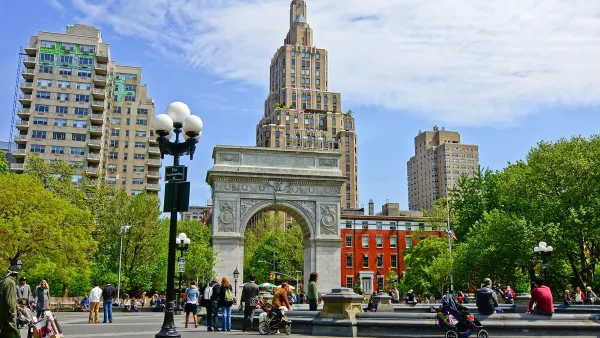
Manhattan Residents Cling to Public Space Amid NYPD Crackdowns
The city's police has begun issuing citations and implementing curfews in public parks that became oases of social activity during the pandemic.

Planetizen Federal Action Tracker
A weekly monitor of how Trump’s orders and actions are impacting planners and planning in America.

‘Going backwards:’ Baltimore mayor, students rally against state's transit funding plan
Maryland's proposed six-year plan provides no funding for Baltimore’s BMORE bus program and reduces its road maintenance funding.

Detroit to transform waterfront with $2.2 billion investment
Developers will convert about 18 acres of unused parking lot space into civic spaces.

U.S.-Iran war may have ‘devastating’ impact on cost to warm homes
Vermont and Maine residents may see a 76% increase in the cost of warming their homes this winter.

Senate bill would ‘overhaul’ environmental permitting laws
Under the proposed act, government agencies would also not be able to suspend or rescind permits after granting them.

Exemption applications for NYC’s pied-à-terre tax see 55% success rate
The city sent nearly 40% of its initial pied-à-terre tax warnings erroneously.

FREE Course: Walkable City 1: Why Walkability?
After describing his path towards focusing on walkability as the essence of good planning, Jeff Speck marches through his five principal reasons for making more walkable places.
Reinventing Malls: Planning Alchemy—Turning Gray Fields Into Gold
The course focuses on the opportunities and imperatives that shape reinvention of mall sites.

One Hundred Miles
County of Mendocino
planning NEXT
The Architects Foundation
University of Cincinnati Online
Montrose County
Northern Illinois Transit Authority (NITA)
The Pocatello Development Authority