Robert A.M. Stern doesn't get much respect from the architectural avant-garde. In a time in which sleek glass and curves are all the rage, Stern goes against the grain with his use of stone and nods to history. Does that make him a lesser architect?


Justin Davidson pens a profile of architect Robert A.M. Stern, "a traditionalist with a deep understanding of the contemporary metropolis." Though many of his peers view his work with derision, his designs are sought after by clients from around the world and some of New York's most discriminating residents.
"His architecture doesn’t evoke a wow so much as an mmm," observes Davidson. "Instead of indulging in outrageous height, bendy walls, or glittering façades, Stern beguiles with details: the interplay of pale limestone and black steel, a subtle setback toward the top of a tower, a pattern of bricks fanning out above a shallow arch."
“My interest is not in being an autobiographical architect but a portraitist of places,” Stern says. “Other architects put the same building, more or less, in many different locations. And in this age of branding many people are reassured by that. But when clients come to us, they don’t know what the building is going to look like until we study the site and consult our library.”
Read the full story: Unfashionably Fashionable

Can the Garden City of the Past Work in the Future?
Anthony Flynt explores the motivations behind Robert A.M. Stern's recent revival of the Garden City as a model for future development. Among the benefits of the model proposed by Ebenezer Howard in 1902, according to Stern: equity and comfort.
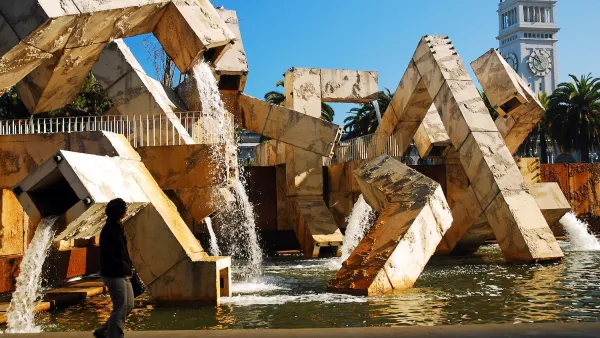
San Francisco to Dismantle its Polarizing Brutalist Fountain
The Vaillancourt Fountain stands as a symbol of the tension between the city’s past and future.
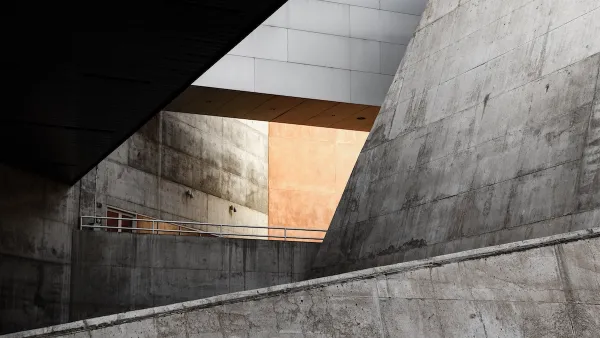
What ‘The Brutalist’ Teaches Us About Modern Cities
How architecture and urban landscapes reflect the trauma and dysfunction of the post-war experience.

Planetizen Federal Action Tracker
A weekly monitor of how Trump’s orders and actions are impacting planners and planning in America.

‘Going backwards:’ Baltimore mayor, students rally against state's transit funding plan
Maryland's proposed six-year plan provides no funding for Baltimore’s BMORE bus program and reduces its road maintenance funding.

Detroit to transform waterfront with $2.2 billion investment
Developers will convert about 18 acres of unused parking lot space into civic spaces.

U.S.-Iran war may have ‘devastating’ impact on cost to warm homes
Vermont and Maine residents may see a 76% increase in the cost of warming their homes this winter.

Senate bill would ‘overhaul’ environmental permitting laws
Under the proposed act, government agencies would also not be able to suspend or rescind permits after granting them.

Exemption applications for NYC’s pied-à-terre tax see 55% success rate
The city sent nearly 40% of its initial pied-à-terre tax warnings erroneously.

FREE Course: Walkable City 1: Why Walkability?
After describing his path towards focusing on walkability as the essence of good planning, Jeff Speck marches through his five principal reasons for making more walkable places.
Reinventing Malls: Planning Alchemy—Turning Gray Fields Into Gold
The course focuses on the opportunities and imperatives that shape reinvention of mall sites.

One Hundred Miles
County of Mendocino
planning NEXT
The Architects Foundation
University of Cincinnati Online
Montrose County
Northern Illinois Transit Authority (NITA)
The Pocatello Development Authority