Analysis by The Wall Street Journal shows that even as other sectors of the economy fight their way back from the Great Recession, municipal finances lag far behind.


"Buffeted by steep drops in state aid, rising pension and health-care costs and sluggish property-tax revenue, many urban centers are struggling even several years after the financial crisis," reports Jeannette Neumann.
"In Allentown, Pa., weak property values are starving the city of a primary source of cash. Springfield, Ill., has seen pension costs nearly triple in the past decade. Providence, R.I., raised taxes and fees and cut benefits to offset losses in state aid. Fresno, Calif., has so little available cash that officials worry one unforeseen event could reverse nascent improvements."
"While many cities made conservative choices that protected them during tough times, the overall picture shows signs of fragility."
An accompanying interactive graphic depicts the cities struggling the most.
Read the full story: U.S. Cities Grapple With Finances

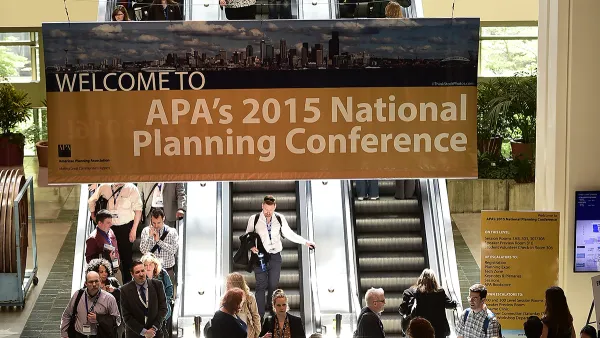
Welcome to a New Era of Planning: the APA National Conference Draws a Crowd
The American Planning Association's 2015 National Conference has launched in Seattle, with more attendees than any event since before the recession.
The Uneasy Transition in Post-Recession Seattle
While some have pigeonholed him as anti-business, Seattle Mayor Mike McGinn is taking the city through the recovery of the economy in a positive but potentially hard-to-swallow way, according to this column.
A Place to Recover from Illness: How Medical Respite Programs Help Unhoused People Heal
For people experiencing homelessness, recuperating after a hospitalization is difficult. Medical respite programs can help. Why aren't they more common?

Planetizen Federal Action Tracker
A weekly monitor of how Trump’s orders and actions are impacting planners and planning in America.

Amtrak, CN end decades-long dispute with eight-year agreement
The new operating agreement establishes an updated framework for the companies to work together, including processes to resolve disputes.

Judges permit Denver to divert 77,000 acre feet from the Colorado River for reservoir expansion
Overuse and climate change have caused the Colorado River’s water levels to plummet.

NYC DOT wants faster, more permanent street upgrades
The city is examining ways to build more concrete infrastructure without getting entangled in 'decades-long' projects.

'Something we’ve never seen before:' rising utility rates could strain city finances nationwide
Data centers, climate change and other factors have caused utility rates in the United States to increase by 38% since 2020.

Trump to overrule local leaders, lease millions of acres of America’s Pacific Island territories’ seafloors to mining companies
International law says that the Indigenous people of America’s territories have a right to prior and informed consent regarding projects that impact their countries.

FREE Course: Walkable City 1: Why Walkability?
After describing his path towards focusing on walkability as the essence of good planning, Jeff Speck marches through his five principal reasons for making more walkable places.
Reinventing Malls: Planning Alchemy—Turning Gray Fields Into Gold
The course focuses on the opportunities and imperatives that shape reinvention of mall sites.

Harvard University Graduate School of Design
KFH Group Inc.
Greater Baltimore Committee
The Architects Foundation
University of Cincinnati Online
The Pocatello Development Authority
The Urban Renewal Agency of the City of Pocatello