A new study by MIT researchers indicates that a greater number of premature deaths in the United States can be attributed to auto pollution than auto collisions.


"In 2012, 34,080 lives ended early on American roads," writes Stephen J. Smith. "That’s a big number, but it’s not as large as the number of people who die prematurely each year due to pollution caused by cars and trucks, according to a new study in the journal Atmospheric Environment."
"Authored by five researchers at the Massachusetts Institute of Technology," he explains, "the study found an estimated 200,400 premature deaths attributable to combustion emissions in the U.S. last year. Of those, a bare majority were due to either road transportation or electric power generation."
"While deaths from auto pollution largely tracked dense urban areas with the most traffic, early deaths related to electricity generation emissions were concentrated overwhelmingly east of the Mississippi, especially in the Allegheny and Appalachian Mountain regions, which have long traditions of burning coal for electricity."
Read the full story: Killer Infrastructure: Half of All Premature Deaths Due to Road & Electricity Emissions
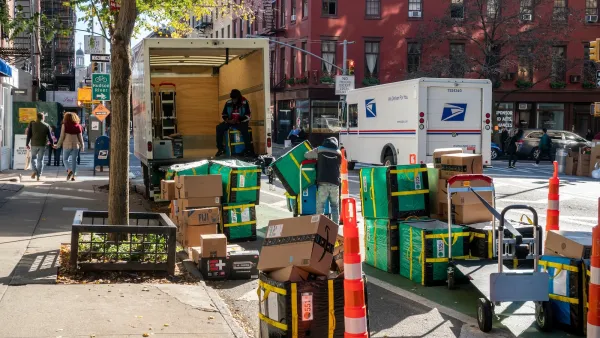
Report: 75% of NYC warehouses are in 'disadvantaged communities'
Low-income New Yorkers are 1.2 times more likely to live within half a mile of a warehouse.
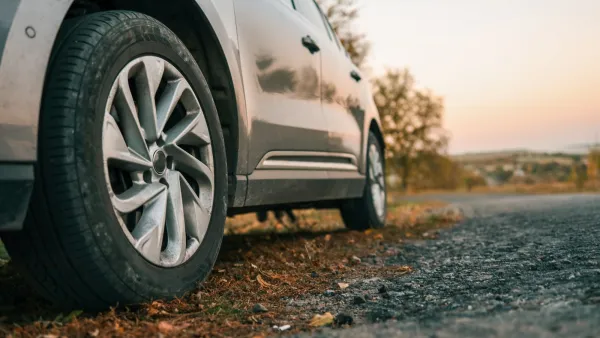
Study: Airborne tire pollution is harmful to human health
Rubber particles that wear off tires combine with other chemicals to create harmful airborne pollutants.
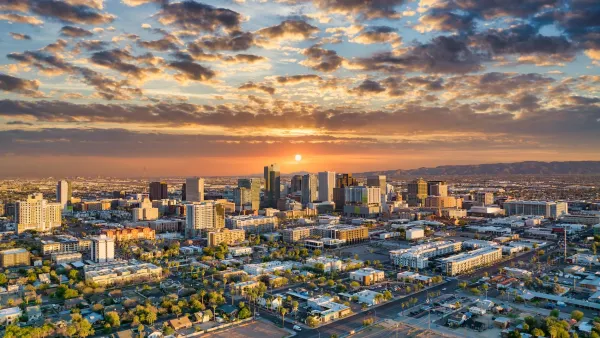
Study: Pavement covers 40% of Phoenix
A new study reveals how ultrafine particles emitted by pavement worsen air quality.

Planetizen Federal Action Tracker
A weekly monitor of how Trump’s orders and actions are impacting planners and planning in America.

California plans to bury El Niño’s downpour
If the state plays its cards right, it may be able to store a billion acre-feet of El Niño’s water in aquifers.

Desperate measures: Advocates weigh draining Lake Powell to fill Colorado River
Draining the reservoir could reduce evaporation losses by a couple hundred thousand acre-feet.

Chicago voters approve permanent festival grounds, penalty for vacant property owners
Currently, major summer and fall festivals take over public parks for weeks at a time, drawing criticism from nearby residents

NYC votes to cut outdoor dining red tape, speed up permitting
New York City also voted to allow the Department of Transportation to begin work on urgent projects before notifying elected officials.

California appears to reject Prop. 45
The proposition would have expanded the projects that qualify for a streamlined environmental review, effectively paring down the California Environmental Quality Act.

FREE Course: Walkable City 1: Why Walkability?
After describing his path towards focusing on walkability as the essence of good planning, Jeff Speck marches through his five principal reasons for making more walkable places.
Reinventing Malls: Planning Alchemy—Turning Gray Fields Into Gold
The course focuses on the opportunities and imperatives that shape reinvention of mall sites.

City of Rosemead
Rutgers University, Edward J. Bloustein School of Planning and Public Policy
One Hundred Miles
Hunter College, City University of New York (CUNY)
The Architects Foundation
University of Cincinnati Online
City of Cambridge
Montrose County
The Pocatello Development Authority