In case you haven't noticed, California is big into alternative energy. Just how big? $1.6 billion was spent last year and $15 billion over the last decade as education and public services fought for scraps. The spending is attracting new scrutiny.


"Even as California has scaled back education, law enforcement and assistance to the disabled in this era of financial stress, the [state's energy-efficiency and alternative-energy program] has continued unrestrained and is expected to grow significantly in coming years," write Ralph Vartabedian and Evan Halper.
"The spending is drawing increasing scrutiny. Some of the energy investments have gone bust, electricity costs have soared, and some economists have disputed the benefits. The legality of some consumer fees that fund the programs also is being challenged in court."
"Suddenly, you look up and there are literally hundreds of millions of dollars going into investments that produce marginal benefits," said state Sen. Rod Wright (D-Inglewood), a member of the Energy, Utilities and Communications Committee.
"You know the tale of Robin Hood? Well, this is robbing the 'hood," he said. "You are taking from poor people to give to rich people."
Read the full story: California's alternative-energy program under scrutiny


Retrofitting Old Cities for Sustainability
Explore strategies for retrofitting old cities to enhance sustainability while preserving historical integrity and managing logistical challenges.
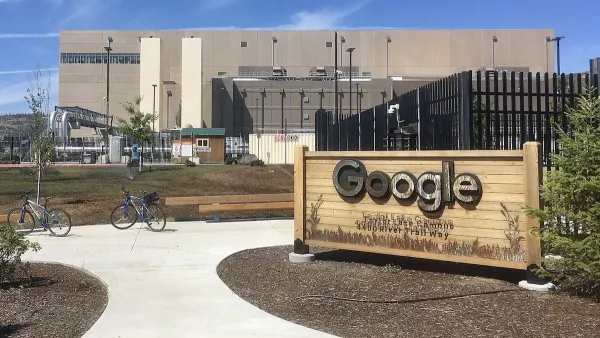
Michigan Proposal to Attract Data Centers Garners Criticism
The state legislature is poised to pass a law that would bring more data centers to the state, but critics say the move would threaten the state’s climate goals.
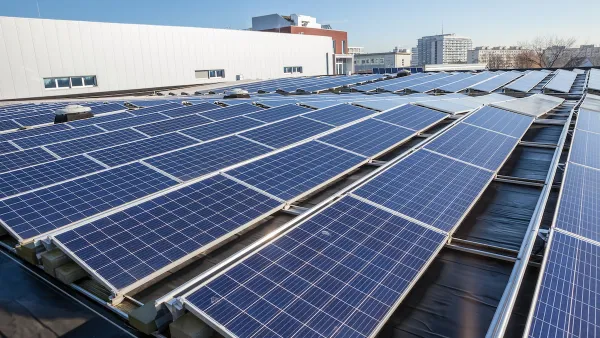
US Building Emissions are Growing
Green building standards and efficiency retrofits are not keeping up with energy demand, resulting in a net increase in greenhouse gas emissions from buildings.

Planetizen Federal Action Tracker
A weekly monitor of how Trump’s orders and actions are impacting planners and planning in America.

California plans to bury El Niño’s downpour
If the state plays its cards right, it may be able to store a billion acre-feet of El Niño’s water in aquifers.

Chicago breaks ground on $3 billion megadevelopment
The new neighborhood, titled Foundry Park, will one day host 3,700 residences.

California High-Speed Rail Authority CEO resigns after $600,000 scandal
Under Ian Choudri, the authority used taxpayer dollars to fund first class flights and trips to nightclubs.

Want to study the Missouri River? Soon, you may need unanimous approval from 10 states
Legislation would require 10 governors’ permission to study or build projects moving water outside the basin.

Desperate measures: Advocates weigh draining Lake Powell to fill Colorado River
Draining the reservoir could reduce evaporation losses by a couple hundred thousand acre-feet.

FREE Course: Walkable City 1: Why Walkability?
After describing his path towards focusing on walkability as the essence of good planning, Jeff Speck marches through his five principal reasons for making more walkable places.
Reinventing Malls: Planning Alchemy—Turning Gray Fields Into Gold
The course focuses on the opportunities and imperatives that shape reinvention of mall sites.

City of Rosemead
Rutgers University, Edward J. Bloustein School of Planning and Public Policy
One Hundred Miles
Hunter College, City University of New York (CUNY)
The Architects Foundation
University of Cincinnati Online
City of Cambridge
Montrose County
The Pocatello Development Authority