If your city isn't attracting hordes of new residents does that mean it's not growing economically? Richard Florida and his colleagues seek to undermine those who equate population growth with economic health.


"As I wrote in my feature on economic recovery for The Atlantic, while many people use population as a way to gauge regional growth or decline, it actually tells us little about economic growth," says Florida. "To shed light on the connection — or, really, lack of one —between population growth and economic growth, my team and I tracked not just the recovery period but also for the entire decade of the 2000s."
"Their main conclusion: There is little, if any connection, between the two," he continues. "Here's the rub: Across the nation, fewer than one in five metros (19 percent) experienced both population growth and productivity growth over the past decade. There was no statistical association between the two, according to the team's analysis."
In a swipe at those that look to population growth as the sign of a healthy metro area, Florida concludes that "America's economic winners are not those places that are growing population fastest, but those that are developing the skills and capabilities that improve their underlying productivity."
Read the full story: The Great Growth Disconnect: Population Growth Does Not Equal Economic Growth

Study: How Beauty Is a Boon for Cities
Richard Florida discusses a study finding a range of connections between a city or neighborhood's aesthetic appeal and its economic health.

The 'Mountain Lion' Cities Rising in the U.S. West
An economist identifies the growth in nine U.S. cities—scattered from Utah to Texas, Arizona, Washington, and Idaho—as similar to the economic power generated in parts of Asia.
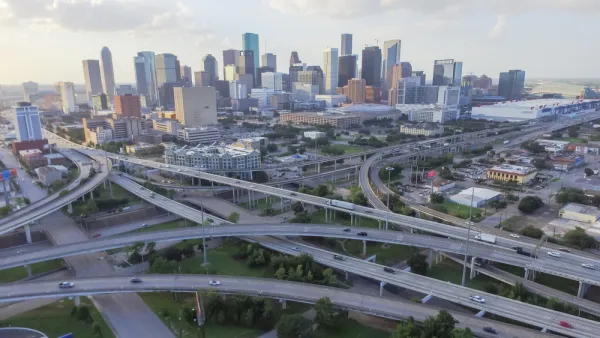
Sun Belt Cities Are Facing Many Changes and Challenges
Cities across this swath of the country have rapidly growing populations and economies. At the same time, Sun Belt cities are contending with a common host of urban issues that should not be overlooked.

Washington state to charge fee to drivers with fuel-efficient cars
Revenue from the fee will go towards supporting the state’s highways.

Illinois considers spending $1 billion in taxpayer money on data center
A quantum computing campus and data center are currently under construction in Chicago.

Trump to blast ‘hydrocarbon highway’ through ‘world’s longest art gallery’
Environmental and historic preservation groups are suing to stop the project.

NYC, state sue feds over mixed-immigration-status housing assistance rule
The state’s lawsuit argues that the rule change violates the Administrative Procedure Act.

Michigan to turn neighborhood into virtual power plant
Residents will soon be able to divert their excess energy to the grid in exchange for compensation.

Data center, mining project swarm to long-awaited Alaska railroad line
The state-owned railroad approved final plans for the spur line this week; the project is expected to cost $311 million, mostly funded by the federal government

FREE Course: Walkable City 1: Why Walkability?
After describing his path towards focusing on walkability as the essence of good planning, Jeff Speck marches through his five principal reasons for making more walkable places.
Reinventing Malls: Planning Alchemy—Turning Gray Fields Into Gold
The course focuses on the opportunities and imperatives that shape reinvention of mall sites.

City of Charlotte
City of Rosemead
Rutgers University, Edward J. Bloustein School of Planning and Public Policy
University of Michigan School for Environment and Sustainability (SEAS)
Hunter College, City University of New York (CUNY)
The Architects Foundation
University District Partnership