In a city that has long typified auto-centric sprawl and unplanned growth, a funny thing is happening. An urban revival has taken root as the city competes with its suburbs and other big cities to attract residents and businesses.


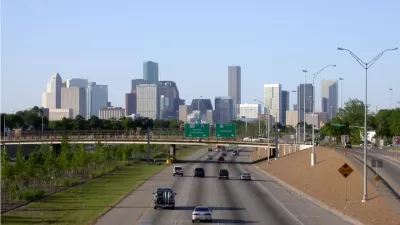
"Historically, as Rice University’s Kinder Institute for Urban Research succinctly puts it, Houston has been viewed as 'the most sprawling, least dense, most automobile-dependent major city in America.' And for many years, Houstonians seemed to be perfectly content with that. But there’s evidence that’s no longer the case," writes Ryan Holeywell. "The institute’s annual survey of Houston-area residents last year found that half the residents of Harris County, of which Houston is part, would prefer to live 'in an area with a mix of development, including homes, shops and restaurants” as opposed to a 'single-family residential area.'”
"As a result, in recent years, city leaders have proudly rolled out a seemingly endless list of programs and policies they say will make Houston denser and more 'livable' in an effort to capitalize on the growing fascination with urban living."
Despite, or perhaps because of, such initiatives, a battle is taking place over the city's future. "On one side, more strident urbanists say the current plans are not nearly bold enough; defenders of the current arrangement say the city should avoid the temptation to change at all."
Read the full story: Houston: The Surprising Contender in America’s Urban Revival
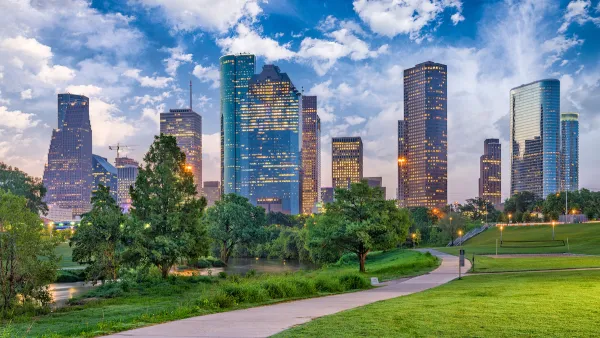
Promoting Infill Development for a Denser Houston
An advocacy group is calling for ‘sustainable, vertical’ mixed-use urbanism in the famously sprawling city.
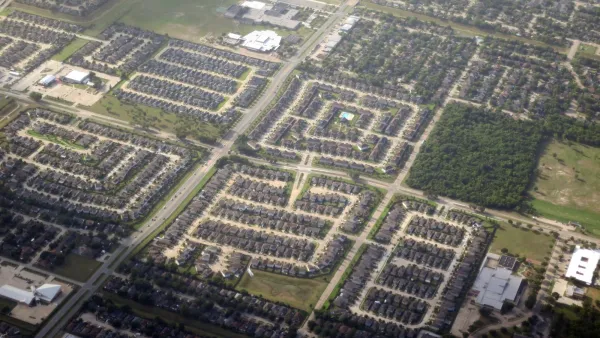
Houston Area's Center of Gravity Shifts Outside the Loop
The population center of Harris County is now outside central Houston, a shift that occurred over the last two decades as the region's suburbs blossomed.
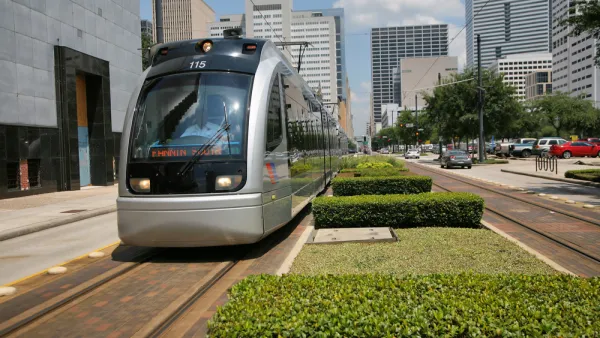
Two Studies Show How Light Rail Benefits Houston
Finally, the city seems to be reaping benefits from a major investment in public transportation.

Planetizen Federal Action Tracker
A weekly monitor of how Trump’s orders and actions are impacting planners and planning in America.

California plans to bury El Niño’s downpour
If the state plays its cards right, it may be able to store a billion acre-feet of El Niño’s water in aquifers.

Desperate measures: Advocates weigh draining Lake Powell to fill Colorado River
Draining the reservoir could reduce evaporation losses by a couple hundred thousand acre-feet.

Housing is the top priority of Seattle’s sole new councilmember
Jenks campaigned on building 1,000 new units of affordable housing.

New tax cuts may slash $1.5 billion in funding for Miami transit, public parks
Amendment 3 will save Miami-Dade homeowners $2,700 in 2028.

Arizona, Wisconsin, Pennsylvania hope to finally advance climate goals post-midterms
The three states have spent years under Republican or divided control.

FREE Course: Walkable City 1: Why Walkability?
After describing his path towards focusing on walkability as the essence of good planning, Jeff Speck marches through his five principal reasons for making more walkable places.
Reinventing Malls: Planning Alchemy—Turning Gray Fields Into Gold
The course focuses on the opportunities and imperatives that shape reinvention of mall sites.

City of Rosemead
Rutgers University, Edward J. Bloustein School of Planning and Public Policy
One Hundred Miles
University of Michigan School for Environment and Sustainability (SEAS)
Hunter College, City University of New York (CUNY)
The Architects Foundation
City of Cambridge
Montrose County
The Pocatello Development Authority