With a goal of improving the quality of life for the city's residents, Los Angeles Mayor Eric Garcetti is embarking on a titanic task: using technology, transparency, and accountability to transform the city's "lumbering" bureaucracy.


Michael Finnegan describes new Mayor Eric Garcetti's "signature initiative: a top-to-bottom modernization of an often-lumbering, 50,000-person bureaucracy that controls the critical machinery of daily life in Los Angeles, from the water supply and power grid to the police and fire emergency dispatch system."
"Garcetti's goal is to develop a finely tuned data system that will track key measures of performance for every city agency — how many miles of streets get repaired, how long it takes to pick up bulky items of trash."
The first step in this transformation has been a three-month-long review of the managers of each city agency. Essentially, each manager has interviewed for his or her job again, in order to weed out the ones who don't embrace his agenda.
"The L.A. project is integral to Garcetti's political fortunes," adds Finnegan, "because the core of his agenda is to make City Hall more responsive in delivering basic services."
FULL STORY: L.A. Mayor Garcetti's goal: modernize city government

On Garcetti's 100th Day: Let There Be Metrics
On Eric Garcetti's 100th day in office, the new mayor of Los Angeles showed progress on his promise to increase accountability by launching a beta website to track City Hall performance in nine categories and for each city department.
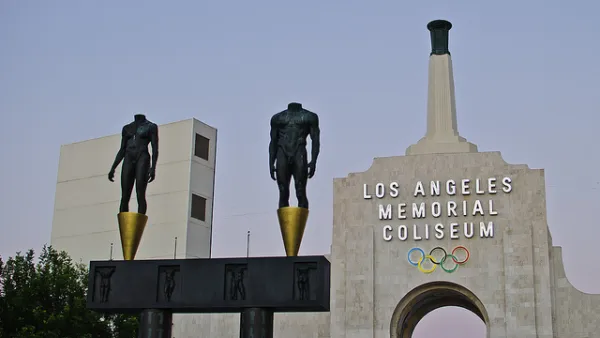
L.A. Seeking Funding for New Transit Projects Prior to the 2028 Summer Olympics
Los Angeles officials have been working for years to deliver a suite of transit projects in time for the 2028 Olympics. Planners now hope federal infrastructure funding could reinvigorate the effort.

L.A. Mayor Proposes Guaranteed Income Program
The city could give 2,000 families $1,000 a month in what would be the largest program of its kind in the country.

Planetizen Federal Action Tracker
A weekly monitor of how Trump’s orders and actions are impacting planners and planning in America.

The state-sanctioned urbicide of Austin
People don’t kill cities. Freeways do.

US to reduce Colorado River water deliveries to Mexico
A new Colorado Treaty amendment reduces Mexico’s Colorado River water allocation by 250,000 acre feet.

Mamdani overhauls NYC's Vision Zero plan with 100 new policy goals
The overhaul aims to reduce traffic deaths and make streets safer for pedestrians, cyclists and drivers through lower speed limits, new safety infrastructure and more.

Amtrak not solely to blame for New Jersey commuter rail's unreliability, report finds
A new study from the Garden State Initiative found that NJ Transit’s budget grew 20% across a 4 year period, but reliability declined significantly over the same period.

EPA erases limits on planet-warming pollution from power plants
Under Monday’s plan, power plants would still have some limits on how much mercury, arsenic and other contaminants they can emit.

FREE Course: Walkable City 1: Why Walkability?
After describing his path towards focusing on walkability as the essence of good planning, Jeff Speck marches through his five principal reasons for making more walkable places.
Reinventing Malls: Planning Alchemy—Turning Gray Fields Into Gold
The course focuses on the opportunities and imperatives that shape reinvention of mall sites.

Eagle County Government
Harvard University Graduate School of Design
Nashville Planning Department
The Architects Foundation
University of Cincinnati Online
The Pocatello Development Authority
The Urban Renewal Agency of the City of Pocatello
Journal of the American Planning Association