For years, science has been catching up to the intuitive wisdom that spending time in, or adjacent to, nature has physical and mental health benefits. The ASLA has collected a trove of this research in one easy to navigate website.


"Researchers are amassing a body of evidence, proving what we all know to be true: nature is good for us and has both long and short term mental and physical health benefits," writes the American Society of Landscape Architects in introducing a new guide the organization has assembled online.
The hundreds of case studies, research studies and articles collected by the ASLA have been organized into 23 mental and physical health topics affecting children and adults. The webpage for each topic area provides an overview of the challenges facing health and design professionals, explores how landscape architects can help meet those challenges, and provides links to relevant research, resources, organizations, and case studies.
Read the full story: HEALTH BENEFITS OF NATURE


Serpentine Maze: Pop-Up Parks in the Pandemic
If the combined effects of winter's cold and the pandemic has you bummed, check out this community-building exercise in the frozen North.
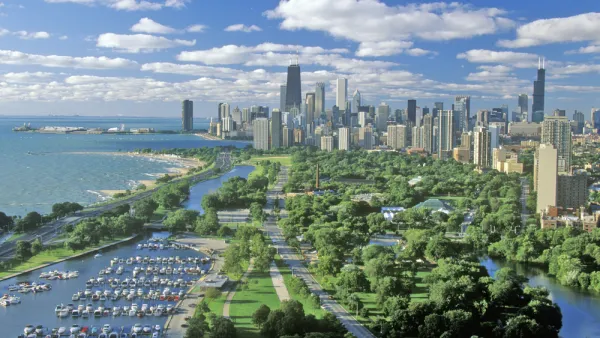
More Parks and Trees Can Increase Life Expectancy
New research shows that increasing park acreage in areas that face park deficits and low levels of tree canopy could lead to significant population-level increases in life expectancy.

Lessons Emerge as Cities Cede Public Space to Contain the Pandemic
One of the dominant themes to emerge from the spread of COVID-19 is the conflict between the need to be in nature for health and well-being while avoiding public space as much as possible to prevent the spread.

Planetizen Federal Action Tracker
A weekly monitor of how Trump’s orders and actions are impacting planners and planning in America.

Amtrak, CN end decades-long dispute with eight-year agreement
The new operating agreement establishes an updated framework for the companies to work together, including processes to resolve disputes.

Judges permit Denver to divert 77,000 acre feet from the Colorado River for reservoir expansion
Overuse and climate change have caused the Colorado River’s water levels to plummet.

Atlanta City Council unanimously backs $3.5 billion Beltline light rail project
The resolution was drafted after Atlanta Mayor Andre Dickens pulled support for the Atlanta Streetcar extension last year.

SEPTA to bring nearby frequent transit to over 1 million new riders as part of decade-long plan
The agency's Accelerate plan will also bring frequent transit to twice the amount of jobs that are currently located near it.

NYC plants over 18,000 trees, the most new foliage in a decade
Many of the trees were planted in communities vulnerable to extreme heat.

FREE Course: Walkable City 1: Why Walkability?
After describing his path towards focusing on walkability as the essence of good planning, Jeff Speck marches through his five principal reasons for making more walkable places.
Reinventing Malls: Planning Alchemy—Turning Gray Fields Into Gold
The course focuses on the opportunities and imperatives that shape reinvention of mall sites.

City of Thousand Oaks
City of Wisconsin Rapids
Harvard University Graduate School of Design
The Architects Foundation
University of Cincinnati Online
The Pocatello Development Authority
The Urban Renewal Agency of the City of Pocatello