Nissan has become the first car company to commit to a date for selling self-driving cars in an announcement this week. And it won't just be one model for sale by 2020, Nissan will produce "multiple 'commercially viable' self-driving vehicles."


"In 2007 I pledged that by 2010, Nissan would mass market a zero-emission vehicle," said Nissan and Renault CEO Carlos Ghosn in a statement. "Today, the Nissan Leaf is the best-selling electric vehicle in history. Now I am committing to be ready to introduce a new ground-breaking technology, Autonomous Drive, by 2020, and we are on track to realize it."
The early stages of autonomous technology are already deployed in the 2014 Infiniti Q50 sedan. "It makes first use of advanced technology that allows it to essentially drive itself on a highway," writes Chris Woodyard. "The Q50 has a system that keeps the vehicle driving in its lane on freeways. Coupled with an adaptive cruise control that maintains a set distance from other cars and brakes if the car ahead -- or the car ahead of that one -- slows, it allows drivers to take their hands off the wheel."
Read the full story: Nissan vows self-driving cars by 2020
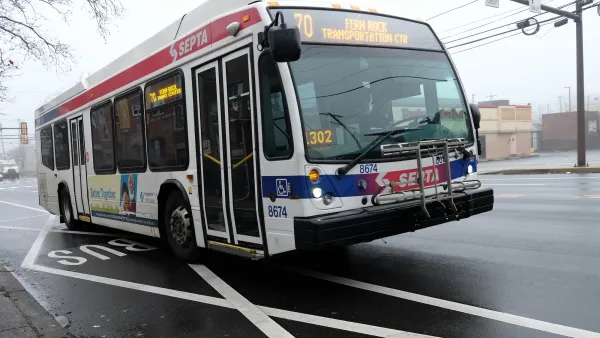
Pennsylvania lawmaker wants to ban fully self-driving buses
State Rep. Ben Waxman's proposed bill would require autonomous buses to have a licensed driver on board.
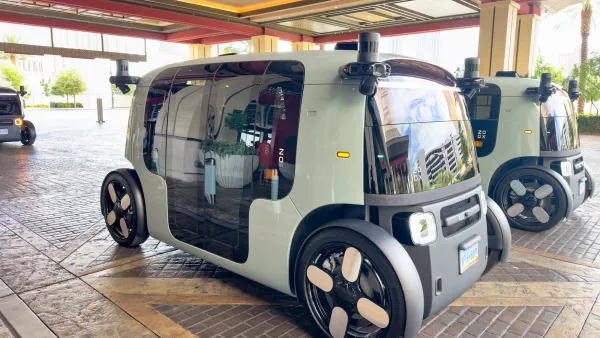
Amazon's steering wheel- and brake pedal-less Zoox robotaxis receive nation's first go-ahead for paid public rides
The NHTSA is giving a temporary permit to some autonomous cars that don't meet current safety standards as it develops a new framework for self-driving vehicles.
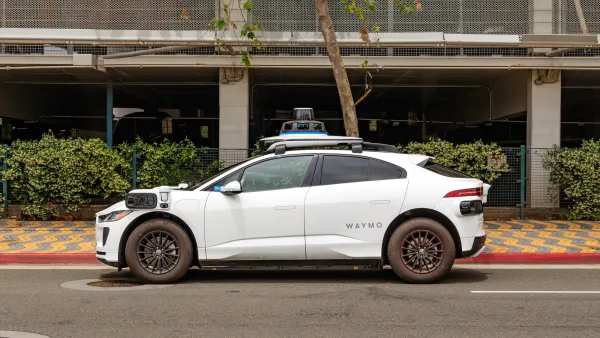
Austin Waymos rack up nearly $10k in parking tickets
The robotaxis have been cited for parking in tow zones and double parking, among other violations.

Planetizen Federal Action Tracker
A weekly monitor of how Trump’s orders and actions are impacting planners and planning in America.

Eastern Nebraska is running out of electricity
Data centers and electrification are straining eastern Nebraska’s grid, throttling economic development.
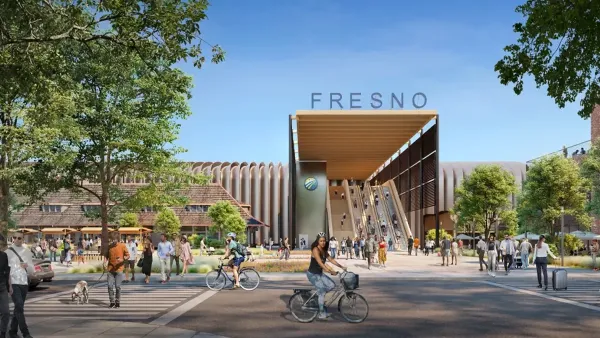
California High-Speed Rail Authority picks trainset manufacturer
The California High-Speed Rail Authority aims to start servicing passengers by 2033.

Massachusetts bogs generate both power, and cranberries
Putting solar panels above farmland is one way Massachusetts is advancing toward its goal of net-zero carbon emissions by 2050.

What could the future of LA transit look like under Raman?
The mayor-elect views broken sidewalks and potholes as crises that can be fixed with better governance.

States are counting on battery farms. Some towns don’t want them.
While fire safety has improved, some communities are still wary.

FREE Course: Walkable City 1: Why Walkability?
After describing his path towards focusing on walkability as the essence of good planning, Jeff Speck marches through his five principal reasons for making more walkable places.
Reinventing Malls: Planning Alchemy—Turning Gray Fields Into Gold
The course focuses on the opportunities and imperatives that shape reinvention of mall sites.

City of Rosemead
Rutgers University, Edward J. Bloustein School of Planning and Public Policy
One Hundred Miles
University of Michigan School for Environment and Sustainability (SEAS)
Hunter College, City University of New York (CUNY)
The Architects Foundation
City of Cambridge
The Pocatello Development Authority
The Urban Renewal Agency of the City of Pocatello