After the U.S. Supreme Court sent a long-running lawsuit over pollution in the Los Angeles and San Gabriel rivers back to a lower court, the 9th Circuit Court of Appeals has ruled that L.A. County is liable for high pollution levels in the rivers.


"A federal appeals court dealt Los Angeles County a blow on Thursday in a long-running lawsuit over storm-water pollution when it issued an opinion that the county is liable for excessively high levels," reports Abby Sewell.
"Steve Fleischli, senior attorney and director of plaintiff Natural Resources Defense Council's national water program, called the decision 'a significant milestone.'"
"I think this case demonstrates that there is accountability built into the system, and if the county avoids that, they will be held liable," he said.
"Separately," adds Sewell, "the county's Board of Supervisors had considered putting a measure to voters asking for a new parcel fee that would go toward storm-water cleanup projects, but members decided to shelve the initiative in March after it drew widespread public opposition."
Read the full story: L.A. County liable for storm-water pollution, court rules

Cars Pollute in More Ways Than One
Tires wear down and shed toxic microplastics into stormwater, which eventually ends up in rivers and the ocean. Recent research sheds new light on the extent of the damage.
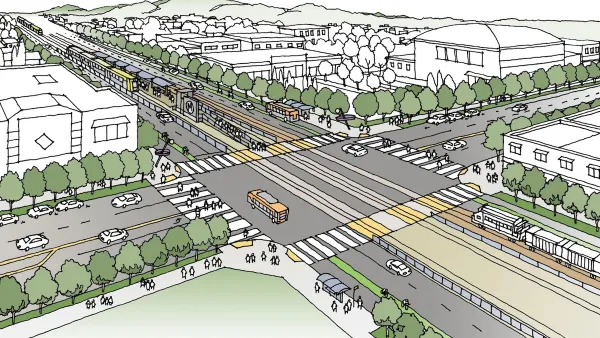
After years of opposition to light rail, this L.A. city wants a $200 million station
Cerritos officials want the Southeast Gateway Line, a planned 14.5-mile light rail route through Los Angeles County, to stop in their city.
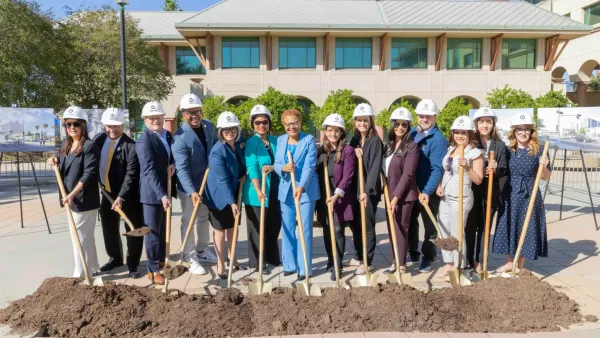
LA begins work on $4 billion light rail through San Fernando Valley
The project will be the areas first light rail service since the termination of the Pacific Electric Railway in the 1950s.

Desperate measures: Advocates weigh draining Lake Powell to fill Colorado River
Draining the reservoir could reduce evaporation losses by a couple hundred thousand acre-feet.

Eastern Nebraska is running out of electricity
Data centers and electrification are straining eastern Nebraska’s grid, throttling economic development.

Malls are becoming the midtowns of the future
Mall and office park redevelopments are a generational opportunity to create new nodes of urbanity.

NYC breaks ground on anti-flooding infrastructure project
New York City's new system will reduce stormwater flows to local sewers by 90%.

One Kentucky town’s secret to affordable housing
The Smoketown Community Land Trust has already built seven affordable homes for community members.

Houston gains petal-shaped cooling infrastructure to make streets more ‘delightful’
The city has installed the pavilions along 15 blocks in Houston.

FREE Course: Walkable City 1: Why Walkability?
After describing his path towards focusing on walkability as the essence of good planning, Jeff Speck marches through his five principal reasons for making more walkable places.
Reinventing Malls: Planning Alchemy—Turning Gray Fields Into Gold
The course focuses on the opportunities and imperatives that shape reinvention of mall sites.

City of Rosemead
Rutgers University, Edward J. Bloustein School of Planning and Public Policy
One Hundred Miles
University of Michigan School for Environment and Sustainability (SEAS)
Hunter College, City University of New York (CUNY)
The Architects Foundation
City of Cambridge
Montrose County
The Pocatello Development Authority