With climate change producing more extreme weather, the likelihood of a natural disaster impacting the world's cities is on the rise. New members of the 'disaster club' can look to these three places for lessons for turning tragedy into opportunity.


"Tornadoes, hurricanes, earthquakes, floods and snowstorms can land with a harsh and terrible swiftness, killing people, wiping out roads and leveling businesses, hospitals and homes," says Liz Farmer. "It’s likely to get worse. Scientists who study meteorology warn that climate change will only increase the severity of some extreme weather events in the future, namely flooding, snowstorms and hurricanes."
"Obviously, there’s little comfort in the devastation of a natural disaster, but essential to the idea is that in disaster there can be opportunity. Millions in federal, state and local disaster dollars can be leveraged into billions in additional investment from the private sector. That approach, however, takes more time, a lot of patience and a dose of creativity. Tuscaloosa; Greensburg, Kan.; and San Francisco all learned how to turn local tragedy into a new and vibrant vision. Their lessons on leveraging funds, dealing with local sentiment -- the longing to replace rather than remake -- are a playbook for local officials dealing with today’s disasters."
Read the full story: 3 Cities That Used Natural Disasters to Revitalize Their Futures
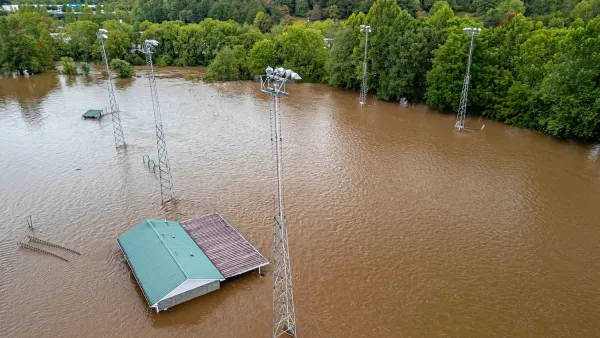
‘Quality Work, Fast’: NC Gears up for Homebuilding After Helene, Trying to Avoid Past Pitfalls
The state will field bids to demolish, repair and rebuild homes in the mountains. After struggles in eastern NC, officials aim to chart a different course.

Rebuilding After Disaster: The Role of Social Connections in Resilience
Dr. Lucy Jones emphasizes that resilience in the face of climate-driven disasters like wildfires relies on building strong social connections, which empower communities to recover and adapt to an increasingly challenging future.
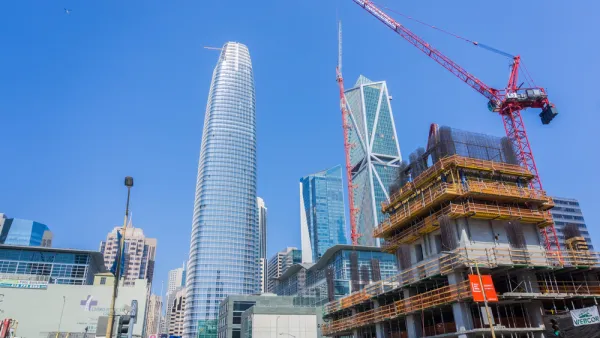
San Francisco Considers More Aggressive Measures to Earthquake-Proof High Rises
The city has proposed tighter rules for new construction and a more active approach to securing existing tall structures from collapse.

Planetizen Federal Action Tracker
A weekly monitor of how Trump’s orders and actions are impacting planners and planning in America.

Eastern Nebraska is running out of electricity
Data centers and electrification are straining eastern Nebraska’s grid, throttling economic development.

Study reveals best places in the U.S. for cycling, walking
New research from Streetlight Data examines bicycle and pedestrian miles per capita in the 100 largest U.S. cities by population.

Federal government nominates new FTA administrator
Mark Aesch is currently the founder and CEO of a transportation management consulting firm.

Developers reveal $10 billion stadium plan as ‘Hail Mary’ to keep Bears in Chicago
The plan would also boast a public park, high- and mid-rise buildings and a youth sports complex.

As Texas embraces carbon storage, a Black community questions the risks
Texas now issues permits for companies to store carbon dioxide underground. East Texas residents fear safety risks, and skeptics doubt the climate benefits.

FREE Course: Walkable City 1: Why Walkability?
After describing his path towards focusing on walkability as the essence of good planning, Jeff Speck marches through his five principal reasons for making more walkable places.
Reinventing Malls: Planning Alchemy—Turning Gray Fields Into Gold
The course focuses on the opportunities and imperatives that shape reinvention of mall sites.

City of Charlotte
City of Rosemead
Rutgers University, Edward J. Bloustein School of Planning and Public Policy
University of Michigan School for Environment and Sustainability (SEAS)
Hunter College, City University of New York (CUNY)
The Architects Foundation
City of Cambridge
The Pocatello Development Authority
The Urban Renewal Agency of the City of Pocatello