Michigan is a national leader in rail-to-trail conversions, but a mining company in the Upper Peninsula will necessitate the first "reactivation" of a trail in the state. The federal Rails to Trails law sanctions such conversions.


"Michigan leads the nation in the miles of recreational trails converted from abandoned railroad tracks," writes Kathleen Gray. "But come August, the 2,653 miles of trails will shrink by almost two miles when a stretch of trail between Ishpeming and Republic is converted back to rail."
"It’s the first such conversion — called reactivation — in Michigan. And it is one of only about nine nationwide that have happened since the federal Rails to Trails law was signed in 1976."
"And perhaps surprisingly," she adds, "there hasn’t been much pushback from the community, the rails-to-trails activists, or the state, to the proposal to convert 1.9 miles of a 20-mile trail back to rail to accommodate a mining company in the Upper Peninsula."
“'This is how it’s supposed to work,' said Joe Derocha, the supervisor in Humboldt Township where the processing mill is located. 'If the industrial district ever returns, it should be given back.'”
Read the full story: 1.9 miles of recreational trails to be converted back to rail in U.P.

A National Bike Trail Network Is Slowly Growing
Around the United States, new bike lanes and trails are connecting communities via two (or three) wheels.
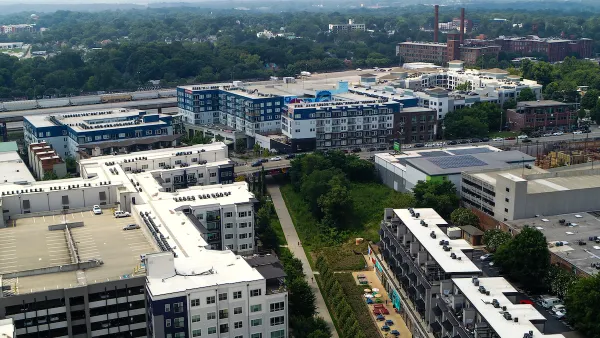
Atlanta Eliminates Parking Mandates Near BeltLine
Developments near the city’s popular greenway will no longer be subject to minimum parking requirements to make way for more effective development.
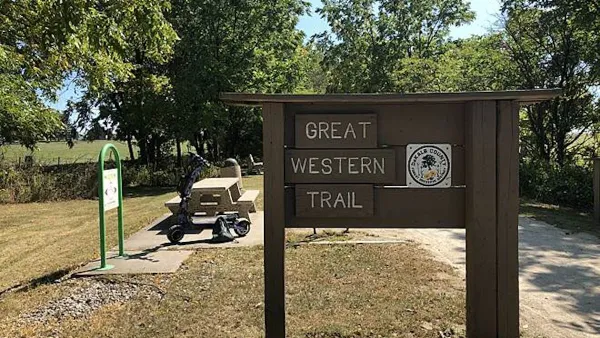
Advocates Champion the Great Western Trail
A Chicago walking and biking trail along a former railroad right-of-way has been a labor of love for local residents.

Planetizen Federal Action Tracker
A weekly monitor of how Trump’s orders and actions are impacting planners and planning in America.

Washington state to charge fee to drivers with fuel-efficient cars
Revenue from the fee will go towards supporting the state’s highways.

Illinois considers spending $1 billion in taxpayer money on data center
A quantum computing campus and data center are currently under construction in Chicago.

Senate passes bill overhauling permitting
The bill still needs to pass the House.

Did data centers change how voters cast their ballots?
Texas, Ohio, and Georgia all flipped party control. But in rural counties, the effect of local data centers was mixed.

Amtrak invests in eight new Airo trainsets
The new trainsets will begin serving passengers in 2031.

FREE Course: Walkable City 1: Why Walkability?
After describing his path towards focusing on walkability as the essence of good planning, Jeff Speck marches through his five principal reasons for making more walkable places.
Reinventing Malls: Planning Alchemy—Turning Gray Fields Into Gold
The course focuses on the opportunities and imperatives that shape reinvention of mall sites.

City of Charlotte
City of Rosemead
Rutgers University, Edward J. Bloustein School of Planning and Public Policy
University of Michigan School for Environment and Sustainability (SEAS)
Hunter College, City University of New York (CUNY)
The Architects Foundation
University District Partnership