A decade ago, a power failure in northern Ohio caused a cascading series of outages that knocked out power to 50 million people in the United States and Canada. New tools aim to reduce the chances that such events could happen in the future.


"After the lights went out for 50 million people from the Northeast to the Midwest on Aug. 14, 2003, investigators found readings from two obscure instruments that would have given them an hour’s warning — plenty of time to solve the problem if the devices had been wired to provide a stream of critical data," writes Matthew L. Wald.
"Now, a decade after the largest blackout in American history, engineers are installing and linking 1,000 of those instruments, called phasor measurement units, to try to prevent another catastrophic power failure. When the work is done, the engineers say, they will have a diagnostic tool that makes the old system seem like taking a patient’s pulse compared with running a continuous electrocardiogram."
Read the full story: New Tools for Keeping the Lights On

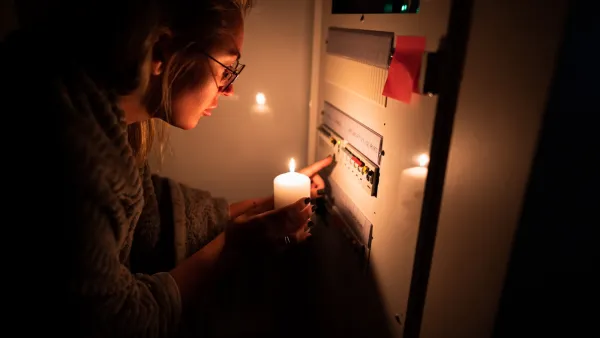
US May Have 100 Times More Blackouts by 2030
Rising demand driven by AI data centers and uncertain energy sources could lead to a surge in power outages by the end of the decade.
Utilities Spending Less on Energy Efficiency Despite Higher Fuel Prices
A survey of major utilities reveals a link between states with strict efficiency standards and incentive programs and efforts to improve efficiency on the part of utilities.
Preparing the Grid for More Intense Heat Waves
As extreme heat becomes more common, the risk of a grid collapse threatens to turn a dangerous situation deadly.

Planetizen Federal Action Tracker
A weekly monitor of how Trump’s orders and actions are impacting planners and planning in America.

Amtrak, CN end decades-long dispute with eight-year agreement
The new operating agreement establishes an updated framework for the companies to work together, including processes to resolve disputes.

Northwest rail fans eager for Sept. 30 debut of Amtrak’s Airo fleet
Get ready for that new train smell and more seats. But they won’t go faster or run more frequently on the Cascades route in Washington and Oregon.

Atlanta City Council unanimously backs $3.5 billion Beltline light rail project
The resolution was drafted after Atlanta Mayor Andre Dickens pulled support for the Atlanta Streetcar extension last year.

SEPTA to bring nearby frequent transit to over 1 million new riders as part of decade-long plan
The agency's Accelerate plan will also bring frequent transit to twice the amount of jobs that are currently located near it.

NYC plants over 18,000 trees, the most new foliage in a decade
Many of the trees were planted in communities vulnerable to extreme heat.

FREE Course: Walkable City 1: Why Walkability?
After describing his path towards focusing on walkability as the essence of good planning, Jeff Speck marches through his five principal reasons for making more walkable places.
Reinventing Malls: Planning Alchemy—Turning Gray Fields Into Gold
The course focuses on the opportunities and imperatives that shape reinvention of mall sites.

City of Thousand Oaks
City of Wisconsin Rapids
Harvard University Graduate School of Design
The Architects Foundation
University of Cincinnati Online
The Pocatello Development Authority
The Urban Renewal Agency of the City of Pocatello