In an affluent suburb of Minneapolis, Minnesota's first 'residential redevelopment coordinator' works as a buffer between aggressive builders and residents upset about the side effects of mansionization.


"Armed with a well-thumbed copy of the city code and a trusty pair of construction boots, Minnesota’s first city teardown enforcement official has started duty in Edina," reports Mary Jane Smetanka.
"Edina hired their 'residential redevelopment coordinator' because the city is a hot spot for developers who demolish small homes and replace them with bigger ones. Last year that happened more than 100 times, setting a record. So far this year, 52 permits for demolition of single-family detached homes have been issued."
"Construction work in some neighborhoods is intense, creating tensions beyond concerns about house size," explains Smetanka. "Unsure who to call, Edina residents have been peppering city departments from police to planning with complaints about dirt, parking, noise, congestion and alleged code violations."
"So City Manager Scott Neal suggested the city create a one-stop shop for both residents and builders by creating a city job that deals only with teardown issues."
FULL STORY: State's first city teardown enforcer makes her mark in Edina


Speed Limit Reform Spreading Across Minnesota
After the Twin Cities lowered speed limits in the urban core of the region in 2020, a trio of suburban cities are planning to follow. Two of the cities are planning to set some speed limits as low as 20 mph.
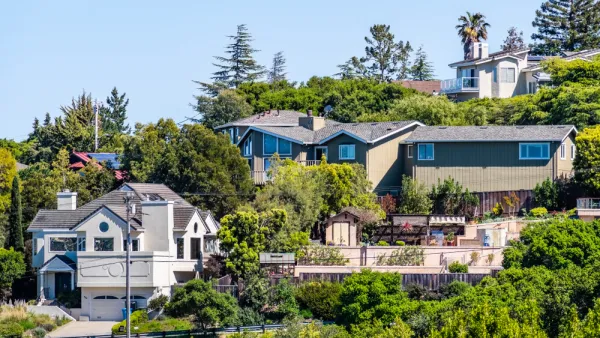
Discretionary Approval for McMansions
Redwood City, located on the San Francisco Peninsula, will make it harder to build homes that take up more than 45 percent of a residential lot.

Seattle Sets a New Standard for Residential Zoning
Seattle is the latest in a series of cities, states, and counties to alter the landscape of land use regulation by approving what the Sightline Institute describes as the "most progressive" ADU policy in the United States.

The state-sanctioned urbicide of Austin
People don’t kill cities. Freeways do.

US to reduce Colorado River water deliveries to Mexico
A new Colorado Treaty amendment reduces Mexico’s Colorado River water allocation by 250,000 acre feet.

New Jersey’s second-largest city bans standalone data centers
Jersey City will continue to allow co-location facilities, such as those meant for research institutions that store their own data.

Amtrak not solely to blame for New Jersey commuter rail's unreliability, report finds
A new study from the Garden State Initiative found that NJ Transit’s budget grew 20% across a 4 year period, but reliability declined significantly over the same period.

EPA erases limits on planet-warming pollution from power plants
Under Monday’s plan, power plants would still have some limits on how much mercury, arsenic and other contaminants they can emit.

Phoenix announces new on-demand transit service, more frequent RAPID buses
Both new services will launch in October, and are part of Phoenix's Project Effective Access Solutions for Easing Congestion.

FREE Course: Walkable City 1: Why Walkability?
After describing his path towards focusing on walkability as the essence of good planning, Jeff Speck marches through his five principal reasons for making more walkable places.
Reinventing Malls: Planning Alchemy—Turning Gray Fields Into Gold
The course focuses on the opportunities and imperatives that shape reinvention of mall sites.

Eagle County Government
Harvard University Graduate School of Design
Nashville Planning Department
The Architects Foundation
University of Cincinnati Online
The Pocatello Development Authority
The Urban Renewal Agency of the City of Pocatello
Journal of the American Planning Association