At $23,550, the federal poverty line is a blunt instrument used to measure the nuances of affordability. A tool provided by the Economic Policy Institute shows how much more a family needs to make for a modicum of security in cities across the U.S.


"The Economic Policy Institute offers a more comprehensive calculator, one that was recently updated for 2013 and that now includes 600 communities across the country and six family types," reports Emily Badger. "The EPI Family Budget Calculator includes geographically adjusted costs for housing, food, child care, transportation, health care, other necessities, and taxes, in search of what it takes to achieve a 'secure yet modest living standard.'"
"The numbers that come out the other end don't look anything like the federal poverty line. How much does a two-parent, two-child household in New York City need? $93,502."
Read the full story: The Insane, True Costs of Raising a Family in America's Major Metros
New Census Data Shows Lack of Improvement on Income, Poverty
While the Census Bureau reported impressive findings on the reduction of Americans without health insurance last year, there was nothing impressive in the numbers on income and poverty, notwithstanding an increase in employment.
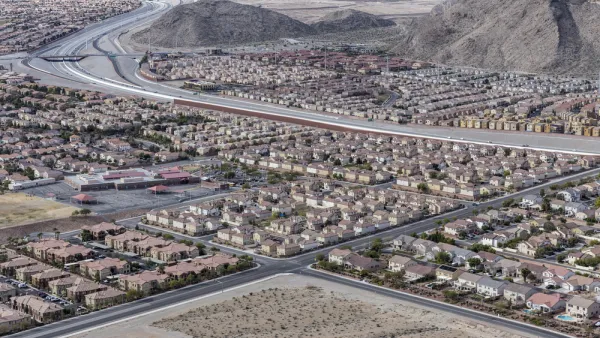
Research: Sprawl Linked to Poverty
Low-income families living in high-sprawl neighborhoods are limited in their access to education, jobs, and other amenities, often trapping them in a cycle of poverty.

Is Inequality Destroying American Cities?
A recent video claimed that high income inequality is the “Thing That Will Destroy Our Cities.” Is this true?

Washington state to charge fee to drivers with fuel-efficient cars
Revenue from the fee will go towards supporting the state’s highways.

Illinois considers spending $1 billion in taxpayer money on data center
A quantum computing campus and data center are currently under construction in Chicago.

Trump to blast ‘hydrocarbon highway’ through ‘world’s longest art gallery’
Environmental and historic preservation groups are suing to stop the project.

NYC, state sue feds over mixed-immigration-status housing assistance rule
The state’s lawsuit argues that the rule change violates the Administrative Procedure Act.

Michigan to turn neighborhood into virtual power plant
Residents will soon be able to divert their excess energy to the grid in exchange for compensation.

Data center, mining project swarm to long-awaited Alaska railroad line
The state-owned railroad approved final plans for the spur line this week; the project is expected to cost $311 million, mostly funded by the federal government

FREE Course: Walkable City 1: Why Walkability?
After describing his path towards focusing on walkability as the essence of good planning, Jeff Speck marches through his five principal reasons for making more walkable places.
Reinventing Malls: Planning Alchemy—Turning Gray Fields Into Gold
The course focuses on the opportunities and imperatives that shape reinvention of mall sites.

City of Charlotte
City of Rosemead
Rutgers University, Edward J. Bloustein School of Planning and Public Policy
University of Michigan School for Environment and Sustainability (SEAS)
Hunter College, City University of New York (CUNY)
The Architects Foundation
University District Partnership