Poverty is now more widespread in America's suburbs than its cities. But the suburbs of some cities are experiencing more dramatic increases than others. 24/7 Wall St. examines the top 10 sources of suburban poverty.


Michael B. Sauter, Alexander E. M. Hess and Samuel Weigley examine data from the Brookings Institution's newly published examination of America's changing face of poverty to determine the 10 cities with the biggest increases in suburban poverty between 2000 and 2011.
Atlanta, where the number of poor suburban residents increased by 158 percent between 2000 and 2011, has the dubious distinction of topping the list. "At the end of 2011, 88% of all the area’s residents living below the poverty lived in the suburbs — the largest proportion of any large metro area in the nation," say the authors. "According to the Brookings Institution’s [Elizabeth] Kneebone, 'as people came to the region, the region continued to grow, and then the housing market collapsed.'”
"While the increase in population and rising home prices have clearly been a factor in the rising numbers of poor people outside of cities, Kneebone cautioned that this is not the only factor affecting suburban poverty. 'It is also,' she noted, 'long-term residents that have been hit hard by the economy in the last decade. The recession clearly has a role in this trend.'”
Read the full story: Cities Where Suburban Poverty Is Skyrocketing

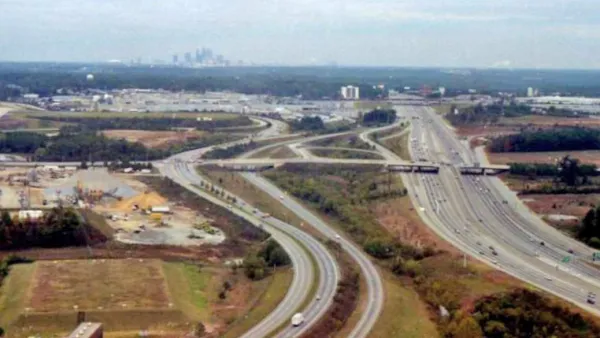
Suburban Poverty Rising in Atlanta
Driven by economic and demographic trends, poverty in "outer ring" suburbs is on the rise. Since 2000, Atlanta's suburbs have seen the highest rate of change in poverty of any comparable metro region.
On the Suburban South's Troubling Poverty
Land use and transportation planning decisions provide a framework on which other social policies have created particularly isolating and intractable poverty in the South.
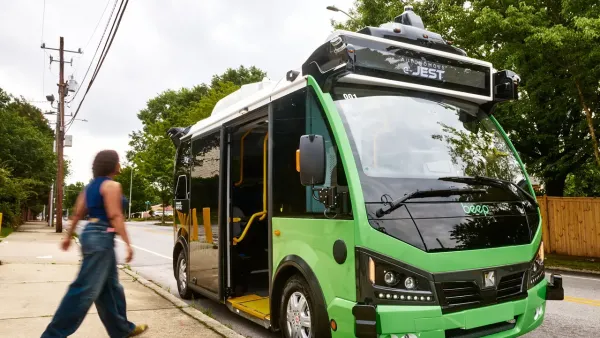
Atlanta Beltline’s free automated shuttle expands service
A $1.75 million grant funded the autonomous shuttle service’s growth.

Planetizen Federal Action Tracker
A weekly monitor of how Trump’s orders and actions are impacting planners and planning in America.

Amtrak, CN end decades-long dispute with eight-year agreement
The new operating agreement establishes an updated framework for the companies to work together, including processes to resolve disputes.

Judges permit Denver to divert 77,000 acre feet from the Colorado River for reservoir expansion
Overuse and climate change have caused the Colorado River’s water levels to plummet.

NYC DOT wants faster, more permanent street upgrades
The city is examining ways to build more concrete infrastructure without getting entangled in 'decades-long' projects.

'Something we’ve never seen before:' rising utility rates could strain city finances nationwide
Data centers, climate change and other factors have caused utility rates in the United States to increase by 38% since 2020.

Trump to overrule local leaders, lease millions of acres of America’s Pacific Island territories’ seafloors to mining companies
International law says that the Indigenous people of America’s territories have a right to prior and informed consent regarding projects that impact their countries.

FREE Course: Walkable City 1: Why Walkability?
After describing his path towards focusing on walkability as the essence of good planning, Jeff Speck marches through his five principal reasons for making more walkable places.
Reinventing Malls: Planning Alchemy—Turning Gray Fields Into Gold
The course focuses on the opportunities and imperatives that shape reinvention of mall sites.

Harvard University Graduate School of Design
KFH Group Inc.
Greater Baltimore Committee
The Architects Foundation
University of Cincinnati Online
The Pocatello Development Authority
The Urban Renewal Agency of the City of Pocatello