Although he recognized that Denver does not have an immediate demand for micro-housing, architect Jeff Sheppard launched a design competition that proved global interest in the this hot housing type, writes David Hill.


A recent international competition, launched by a local Denver firm and sponsored by the city's architectural league, sought micro-housing proposals for a site in Denver's River North neighborhood. To the surprise of organizers, it received entries from over 70 different countries.
“'Clearly, there’s a global interest in microhousing,' says longtime Denver architect George Hoover, who chaired the six-person jury. Certainly there is a national push for housing with units of 300 square feet or smaller," explains Hill. "Projects are being explored and built in such cities as Boston, New York, and San Francisco, where the cost of living is high."
First place went to Mexico-based Studio de Arquitectura a Ciudad for its modular facade, which adapts to climate changes through removable planted pods fixed to a grid framework, and interior units that adapt to family size and needs.
All of the entries in the competition will be on view at the AIA National Convention through June 21.
Read the full story: Denver Microhousing competition attracts global interest


Instead of water, sediment from droughts and wildfire is choking U.S. dams
Sediment has filled 8% of dam storage capacity in the United States. Because of climate change, researchers expect it will only accumulate quicker.
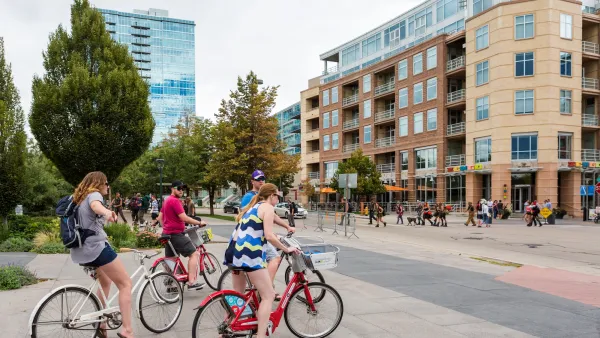
Denver mayor announces 'Mile High Line' vision for interconnected bike and transit routes
The mayor emphasized building more housing near transit lines and bike paths, but failed to address planned transit service cuts.

Denver mayor pushes for cheap downtown parking, says promoting transit is 'not our strategy'
The 'Mayor's Park $5' program encourages local businesses to reduce their parking prices to bring more people downtown.

Planetizen Federal Action Tracker
A weekly monitor of how Trump’s orders and actions are impacting planners and planning in America.

The state-sanctioned urbicide of Austin
People don’t kill cities. Freeways do.

US to reduce Colorado River water deliveries to Mexico
A new Colorado Treaty amendment reduces Mexico’s Colorado River water allocation by 250,000 acre feet.

Nation's most wind-powered state turns to coal as data centers increase energy demand
For the first time in decades, Iowa has increased its generation of coal power.

NYC cools commuters with city's first rain garden above a bus stop
New York City officials say the plants in the rain garden can absorb 16 gallons of rainwater during heavy storms.

Brightline West’s future may rely on $6 billion federal loan
The company has until Nov. 2 to make a $400 million equity investment into its proposed high-speed rail line.

FREE Course: Walkable City 1: Why Walkability?
After describing his path towards focusing on walkability as the essence of good planning, Jeff Speck marches through his five principal reasons for making more walkable places.
Reinventing Malls: Planning Alchemy—Turning Gray Fields Into Gold
The course focuses on the opportunities and imperatives that shape reinvention of mall sites.

Greater Baltimore Committee
Eagle County Government
Harvard University Graduate School of Design
The Architects Foundation
University of Cincinnati Online
The Pocatello Development Authority
The Urban Renewal Agency of the City of Pocatello
Journal of the American Planning Association