A study from the Organization of Economic Cooperation and Development shows that traffic fatalities across the world have reached an all-time low. However roads in the U.S. are less safe than in 28 other countries, including Serbia and Greece.


"Safety is improving on roads around the world -- but mostly for drivers and passengers in wealthier countries," reports Alex Goldmark. "A study [PDF] from the Organization of Economic Cooperation and Development's transportation arm finds that although 2012 was a record low year for traffic fatalities, safety for pedestrians isn't increasing as fast as it is car occupants. And the U.S. still ranks poorly compared to other well-off countries."
"In 2011, U.S. fatalities for people in passenger cars fell by 4.1 percent -- but deaths increased for just about everyone else. According to [Veronique Feypell, the study's author], 'there was an increase in fatalities among cyclists (+8.7%), motorcyclists (+2.1%) and pedestrians (+3.0%).' Overall, though, the U.S. has been trending as a safer place to drive, walk and ride a bicycle."
Read the full story: Global Road Deaths at All-Time Low, but U.S. Still Ranks Poorly on Safety

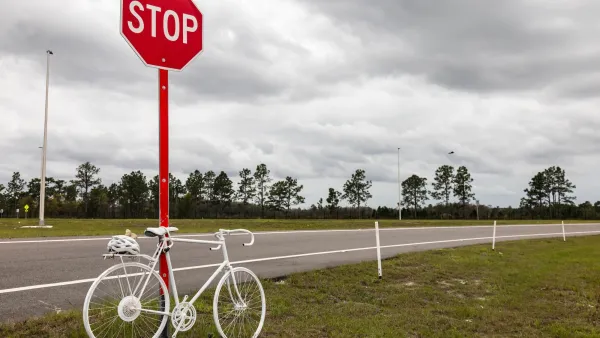
Landscapes of love and loss
As urban planners, every piece of infrastructure we build is a memorial — whether we know it or not.
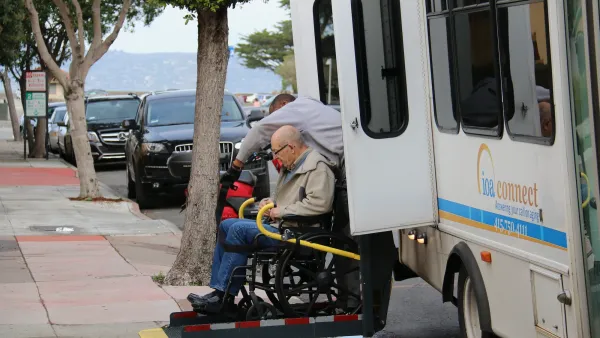
Seniors Account for 32% of Traffic Deaths in the Bay Area
Road safety interventions would help protect seniors and other vulnerable groups from traffic violence.
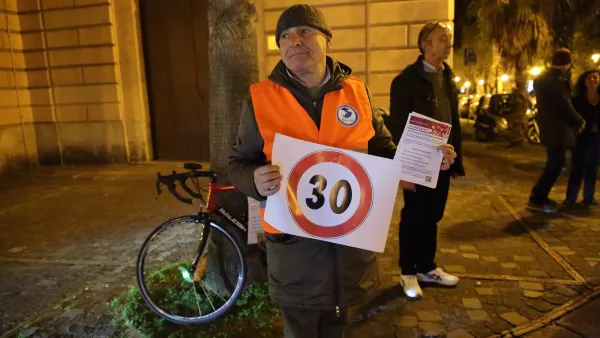
Rome is Latest European Capital to Drop Speed Limit to 30KPH
Traffic fatalities in Bologna, the first major Italian city to lower their speed limit, dropped by 50 percent in the first year.

Planetizen Federal Action Tracker
A weekly monitor of how Trump’s orders and actions are impacting planners and planning in America.

Northwest rail fans eager for Sept. 30 debut of Amtrak’s Airo fleet
Get ready for that new train smell and more seats. But they won’t go faster or run more frequently on the Cascades route in Washington and Oregon.
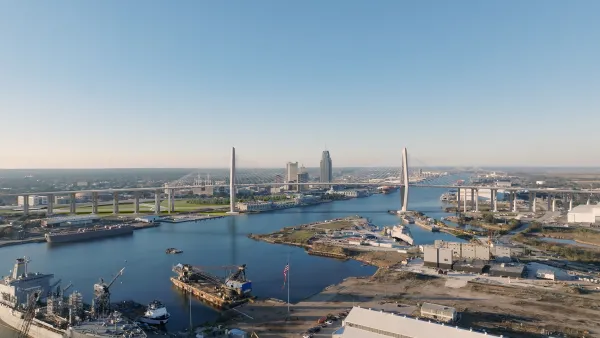
Alabama scores up to $2.5 billion federal loan for largest infrastructure project in state’s history
The Mobile River Bridge and Bayway Project aims to ease congestion at Alabama’s worst bottleneck.

Novel study finds extreme state-by-state disparity in housing construction timelines
The first comprehensive working paper on U.S. construction timelines also found that the permitting process for multi-family projects has slowed nationwide.

California may destroy its beaches trying to save homes from El Niño
Boulders and seawalls can protect homes from waves, but ultimately destroy sandy beaches.

California high-speed rail accomplishes only one legislative goal in 2026
The majority of the agency's failed pitches were never developed into written proposals.

FREE Course: Walkable City 1: Why Walkability?
After describing his path towards focusing on walkability as the essence of good planning, Jeff Speck marches through his five principal reasons for making more walkable places.
Reinventing Malls: Planning Alchemy—Turning Gray Fields Into Gold
The course focuses on the opportunities and imperatives that shape reinvention of mall sites.

City of Thousand Oaks
City of Wisconsin Rapids
Harvard University Graduate School of Design
The Architects Foundation
University of Cincinnati Online
Northern Illinois Transit Authority (NITA)
The Pocatello Development Authority
The Urban Renewal Agency of the City of Pocatello