Whoever is victorious in today's election to choose L.A.'s next mayor, the celebrating may be short lived. Pressing needs to strengthen the city's water supply, maintain transit momentum, and relieve toxic hotspots await the city's next leader.


During his time in office, Mayor Antonio Villaraigosa was able to advance several transportation- and environmentally-related initiatives. In the process of building his or her own legacy, L.A.'s next mayor will have to live up to the commitments set forth by previous office holders, while blazing their own trail. Molly Peterson looks at some of the pressing issues that await Los Angeles's next mayor.
"Besides inheriting the current policy that seeks to end L.A.'s use of coal power by 2025, the winner of Tuesday's mayoral election will face a host of environmental challenges, including the need to increase the local supply of water, maintain momentum on mass transit projects, and fight pollution in toxic hotspots such as Boyle Heights."
Read the full story: Water, transit and toxic hotspots are among environmental issues awaiting LA's next mayor

Decades of Failure in the Sea of Dust
When Los Angeles drained Owens Lake to bring water into its quickly growing urban basin, it simultaneously created a dry lakebed and one of the worst dust pollution problems in America. Various efforts to fight the problem have only failed.
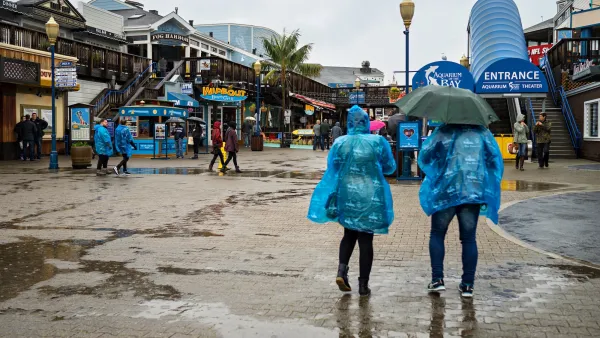
Rain gardens keep up to 99% of pollutants out of San Francisco Bay
The city's roadside rain gardens soak up stormwater and filter out dozens of harmful micropollutants.

L.A. Transit Surpasses 1M Weekday Riders for First Time Since Pandemic
Rail and bus ridership in the Los Angeles metropolitan area is recovering at a faster rate than the national average.

Planetizen Federal Action Tracker
A weekly monitor of how Trump’s orders and actions are impacting planners and planning in America.

Data reveals that NYC’s bet on congestion pricing has paid off
After almost two years of the program, reports show positive impacts on traffic and air quality and no disruptions to parking.

HUD modernizes 50-year-old manufactured housing framework
The Next Generation Manufactured Housing Action Plan establishes new energy-efficiency standards for manufactured homes, and new guidelines for anchoring them.

California voters weigh $11.25 billion housing bond
Prop. 1, combined with other funding, would support over 40,000 new rental units in California.

Connecticut is turning landfills into green infrastructure
Twenty-nine solar arrays have been built, or approved to be built, on top of Connecticut landfills.

Trump guts ‘win-win’ solar energy program for rural farmers
The U.S. Department of Agriculture’s changes have made virtually all solar power ineligible for funding through the Rural Energy for America Program.

FREE Course: Walkable City 1: Why Walkability?
After describing his path towards focusing on walkability as the essence of good planning, Jeff Speck marches through his five principal reasons for making more walkable places.
Reinventing Malls: Planning Alchemy—Turning Gray Fields Into Gold
The course focuses on the opportunities and imperatives that shape reinvention of mall sites.

One Hundred Miles
County of Mendocino
planning NEXT
The Architects Foundation
University of Cincinnati Online
Montrose County
Northern Illinois Transit Authority (NITA)
The Pocatello Development Authority