Prop. 1, combined with other funding, would support over 40,000 new rental units in California.


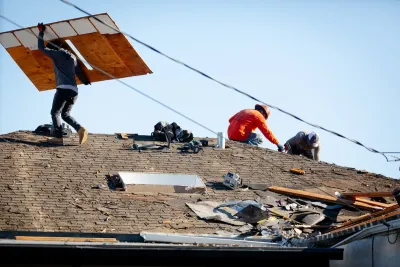
Not only does California not have enough affordable housing, but affordable housing developers are struggling to build new units: a recent report states that almost 40,000 affordable units are stalled because developers can’t get enough funding to finish the projects. Prop. 1, which California residents will vote on in November, would allow California to sell $11.25 billion in general obligation bonds to fund housing, including housing designated for veterans, renters and students.
“It would cost the state between $500 million and $600 million each year for about 25 years to repay the cost of the general housing bond, according to the legislative analyst. That money would come from the state’s general fund, and factors in interest,” Marisa Kendall writes for Cal Matters.
The legislation, combined with other funding, would support over 40,000 new rental units. Vivian Wan, chief executive of affordable housing provider Abode, said passing Prop. 1 would be “huge,” but that California needs a permanent source of funding for new housing.
Read the full story: There’s a $11.25 billion housing bond on the ballot this November. Here’s what you should know


Small single-family homes are illegal in most of MA. Voters can change that
Most land zoned for single-family housing in Massachusetts requires at least 40,000 square feet of land per house.

See the 12 communities on New York City’s affordable housing naughty list
The Upper East and West Sides, Elmhurst, and Bayside are among the communities that have built little affordable housing over the past five years, and now will see certain projects fast-tracked under new city rules.
Maryland local governments examine if they should have more power to raise property taxes
Maryland’s housing market is out of reach for the majority of moderate-income residents.

Planetizen Federal Action Tracker
A weekly monitor of how Trump’s orders and actions are impacting planners and planning in America.

Data reveals that NYC’s bet on congestion pricing has paid off
After almost two years of the program, reports show positive impacts on traffic and air quality and no disruptions to parking.

HUD modernizes 50-year-old manufactured housing framework
The Next Generation Manufactured Housing Action Plan establishes new energy-efficiency standards for manufactured homes, and new guidelines for anchoring them.

California voters weigh $11.25 billion housing bond
Prop. 1, combined with other funding, would support over 40,000 new rental units in California.

Connecticut is turning landfills into green infrastructure
Twenty-nine solar arrays have been built, or approved to be built, on top of Connecticut landfills.

Trump guts ‘win-win’ solar energy program for rural farmers
The U.S. Department of Agriculture’s changes have made virtually all solar power ineligible for funding through the Rural Energy for America Program.

FREE Course: Walkable City 1: Why Walkability?
After describing his path towards focusing on walkability as the essence of good planning, Jeff Speck marches through his five principal reasons for making more walkable places.
Reinventing Malls: Planning Alchemy—Turning Gray Fields Into Gold
The course focuses on the opportunities and imperatives that shape reinvention of mall sites.

One Hundred Miles
County of Mendocino
planning NEXT
The Architects Foundation
University of Cincinnati Online
Montrose County
Northern Illinois Transit Authority (NITA)
The Pocatello Development Authority