Speaking at an event this week, Detroit's economic development czar was unabashed in his support of gentrification for the troubled city. The subject is a sore one for a city that still recalls the rampant black displacement of the 1940s and ’50s.


"George Jackson Jr., the influential leader of economic development in Detroit, told an audience in Grosse Pointe Farms that he’s a staunch supporter of gentrification because the city needs a larger tax base to emerge from a decades-long funk," reports Steve Neavling. "Speaking at a forum about Detroit’s future Tuesday evening, the president and CEO of the Detroit Economic Growth Corporation said gentrification is 'one of the costs of progress.'”
“When I look at this city’s tax base, I say bring on more gentrification,” Jackson told the audience. “I’m sorry, but, I mean, bring it on. We can’t just be a poor city and prosper.”
"But the comments couldn’t be timelier," adds Neavling. "In the past few weeks, hundreds of low-income residents and seniors have been told they are being evicted from at least four large apartment buildings."
Read the full story: ‘Bring on more gentrification,’ declares Detroit’s economic development czar, George Jackson
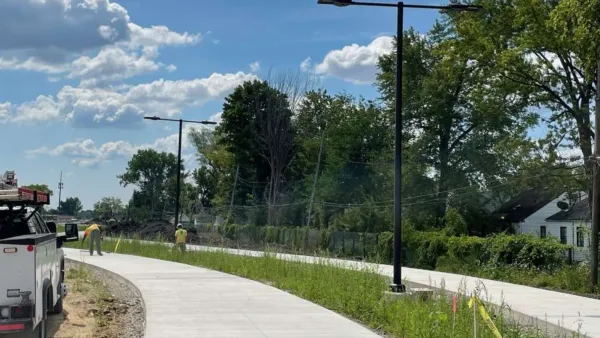
Detroit greenway brings revival — and fears of displacement
The planned Joe Louis Greenway is already bringing change to the neighborhoods near it.
Detroit Tax Abatement Will Keep Senior Renters in Upscale Building
The city worked with the owners of an apartment building to maintain lower rents so longtime residents would not be displaced after renovations.
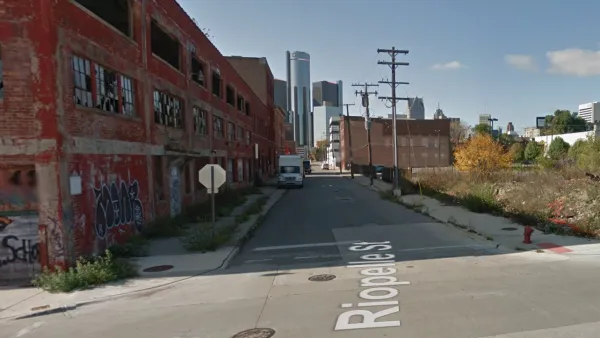
Anticipating Gentrification in Detroit
Where is gentrification most likely to occur in cities like Detroit? And how can that data guide policy? A new report provides some insight.

Planetizen Federal Action Tracker
A weekly monitor of how Trump’s orders and actions are impacting planners and planning in America.

Washington state to charge fee to drivers with fuel-efficient cars
Revenue from the fee will go towards supporting the state’s highways.

Trump to blast ‘hydrocarbon highway’ through ‘world’s longest art gallery’
Environmental and historic preservation groups are suing to stop the project.

Data centers need power – lower income, rural residents pay the price
In 2025, data centers paid only 38% of the energy infrastructure costs linked to their growth, with households, especially rural and low-income residents, bearing the remaining burden.

MBTA Green Line project moved to next phrase of CIG program
The modernization effort will cost $4.08 billion.

22-mile pedestrian and bike path to encircle Atlanta by 2030
The project will also support affordable housing.

FREE Course: Walkable City 1: Why Walkability?
After describing his path towards focusing on walkability as the essence of good planning, Jeff Speck marches through his five principal reasons for making more walkable places.
Reinventing Malls: Planning Alchemy—Turning Gray Fields Into Gold
The course focuses on the opportunities and imperatives that shape reinvention of mall sites.

City of Charlotte
City of Rosemead
Rutgers University, Edward J. Bloustein School of Planning and Public Policy
University of Michigan School for Environment and Sustainability (SEAS)
Hunter College, City University of New York (CUNY)
The Architects Foundation
University District Partnership