A new report has sought to quantify the annual costs of America's assorted environmental protection efforts for the first time.


"The public and private tab for conserving the nation’s fish, wildlife and natural resources is close to $40 billion a year, according to a study released this week," reports Julie Cart. "The analysis, commissioned by the National Fish and Wildlife Foundation, considered the jobs, tax revenue and other economic effects from federal state and private investment in conservation."
According to the study, "The Conservation Economy in America: Direct investments and economic contributions" [PDF], "[t]he federal government is the leading source of conservation investments, accounting for approximately 60 percent of all spending. State and local governments accounted for 29 percent of spending and the private sector provided eleven percent."
As the study indicates, although the costs are significant, so are the benfits. "The total -- $38.8 billion — stimulates as much as $93.2 billion in economic activity, the study found."
Read the full story: What do we spend to preserve nature? $40 billion
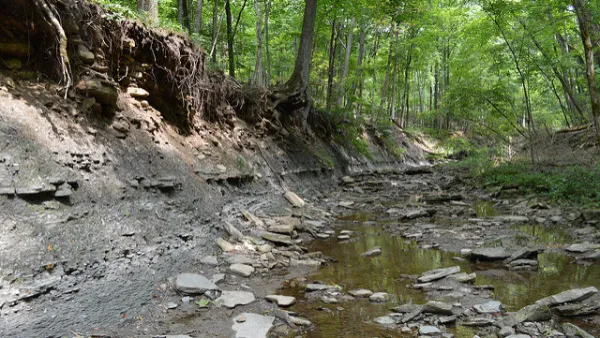
Celebrating the 'Greenspace Gems' in the Cincinnati Region
An advocacy organization in the Tri-State area (Ohio, Kentucky, Indiana) is raising awareness about the region's 116,000 acres of preserved greenspace.
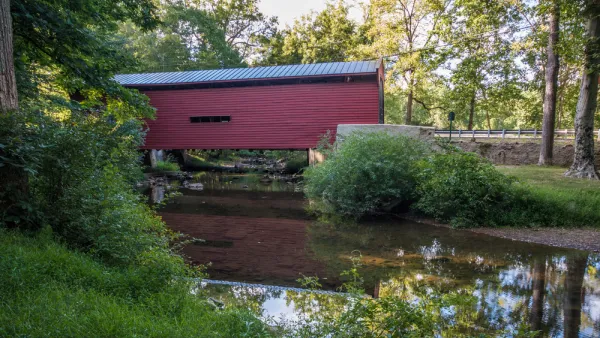
Huge Swath of Land Preserved in Pennsylvania's Fastest Growing County
Preservationists have bought one reprieve from the ongoing expansion of developed land in Chester County, Pennsylvania.
Sydney's Most Valuable Site Set for Preservation Battle
With an election looming, the fate of one of Sydney's landmarks rests with voters as current Prime MInister Kevin Rudd suggests selling Garden Island should he be re-elected. Stephen Nicholls and Antony Lawes consider the site's future.

Planetizen Federal Action Tracker
A weekly monitor of how Trump’s orders and actions are impacting planners and planning in America.

Eastern Nebraska is running out of electricity
Data centers and electrification are straining eastern Nebraska’s grid, throttling economic development.

Move over, LA: St. Louis gears up for Olympics, invests millions in downtown redevelopment
The Missouri city will host the 2028 Olympic soccer group stage and knockout matches.

Dallas releases zoning code overhaul to officials
The drafted overhaul is over 400 pages long.

NYC renovations for dangerous, ‘mercilessly crammed’ street delayed until 2027
Construction was supposed to begin this fall.

San Diego’s Midway Rising project gets greenlight from city council
The project looks to become the largest affordable housing development in California's history.

FREE Course: Walkable City 1: Why Walkability?
After describing his path towards focusing on walkability as the essence of good planning, Jeff Speck marches through his five principal reasons for making more walkable places.
Reinventing Malls: Planning Alchemy—Turning Gray Fields Into Gold
The course focuses on the opportunities and imperatives that shape reinvention of mall sites.

City of Rosemead
Rutgers University, Edward J. Bloustein School of Planning and Public Policy
One Hundred Miles
University of Michigan School for Environment and Sustainability (SEAS)
Hunter College, City University of New York (CUNY)
The Architects Foundation
City of Cambridge
The Pocatello Development Authority
The Urban Renewal Agency of the City of Pocatello