Jared Green looks at some of the innovative projects recognized by Chicago's Metropolitan Planning Council (MPC) for their ability to creatively transform blighted lots into community assets.


"Marisa Novara, Metropolitan Planning Council (MPC), brought out a set of fascinating temporary projects that show how to make vibrant, valuable places in the left-over spaces in between buildings, in all those vacant, abandoned lots that dot cities. At the American Planning Association (APA) conference in Chicago, winners of MPC’s “Placemaking Chicago” contest explained their approaches to DIY urbanism."
"To find out how communities in the broader Chicagoland are using spaces in a temporary fashion, her group launched a contest. Submissions could be projects that just popped-up over a weekend, or could be semi-permanent. Some 46 entries were received, with the majority from Chicago. Navaro said the broad categories of projects sent in were vacant building transformations, 'vacant concrete transformations,' programming, and community gardens / farms. A jury picked winning projects, while more than 11,000 public voters picked the people’s choice award."
Green examines three of the projects that were recognized by the competition.
Read the full story: Temporary Can Still Be Valuable
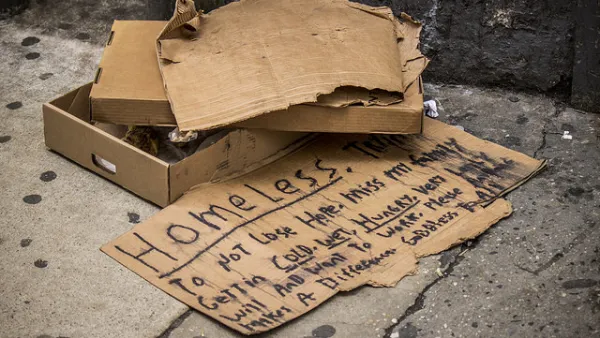
An Argument for a Graduated Real Estate Transfer Tax in Chicago
As it exists today, Chicago's real estate transfer tax is a flat tax that charges the same percentage for modest homes and mansions.
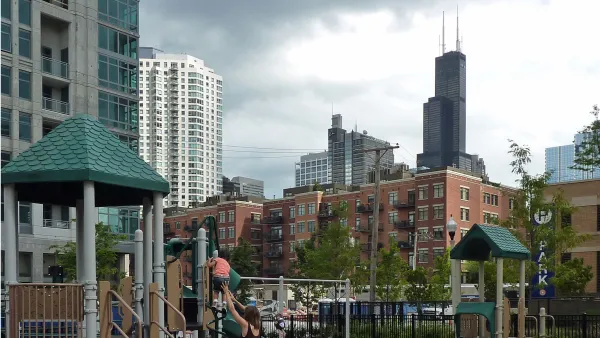
Addressing 'Reverse White Flight' in Chicago
A new report from the Urban Institute and the Metropolitan Planning Council looks at ways to fight perpetual segregation as Chicago's affluent white population booms.
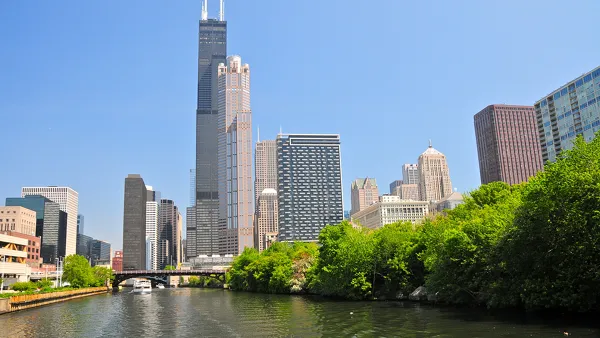
A Bold Plan to Swim in Chicago's Rivers by 2030
Chicago Mayor Rah Emanuel and the Metropolitan Planning Council announced the "Our Great Rivers" plan this week.

Desperate measures: Advocates weigh draining Lake Powell to fill Colorado River
Draining the reservoir could reduce evaporation losses by a couple hundred thousand acre-feet.

Eastern Nebraska is running out of electricity
Data centers and electrification are straining eastern Nebraska’s grid, throttling economic development.

Malls are becoming the midtowns of the future
Mall and office park redevelopments are a generational opportunity to create new nodes of urbanity.

NYC breaks ground on anti-flooding infrastructure project
New York City's new system will reduce stormwater flows to local sewers by 90%.

One Kentucky town’s secret to affordable housing
The Smoketown Community Land Trust has already built seven affordable homes for community members.

Houston gains petal-shaped cooling infrastructure to make streets more ‘delightful’
The city has installed the pavilions along 15 blocks in Houston.

FREE Course: Walkable City 1: Why Walkability?
After describing his path towards focusing on walkability as the essence of good planning, Jeff Speck marches through his five principal reasons for making more walkable places.
Reinventing Malls: Planning Alchemy—Turning Gray Fields Into Gold
The course focuses on the opportunities and imperatives that shape reinvention of mall sites.

City of Rosemead
Rutgers University, Edward J. Bloustein School of Planning and Public Policy
One Hundred Miles
University of Michigan School for Environment and Sustainability (SEAS)
Hunter College, City University of New York (CUNY)
The Architects Foundation
City of Cambridge
Montrose County
The Pocatello Development Authority