The retirement of Buenos Aires's beloved wooden train cars are emblematic of the city's struggle to preserve its physical heritage amid underinvestment, widespread demolition, and uninspired redevelopment, reports Emily Schmall.


According to Schmall, in Buenos Aires, "a local reaction against the retirement of the La Brugeoise trains, known here affectionately as Las Brujas, or the witches, has fueled a debate over which elements of Argentina’s rich cultural heritage are worth saving."
"Preservationists say illegal demolitions, chronic underinvestment and unimaginative architecture that is replacing the historic buildings threaten to erase the city’s heritage as a mecca for European immigrants, who arrived in boatloads to what was, at the beginning of the last century, one of the richest countries in the world."
“'Argentina promised to be a very, very important country,' said Teresa Anchorena, an artist and member of the National Commission of Museums, Monuments and Historic Places, which lobbies for the protection of hundreds of sites throughout the country. 'Argentina’s broken promise is reflected in its buildings.'”
Read the full story: An Argentine Tradition Threatens to Crumble With City Architecture

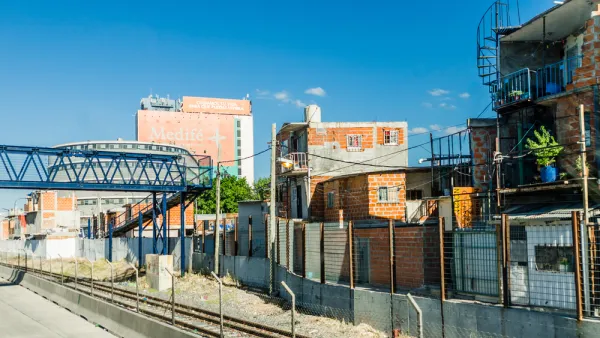
Barrio 31 in Buenos Aires Holds Universal Truths About Informal Urban Places
A study of a poorer neighborhood in Buenos Aires reveals that a delicate balance of design, public space, planning, and access are keys to success.
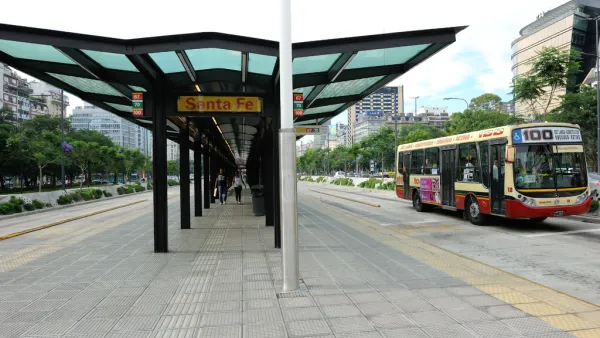
North America Needs a New Model for Pedestrian-Friendly Planning
Where pedestrian-only streets have failed to draw business, the problem may be a failure to think big enough.

New App Plots the Most Beautiful, Walkable Route
Interested in finding the road less traveled by? Walkonomics has launched in seven cities around the globe.

Planetizen Federal Action Tracker
A weekly monitor of how Trump’s orders and actions are impacting planners and planning in America.

The state-sanctioned urbicide of Austin
People don’t kill cities. Freeways do.

Colorado’s Largest Data Center Could Rise Next to Homes — Without a Public Hearing
The proposed campus would consume 11 times the power of Denver International Airport; as it has across the country, opposition mounts.

Judges permit Denver to divert 77,000 acre feet from the Colorado River for reservoir expansion
Overuse and climate change have caused the Colorado River’s water levels to plummet.

Amtrak, CN end decades-long dispute with eight-year agreement
The new operating agreement establishes an updated framework for the companies to work together, including processes to resolve disputes.

Raised interest rates may kill financially vulnerable construction projects
The chief economist at ConstructConnect warns that if construction project owners are negatively impacted by the raised rates, it could result in delayed payments to contractors.

FREE Course: Walkable City 1: Why Walkability?
After describing his path towards focusing on walkability as the essence of good planning, Jeff Speck marches through his five principal reasons for making more walkable places.
Reinventing Malls: Planning Alchemy—Turning Gray Fields Into Gold
The course focuses on the opportunities and imperatives that shape reinvention of mall sites.

Greater Baltimore Committee
Eagle County Government
Harvard University Graduate School of Design
The Architects Foundation
University of Cincinnati Online
The Pocatello Development Authority
The Urban Renewal Agency of the City of Pocatello
Journal of the American Planning Association