How much of a role does your city play in controlling its digital representation? Colin Wood examines the efforts of Louisville's director of innovation to link the city's assets digitally and integrate them with the prevailing platforms.


"In Louisville, Ky., Ted Smith, chief of economic growth and innovation, is working to help his fellow government agencies meet their goals by harnessing new approaches to open data in what he calls 'digital urban planning,'" reports Wood.
"Traditional city planning is just about the built environment -- things that are made of atoms and molecules," [Smith] said. "Digital urban planning is looking at your same city, but strictly in its digital representation and planning for its digital future.”
“What we don’t have right now is a formal discipline in government that says, ‘We have everything accurately portrayed in our built environment, in common digital tools,' Smith said, referencing such search tools as Google Maps, Apple Maps and MapQuest. Digital urban planning will begin with ensuring that government’s local assets – buildings, tourist attractions, public art, private businesses – appear in the tools most commonly used by the public. So if people are using Google Maps and Apple Maps, Smith said, then government should learn to use those tools too."
"Smith’s vision of digital urban planning in Louisville goes beyond maps -- eventually it could include every aspect of local life, connected online and linked to the real world," explains Wood. One example of what Smith has in mind is making data owned by the Kentucky Historical Society available to anyone at anytime by connecting it digitally to relevant places.
Read the full story: Digital Urban Planning Starts with Common Tools


Learning loss and urban schools, part 2
Did test scores in progressive cities drop more post-COVID than test scores in moderate ones?
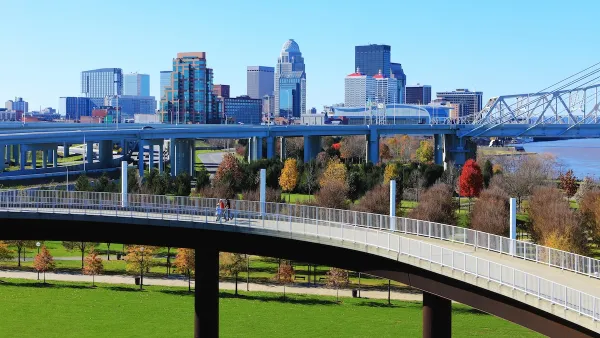
Louisville Creates its First Municipal DOT
The new department will be tasked with speeding up transportation and infrastructure projects.
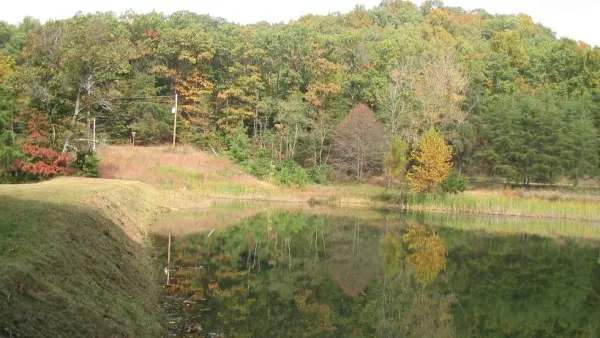
Louisville Begins Process to Clean Superfund Site
A public forest is home to dozens of barrels that have been leaking toxic materials for decades.

Planetizen Federal Action Tracker
A weekly monitor of how Trump’s orders and actions are impacting planners and planning in America.

Chicago breaks ground on $3 billion megadevelopment
The new neighborhood, titled Foundry Park, will one day host 3,700 residences.
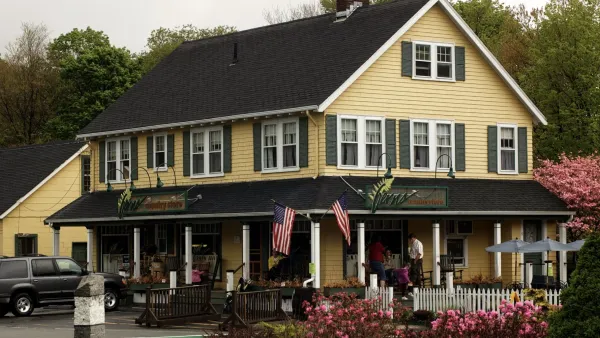
This MA town is drowning in its own sewage — and residents like it that way
Susan Murcott, a waste water expert, said if Carlisle didn't address their leaking sewage, the problem could turn “deadly.”

Iowa taxpayers are paying thousands to clean manure out of their water
While the Clean Water Act makes states responsible for regulating factory farms that discharge pollutants, Iowa has turned a blind eye to the polluting farms.

Amtrak cuts ribbon on Seattle Airo maintenance facility
The $250 million, nearly 100,000-square-foot building can house an entire Cascades Airo trainset.

To power data centers, Google seeks autonomous control of thousands of homes’ electricity
The tech company has signed a deal to indirectly pay Mid-Atlantic residents to reduce their power demand when the grid is strained.

FREE Course: Walkable City 1: Why Walkability?
After describing his path towards focusing on walkability as the essence of good planning, Jeff Speck marches through his five principal reasons for making more walkable places.
Reinventing Malls: Planning Alchemy—Turning Gray Fields Into Gold
The course focuses on the opportunities and imperatives that shape reinvention of mall sites.

City of Rosemead
Rutgers University, Edward J. Bloustein School of Planning and Public Policy
One Hundred Miles
The Architects Foundation
University of Cincinnati Online
Montrose County
The Pocatello Development Authority
The Urban Renewal Agency of the City of Pocatello