D.C.'s decade of prosperity and growth has been accompanied by a wave of development and displacement that is now threatening to submerge its inner-ring suburbs. Robert McCartney examines the consequences.


"Everybody knows gentrification threatens to displace poor and working-class families in the District," says McCartney. "Less publicized, but equally severe, is the same danger in parts of the suburbs, especially in older neighborhoods inside the Beltway."
"Unless our region finds ways to preserve low- and moderate-cost housing in its center, we’re going to see an accelerating exodus of lower- and middle-class people to the outer suburbs," he explains. "That risks damaging our economy, by making it harder to fill service jobs, and worsening traffic."
In response to the growing crisis, 150 area nonprofit, private and faith-based organizations are joining together to help raise awareness of the importance of preserving low- and moderate-priced housing.
Read the full story: Gentrification threatens to displace residents in the inner suburbs as well as in the District
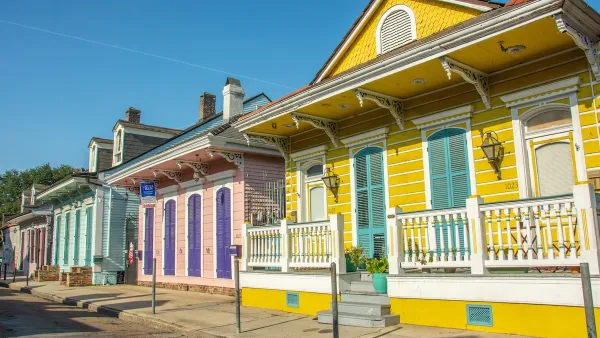
20 Years After Katrina, New Orleans is More Unaffordable Than Ever
The city’s post-hurricane redevelopment has failed to include its most vulnerable residents.

High Housing Costs Driving Down Transit Ridership in LA
When neighborhoods gentrify and displace lower-income residents, transit ridership suffers, new research shows.
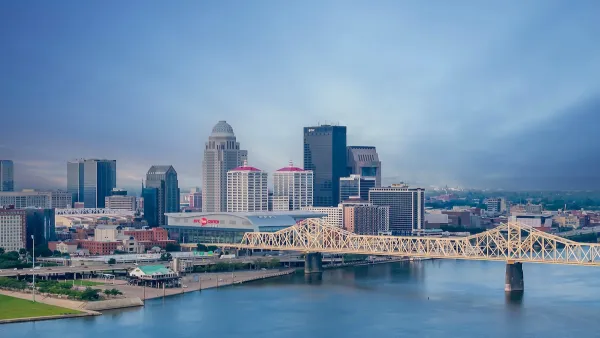
Louisville Launches ‘Anti-Displacement Tool’
After a years-long, tenant-led effort, Louisville will use a new tool to analyze whether a proposed housing development can meet a neighborhood’s housing needs and income levels. If it doesn’t, the city won’t subsidize it.

Planetizen Federal Action Tracker
A weekly monitor of how Trump’s orders and actions are impacting planners and planning in America.

Washington state to charge fee to drivers with fuel-efficient cars
Revenue from the fee will go towards supporting the state’s highways.

Trump to blast ‘hydrocarbon highway’ through ‘world’s longest art gallery’
Environmental and historic preservation groups are suing to stop the project.

Data centers need power – lower income, rural residents pay the price
In 2025, data centers paid only 38% of the energy infrastructure costs linked to their growth, with households, especially rural and low-income residents, bearing the remaining burden.

MBTA Green Line project moved to next phrase of CIG program
The modernization effort will cost $4.08 billion.

22-mile pedestrian and bike path to encircle Atlanta by 2030
The project will also support affordable housing.

FREE Course: Walkable City 1: Why Walkability?
After describing his path towards focusing on walkability as the essence of good planning, Jeff Speck marches through his five principal reasons for making more walkable places.
Reinventing Malls: Planning Alchemy—Turning Gray Fields Into Gold
The course focuses on the opportunities and imperatives that shape reinvention of mall sites.

City of Charlotte
City of Rosemead
Rutgers University, Edward J. Bloustein School of Planning and Public Policy
University of Michigan School for Environment and Sustainability (SEAS)
Hunter College, City University of New York (CUNY)
The Architects Foundation
University District Partnership