In the face of countless scientific studies showing that areas with large amounts of car congestion can lead to higher rates of asthma in children, a new study finds the correlation to be flipped: asthmatic kids are creating congestion in cities.


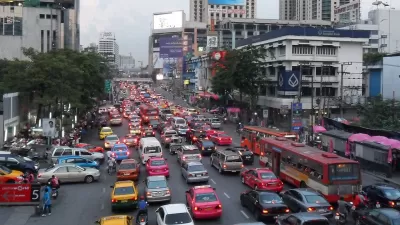
"We've been looking at this all wrong," says Dr. Karl Rapp who conducted the study on congestion and asthmatic children. "For reasons that are still unclear, it's the asthmatic children who are creating these traffic headaches for cities, not the other way around."
By comparing rates of chronic asthma in children in Los Angeles, Philadelphia and New Orleans, Dr. Rapp found that areas with the highest concentrations of asthmatic children aligned almost exactly with the most congested and traveled streets and highways in those cities. More research will be needed to understand the phenomenon, but Dr. Rapp suspects the connection may have something to do with increased emergency response vehicles and medicine deliveries to the asthmatics.
"It's an environmental justice issue. These sick children are slowing down traffic in cities across the country. Something must be done," Dr. Rapp says. "If your children have asthma, please keep them away from our roads."
Read the full story: New Study Finds Asthmatic Children Cause Inner City Traffic Congestion

Self-Driving Cars Still Can't Recognize the Difference Between a Wedding Planner and an Urban Planner
Pundits agree that planners need to prepare for self-driving cars. Self-driving cars still need to prepare for planners.

Florida Man Thought the New Comp Plan Included Zoning Changes
A Florida man is accused of not realizing an entirely separate process would be required to implement the zoning changes recommended in a recently approved comprehensive plan.

April Fool's Headlines That Didn't Make the Cut
"Who's the more foolish, the fool, or the fool who follows him?"

Desperate measures: Advocates weigh draining Lake Powell to fill Colorado River
Draining the reservoir could reduce evaporation losses by a couple hundred thousand acre-feet.

Eastern Nebraska is running out of electricity
Data centers and electrification are straining eastern Nebraska’s grid, throttling economic development.

Malls are becoming the midtowns of the future
Mall and office park redevelopments are a generational opportunity to create new nodes of urbanity.

NYC breaks ground on anti-flooding infrastructure project
New York City's new system will reduce stormwater flows to local sewers by 90%.

One Kentucky town’s secret to affordable housing
The Smoketown Community Land Trust has already built seven affordable homes for community members.

Houston gains petal-shaped cooling infrastructure to make streets more ‘delightful’
The city has installed the pavilions along 15 blocks in Houston.

FREE Course: Walkable City 1: Why Walkability?
After describing his path towards focusing on walkability as the essence of good planning, Jeff Speck marches through his five principal reasons for making more walkable places.
Reinventing Malls: Planning Alchemy—Turning Gray Fields Into Gold
The course focuses on the opportunities and imperatives that shape reinvention of mall sites.


City of Rosemead
Rutgers University, Edward J. Bloustein School of Planning and Public Policy
One Hundred Miles
University of Michigan School for Environment and Sustainability (SEAS)
Hunter College, City University of New York (CUNY)
The Architects Foundation
City of Cambridge
Montrose County
The Pocatello Development Authority