Claire Martin examines research conducted by engineering firm Arup and the Clinton Climate Initiative into the actions that cities are taking to reduce their emissions and identifies five cities, including one surprise, that are leading the charge.


Martin reviews the progressive programs and policies that the usual suspects, including London, Copenhagen, New York, and Sao Paulo are doing to curb their energy use and harmful emissions. One surprising city also made her list: Addis Ababa.
"In Ethiopia’s capital, shoddy water pipes are being replaced to help boost the city’s 50 percent leakage rate 'Cities can lose huge amounts of their often energy-intensively produced potable water due to leakage from pipes during distribution,' the C40 study authors wrote. 'Wasting potable water… increases greenhouse gas emissions, and is also a major issue for those cities that are threatened with droughts. The number of drought-threatened cities is rising due to climate change.'”
"That project joins large-scale, low-carbon housing developments that will create new homes for people currently living in Addis Ababa’s shanty towns, the C40 study showed. The city is also planning to convert 40 percent of its land to green space, which serves to absorb CO2 emissions and reduce the urban-heat-island effect. To that end, Addis Ababa’s mayor instituted a plan to plant three million new trees (the most ambitious tree-planting project in the world) and create a giant nature reserve featuring every tree and plant native to Ethiopia."
Read the full story: Which Major Cities Are Leaders in Reducing Greenhouse Gas Emissions?


EPA Guts Emissions Regulations
The agency is eliminating the endangerment finding that underpins the agency’s authority to regulate greenhouse gas emissions.

FTA Kills ‘Social Cost of Carbon’ in Transit Grant Criteria
The Capital Investments Grant program will no longer factor in the future impacts of carbon emissions.
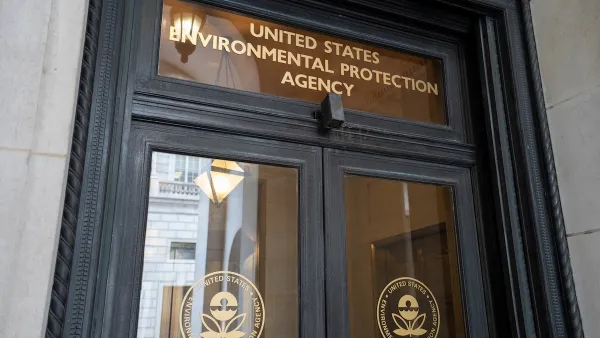
EPA Plans “Largest Deregulatory Action” in History
The agency plans to repeal a key 2009 rule that underpins the government’s authority to regulate greenhouse gas emissions.

Planetizen Federal Action Tracker
A weekly monitor of how Trump’s orders and actions are impacting planners and planning in America.

‘Going backwards:’ Baltimore mayor, students rally against state's transit funding plan
Maryland's proposed six-year plan provides no funding for Baltimore’s BMORE bus program and reduces its road maintenance funding.

Detroit to transform waterfront with $2.2 billion investment
Developers will convert about 18 acres of unused parking lot space into civic spaces.

Data center developers are using lawsuits, cash offers to ‘overwhelm’ rural America
Newsrooms in five states worked together to uncover the tactics big tech developers use to buy land from reluctant communities.

U.S.-Iran war may have ‘devastating’ impact on cost to warm homes
Vermont and Maine residents may see a 76% increase in the cost of warming their homes this winter.

Senate bill would ‘overhaul’ environmental permitting laws
Under the proposed act, government agencies would also not be able to suspend or rescind permits after granting them.

FREE Course: Walkable City 1: Why Walkability?
After describing his path towards focusing on walkability as the essence of good planning, Jeff Speck marches through his five principal reasons for making more walkable places.
Reinventing Malls: Planning Alchemy—Turning Gray Fields Into Gold
The course focuses on the opportunities and imperatives that shape reinvention of mall sites.

One Hundred Miles
County of Mendocino
planning NEXT
The Architects Foundation
University of Cincinnati Online
Montrose County
Northern Illinois Transit Authority (NITA)
The Pocatello Development Authority