Jordan Rane profiles 8 historic towns from across the country that have overcome significant challenges to become desirable destinations once again.


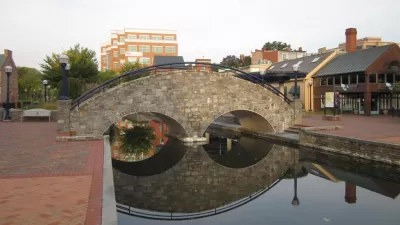
Vacant commercial districts, blighted historic neighborhoods, failed urban renewal projects and natural disasters are among the challenges overcome by the now-thriving towns identified by Rane. The success stories include:
- Frederick, Maryland: After overcoming suburban flight and a massive flood, the town has been revived, "with a nearly chain-proof red brick commercial district lined with indie shops, destination restaurants and weekenders from D.C. and Baltimore (both about an hour away) escaping here instead of the other way around."
- El Dorado, Arkansas: This town faced a steady decline after an oil rush in the 1920s fizzled. "Thanks to one huge civic mobilization, mass restorations, a new $14.4 million conference facility and a roster of annual festivals, El Dorado has recouped its reputation as 'the pride of south Arkansas.'"
- Paducah, Kentucky: As recently as the 1980's, its commercial district was 70 percent vacant. "More than $100 million in investment later, those same blocks are home to a vibrant arts and small business community that's now listed on the National Register of Historic Places. With brick- and tree-lined sidewalks that attract more than $200 million in annual tourist income, the town underwrites an Artist Relocation Program that's drawing resident artists and international visitors, and is considered a national model for utilizing the arts for municipal resurrection."
Read the full story: America's best small town comebacks
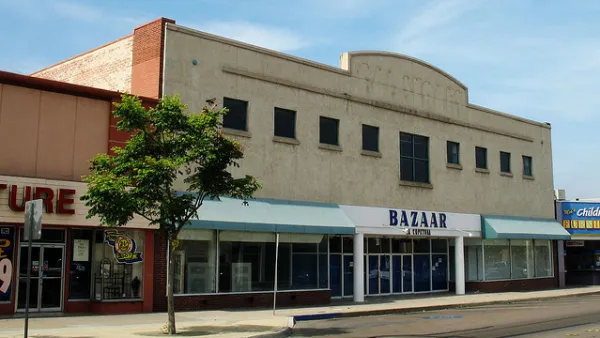
Should We Let Main Streets Disappear?
Kaid Benfield pens a provocative column in which he suggests that the traditional American Main Street is a thing of the past, and may no longer fit our modern retail economy. Are traditional main streets still worth preserving and emulating?
Opportunities in Tornadoes
Parkersburg, IA, reeling from a recent tornado that devastated the town, could look to nearby Charles City for a silver lining.
Pittsburgh downtown tax diversion plan draws criticism for lack of transparency
A proposed new development tax faces opposition from transit advocates.

Planetizen Federal Action Tracker
A weekly monitor of how Trump’s orders and actions are impacting planners and planning in America.

Eastern Nebraska is running out of electricity
Data centers and electrification are straining eastern Nebraska’s grid, throttling economic development.

Study reveals best places in the U.S. for cycling, walking
New research from Streetlight Data examines bicycle and pedestrian miles per capita in the 100 largest U.S. cities by population.

DSA members accuse Mamdani of 'abandoning values' over housing redevelopment
New York City's mayor plans to replace about 2,000 units of public housing with private, mixed-income housing.

All sides of BRT debate unhappy with CDOT’s most recent move
The Colorado Department of Transportation is no longer considering center-running bus lanes for Colorado Boulevard.

Massachusetts bogs generate both power, and cranberries
Putting solar panels above farmland is one way Massachusetts is advancing toward its goal of net-zero carbon emissions by 2050.

FREE Course: Walkable City 1: Why Walkability?
After describing his path towards focusing on walkability as the essence of good planning, Jeff Speck marches through his five principal reasons for making more walkable places.
Reinventing Malls: Planning Alchemy—Turning Gray Fields Into Gold
The course focuses on the opportunities and imperatives that shape reinvention of mall sites.

City of Rosemead
Rutgers University, Edward J. Bloustein School of Planning and Public Policy
One Hundred Miles
University of Michigan School for Environment and Sustainability (SEAS)
Hunter College, City University of New York (CUNY)
The Architects Foundation
City of Cambridge
The Pocatello Development Authority
The Urban Renewal Agency of the City of Pocatello