That wild "mountain-slash-ski-slope-slash-waste-to-energy-power-plant" project proposed by "it" architecture firm BIG that everyone thought was dead has broken ground in Copenhagen, reports Branden Klayko.


"Against all odds, BIG-founder Bjarke Ingels is actually building a mountain-slash-ski-slope-slash-waste-to-energy-power-plant in his hometown of Copenhagen," says Klayko. "Announced in 2011, the project nearly stalled during the approval process, but officials in the Danish capital broke ground on the facility on Monday. Called the Amager Bakke Waste-to-Energy Plant, the structure represents Ingels’ concept of Hedonistic Sustainability, the notion that a sustainable building shouldn’t only be green, but should also be fun."
And it turns out that one of our favorite trifles from the original plan has been retained in the final design. "A slender chimney at the building’s peak, updated from the original design, releases smoke rings periodically, indicating when one ton of CO2 has been released into the atmosphere."
"In 2011, the price of the incinerator was estimated at $645 million."
FULL STORY: Groundbreaking Pushes Bjarke Ingels’ Hedonistic Sustainability Into Spotlight

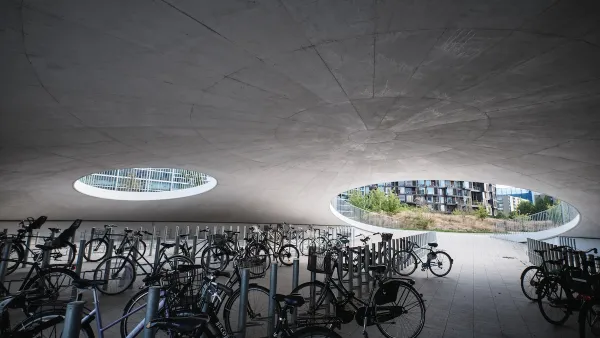
How Copenhagen Became a ‘Sponge City’
The Danish capital is implementing a massive, multi-pronged strategy to build resilience against flooding and shore up water supplies during drought periods.

Envisioning the 'Soft City'
Density and diversity—where boundaries between spaces and uses are lessened—create more vibrant, livable places and more functional cities.
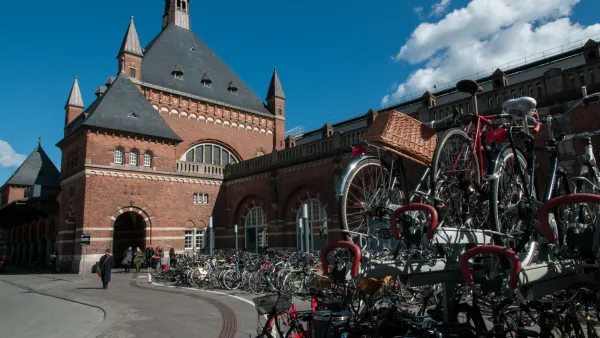
Copenhagen Strives to Be Carbon Neutral by 2025
The Danish capital has an ambitious goal to be the world’s greenest and most bike-friendly city, and it is taking big steps to make that happen soon.

Planetizen Federal Action Tracker
A weekly monitor of how Trump’s orders and actions are impacting planners and planning in America.

The state-sanctioned urbicide of Austin
People don’t kill cities. Freeways do.

US to reduce Colorado River water deliveries to Mexico
A new Colorado Treaty amendment reduces Mexico’s Colorado River water allocation by 250,000 acre feet.

5 New England states march closer to 800 megawatt wind energy project
Securing federal approval for the project may be complicated under the Trump administration, which has historically been hostile towards domestic wind power.

Baltimore to break ground on $50 million Transit Priority Project
The project will bring faster bus trips, safer streets and better bike connections to Baltimore.

Airbnb launches $250 million 'last-dollar financing' housing accelerator, makes first investment in Austin
The company will put $6.4 million towards affordable housing development in Texas’ capital.

FREE Course: Walkable City 1: Why Walkability?
After describing his path towards focusing on walkability as the essence of good planning, Jeff Speck marches through his five principal reasons for making more walkable places.
Reinventing Malls: Planning Alchemy—Turning Gray Fields Into Gold
The course focuses on the opportunities and imperatives that shape reinvention of mall sites.

Eagle County Government
Harvard University Graduate School of Design
Nashville Planning Department
The Architects Foundation
University of Cincinnati Online
The Pocatello Development Authority
The Urban Renewal Agency of the City of Pocatello
Journal of the American Planning Association