Over the next two decades, we’re going to experience the most dramatic changes in American neighborhoods since the post-WWII era. Ben Brown looks at the changes on the horizon for the housing market, and the role planners will play in meeting them.


"If it did nothing else, the last decade should have disciplined some of our enthusiasm for betting the house, literally, on long-term trends deduced from short-term experiences. Remember that little hiccup in the world economy when pretty much everybody bought into assumptions about ever-rising home values?"
"So where do I get off saying this: For the next 15 to 20 years we’re going to experience the most dramatic changes in American neighborhoods since the post-WWII era?"
"It helps that it’s not me making that argument. There’s a growing chorus of analysts smarter and more experienced in the housing economy than I am predicting a seismic shift – and worrying more than a little whether communities can meet the challenges."
Read the full story: New Game, New Rules? Guessing at the future of American housing

Aging in 'Connected' Places
Ben Brown argues that design adaptations intended to accommodate America's swelling senior population by "aging in place" will be unable, on their own, to meet the challenge. He looks at one model of support that goes beyond universal design.
A Better Understanding of Smart Growth Benefits
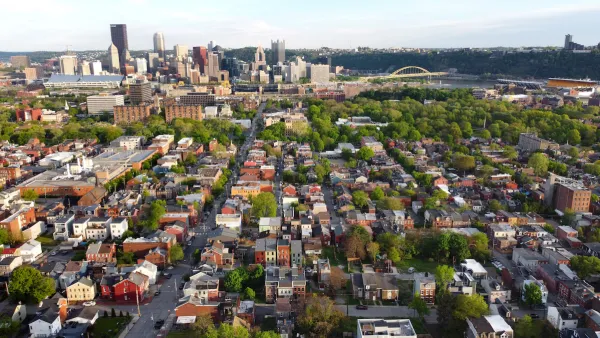
Smart Growth creates compact, multimodal communities where residents consume less land, drive less, and rely more on non-auto modes. Planners have important stories to tell about the benefits of Smart Growth.
Defining the Buzzword: What's a 15-Minute City?
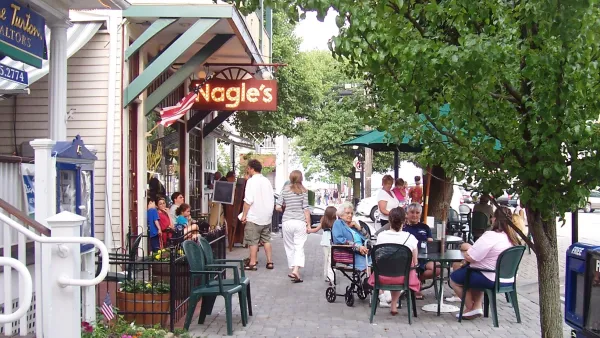
What does it mean to be a 15-minute city?

Planetizen Federal Action Tracker
A weekly monitor of how Trump’s orders and actions are impacting planners and planning in America.

California plans to bury El Niño’s downpour
If the state plays its cards right, it may be able to store a billion acre-feet of El Niño’s water in aquifers.

Chicago breaks ground on $3 billion megadevelopment
The new neighborhood, titled Foundry Park, will one day host 3,700 residences.

Want to study the Missouri River? Soon, you may need unanimous approval from 10 states
Legislation would require 10 governors’ permission to study or build projects moving water outside the basin.

Desperate measures: Advocates weigh draining Lake Powell to fill Colorado River
Draining the reservoir could reduce evaporation losses by a couple hundred thousand acre-feet.

This road in NYC is infamously dangerous — and Mamdani can't fix it
New York City's Ocean Parkway is known for reckless driving, but the power to implement safety measures lies with the state rather than the city.

FREE Course: Walkable City 1: Why Walkability?
After describing his path towards focusing on walkability as the essence of good planning, Jeff Speck marches through his five principal reasons for making more walkable places.
Reinventing Malls: Planning Alchemy—Turning Gray Fields Into Gold
The course focuses on the opportunities and imperatives that shape reinvention of mall sites.

City of Rosemead
Rutgers University, Edward J. Bloustein School of Planning and Public Policy
One Hundred Miles
Hunter College, City University of New York (CUNY)
The Architects Foundation
University of Cincinnati Online
City of Cambridge
Montrose County
The Pocatello Development Authority