Creating a centralized authority for approving infrastructure projects can help the U.S. to meet environmental goals, experts say.


According to the Department of Energy, the US has the potential to generate four times the amount of energy currently generated by power plants through off-shore wind turbines. However, as demonstrated in the 12-year approval process faced by the pioneering Cape Wind proposal for wind turbines on Nantucket Sound, regulatory hurdles and NIMBY grassroots action present a grave challenge to harnessing wind energy, reports Tom Zeller Jr.
While locals opposed the project on aesthetic and environmental grounds, policy experts cite decentralization of permitting authority as a major setback to getting off-shore projects approved.
Projected for completion by 2015, Cape Wind has the potential to meet 3/4 of Cape Cod's energy needs.
As part of its 2010 Smart from the Start initiative to promote renewable energy, the Obama administration has launched seven pilot off-shore projects in the U.S., but experts agree that expediting the permitting process is the only way to get closer to meeting the EPA's guidelines for 80 percent greenhouse emissions reduction by 2050.
Read the full story: Cape Wind: Regulation, Litigation and the Struggle to Develop Off-shore Wind Power in the U.S.

Foundations for First U.S. Offshore Wind Power Towed to Construction Site
Last week the foundations for five wind turbines were towed into place off Block Island, 13 miles east of Rhode Island in the Atlantic Ocean. Scheduled to go online in 2016, they will be the first offshore wind turbines in the United States.
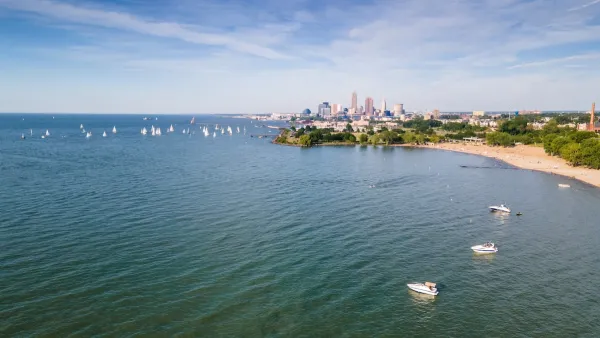
Op-Ed: The Great Lakes Could Be a Key Source of Wind Energy
States, not the federal government, have authority over wind power leases in the Great Lakes.
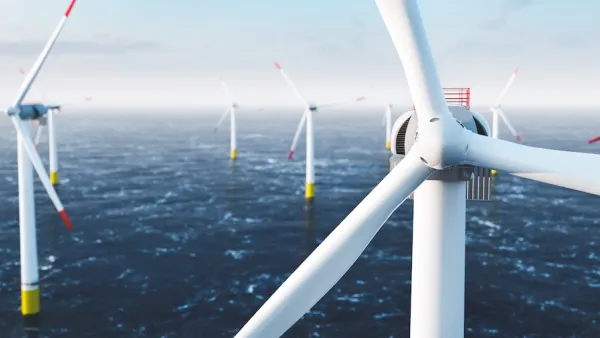
New York Offshore Wind Farm Offers Hope for Nascent Industry
The first commercial-scale offshore wind installation in the United States is powering roughly 70,000 homes in Long Island, New York.

Planetizen Federal Action Tracker
A weekly monitor of how Trump’s orders and actions are impacting planners and planning in America.

Amtrak, CN end decades-long dispute with eight-year agreement
The new operating agreement establishes an updated framework for the companies to work together, including processes to resolve disputes.

Judges permit Denver to divert 77,000 acre feet from the Colorado River for reservoir expansion
Overuse and climate change have caused the Colorado River’s water levels to plummet.

Philadelphia to invest $2 billion into upgrading city airports as PHL places last in customer satisfaction
Modernizations to Philadelphia's airports will include baggage system upgrades and a new automated parking garage guidance system.

The LA housing policies making developers turn away from the city
Despite LA’s housing shortage, developers say the city’s "mansion-tax" and pandemic-era policies make it an unappealing place to build housing.

New density bill would require 7 California cities to establish regional transit hubs
The bill would also require major cities in California to permit high-rise residential buildings.

FREE Course: Walkable City 1: Why Walkability?
After describing his path towards focusing on walkability as the essence of good planning, Jeff Speck marches through his five principal reasons for making more walkable places.
Reinventing Malls: Planning Alchemy—Turning Gray Fields Into Gold
The course focuses on the opportunities and imperatives that shape reinvention of mall sites.

City of Wisconsin Rapids
Harvard University Graduate School of Design
KFH Group Inc.
The Architects Foundation
University of Cincinnati Online
The Pocatello Development Authority
The Urban Renewal Agency of the City of Pocatello