This week, reports Orhan Ayyüce, the Massachusetts Institute of Technology announced the launch of "a major new research center focused on the planning, design, construction and retrofitting of urban environments for the 21st century."


"We have entered into a new era or urban growth whereby the rules have changed and paradigms of urbanism desperately need recalibration to meet today’s global challenges." says the Mission statement of MIT's new Center for Advanced Urbanism (CAU).
Led by Alexander D'Hooghe, Director, and Alan Berger, Director of Research, "The MIT Center for Advanced Urbanism’s objective is to become the world’s pre-eminent cultural center about the design of metropolitan environments, by articulating methods and projects to integrate separate disciplinary agendas in architecture, landscape, ecology, transportation engineering, politics and political philosophy, technology and real estate through a most eloquent design culture on scales ranging from the complex infrastructural intersection, to that of a neighborhood, on to the scale of an entire regional system."
"With its distinguished history in urbanism, reaching all the way back to the work of pioneering urbanist Kevin Lynch, the MIT School of Architecture + Planning is well positioned to lead this effort, drawing faculty from both the department of architecture and of urban studies and planning," adds Ayyüce.
Read the full story: MIT launches new research center on advanced urbanism
Are We Designing the Wrong Solutions to America's Health Problems?
From encouraging physical activity to improving access to healthy food, planners and designers are increasingly tackling America's public health challenges. But what if cars, suburbs, and food deserts aren't to blame for our unhealthy lifestyles?
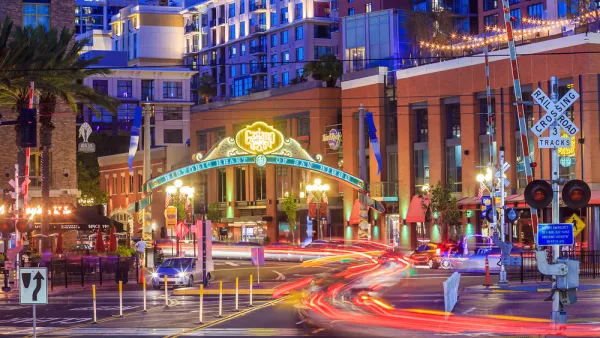
Looking Back to Find the Future of San Diego
An advocacy group is republishing the 1974 regional plan for sustainability, and finding that it's just as relevant now as it was then.
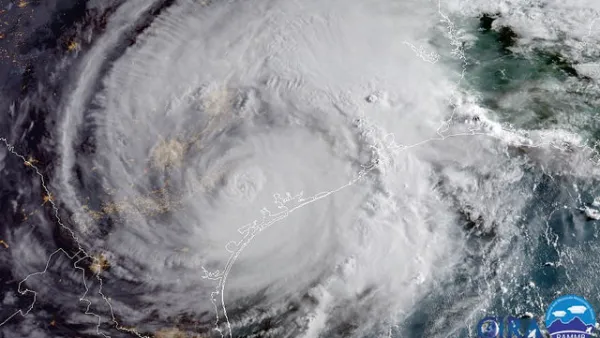
It's Now Safe to Link Hurricane Precipitation and Climate Change
A new study from MIT makes a clear connection between the intensity of rainfall caused by Hurricane Harvey last August in Texas and climate change, concluding that the likelihood of stronger downpours is greatly increasing.

Planetizen Federal Action Tracker
A weekly monitor of how Trump’s orders and actions are impacting planners and planning in America.

California plans to bury El Niño’s downpour
If the state plays its cards right, it may be able to store a billion acre-feet of El Niño’s water in aquifers.

Desperate measures: Advocates weigh draining Lake Powell to fill Colorado River
Draining the reservoir could reduce evaporation losses by a couple hundred thousand acre-feet.

Chicago voters approve permanent festival grounds, penalty for vacant property owners
Currently, major summer and fall festivals take over public parks for weeks at a time, drawing criticism from nearby residents

NYC votes to cut outdoor dining red tape, speed up permitting
New York City also voted to allow the Department of Transportation to begin work on urgent projects before notifying elected officials.

California appears to reject Prop. 45
The proposition would have expanded the projects that qualify for a streamlined environmental review, effectively paring down the California Environmental Quality Act.

FREE Course: Walkable City 1: Why Walkability?
After describing his path towards focusing on walkability as the essence of good planning, Jeff Speck marches through his five principal reasons for making more walkable places.
Reinventing Malls: Planning Alchemy—Turning Gray Fields Into Gold
The course focuses on the opportunities and imperatives that shape reinvention of mall sites.

City of Rosemead
Rutgers University, Edward J. Bloustein School of Planning and Public Policy
One Hundred Miles
Hunter College, City University of New York (CUNY)
The Architects Foundation
University of Cincinnati Online
City of Cambridge
Montrose County
The Pocatello Development Authority