Dollar stores were already a presence in rural communities, but recession has caused dollar chains to ramp up development to keep pace with the public's growing need to stretch their paychecks. Urban communities aren't immune from chain creep either.


Louisa County, VA. planner and Rooflines blogger David Holtzman writes about the ever growing presence of dollar store chains in rural parts of the country in his blog post "Dollar Stores Take Their Place on the Block." While praising the willingness of these chains to open up in places where other larger retailers will not (incomes in rural areas have long lagged those in suburban and urban communities), Holtzman notes that a preponderance of any of these stores in a community could potentially rid it of vibrancy and uniqueness.
Concern with the spread of chain stores is not limited to rural America, however. In a new piece for The Atlantic Cities, Sarah Goodyear looks at the spread of 7-Elevens in New York City, the perceived threat to the neighborhood bodega, and the ensuing backlash. "The rise of 7-Eleven is just one example of the increasing dominance of chain stores in the city at large," observes Goodyear. "[T]here’s no denying that the texture of the city would be flattened if the idiosyncratic bodega became an endangered species. Not so much because of what the stores sell as because of the larger role they play in the community."
Read the full story: The Dollar Stores Take Their Place on the Block
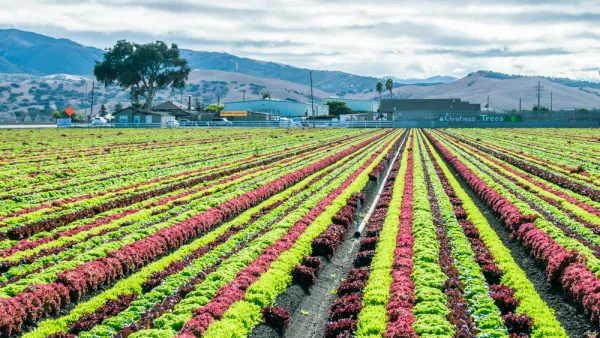
3 Myths About Rural America and How to Debunk Them
The effort to debunk common myths about rural America in academia and the news media continues.
Vermont Towns Battle to Maintain a Sense of Place
Chain store opponents in Vermont battle to preserve the uniqueness of their small towns by pushing against a planned Dollar General Store. While a review board narrowly approved a plan, it also attached a lengthy list of restrictions.
Scandal Threatens Wal-Mart's Urban Push
A bribery scandal recently uncovered by The New York Times is undoing years of hard work the retailer has engaged in to "polish its reputation and give elected officials, community groups and shoppers a reason to say yes to their stores."

Planetizen Federal Action Tracker
A weekly monitor of how Trump’s orders and actions are impacting planners and planning in America.

California plans to bury El Niño’s downpour
If the state plays its cards right, it may be able to store a billion acre-feet of El Niño’s water in aquifers.

Desperate measures: Advocates weigh draining Lake Powell to fill Colorado River
Draining the reservoir could reduce evaporation losses by a couple hundred thousand acre-feet.

Los Angeles just elected an urban planner as its mayor
Transportation analysts are optimistic that Raman will be more aggressive in addressing transit issues than Bass.

Mamdani’s pied-à-terre tax survives legal challenge
A panel of judges found that the plaintiffs failed to demonstrate injury as a result of New York City's implementation of the tax.

Eastern Nebraska is running out of electricity
Data centers and electrification are straining eastern Nebraska’s grid, throttling economic development.

FREE Course: Walkable City 1: Why Walkability?
After describing his path towards focusing on walkability as the essence of good planning, Jeff Speck marches through his five principal reasons for making more walkable places.
Reinventing Malls: Planning Alchemy—Turning Gray Fields Into Gold
The course focuses on the opportunities and imperatives that shape reinvention of mall sites.

City of Rosemead
Rutgers University, Edward J. Bloustein School of Planning and Public Policy
One Hundred Miles
University of Michigan School for Environment and Sustainability (SEAS)
Hunter College, City University of New York (CUNY)
The Architects Foundation
City of Cambridge
Montrose County
The Pocatello Development Authority