In Hong Kong, new government policies to curb real estate speculation in housing markets have led investors to turn elsewhere for quick, lucrative profits - the market for parking spaces.


“The hottest properties in this frenetic city have no walls, windows or even front doors. Forget condos, apartments and homes,” writes David Pierson. “Real estate investors are scrambling for parking spaces.”
Parking space transactions are up five-fold and average parking space prices have risen 20% from the previous year. Recorded sales and offers on highly coveted parking spaces can soar past half a million dollars. "This market has gone crazy," says Jacinto Tong, head of the Gale Well Group real estate investment firm who was offered $640,000 for each of two spots in the Wan Chai commercial district, adding,”These spaces aren't worth that much money.”
While it's unclear whether this is a short- or long-term phenomenon, it can be at least partly attributed to new curbs aimed at reducing housing speculation. "Hong Kong people always have to invest in something," said Shih Wing-ching, chairman of Centaline, one of the largest real estate firms in Hong Kong, and investors who are looking to avoid taxes, for steady rental income, or to flip a quick profit, have turned to parking spaces.
Hat tip to Daniel Lippman.
Read the full story: Hong Kong real estate investors pursue parking spaces
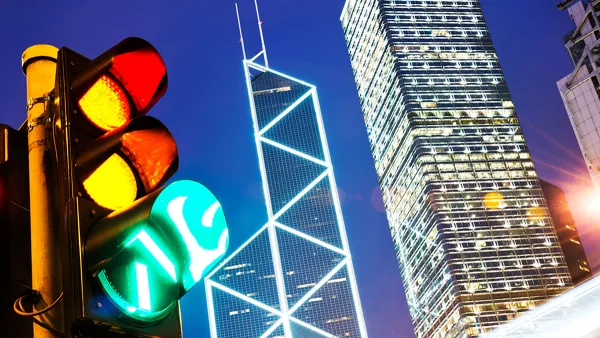
Hong Kong Parking Plan Denounced as 'Wasteful'
Hong Kong's leaders want to build more parking for the growing number of private vehicles, but transportation experts suggest parking management could be a faster and more affordable solution.
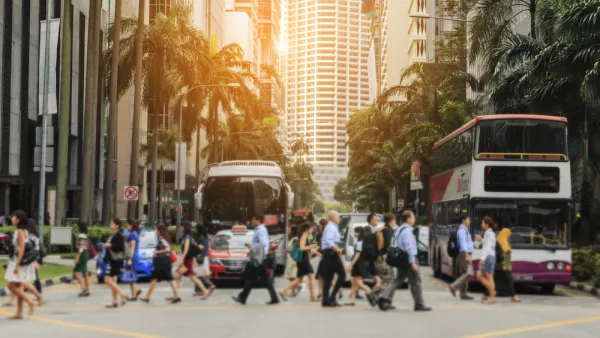
The Singapore Exception
Singapore, Taiwan, and Hong Kong were credited early in the pandemic with having successfully contained the coronavirus without resorting to lockdowns. However, Singapore lost its standing in that elite group. Crowding vs. density may explain why.
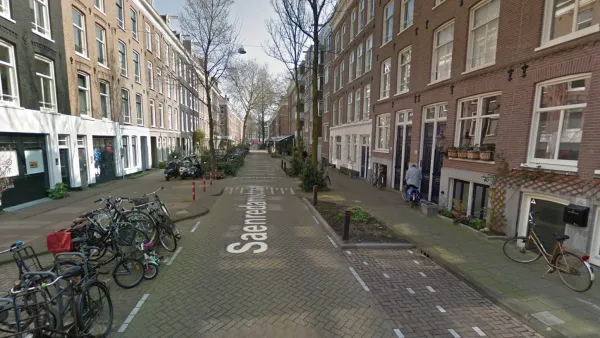
Watch: How to Remove Thousands of Parking Spaces
What the city of Amsterdam will gain by removing cars from on-street parking space.

Planetizen Federal Action Tracker
A weekly monitor of how Trump’s orders and actions are impacting planners and planning in America.

California plans to bury El Niño’s downpour
If the state plays its cards right, it may be able to store a billion acre-feet of El Niño’s water in aquifers.

Desperate measures: Advocates weigh draining Lake Powell to fill Colorado River
Draining the reservoir could reduce evaporation losses by a couple hundred thousand acre-feet.

Mamdani’s pied-à-terre tax survives legal challenge
A panel of judges found that the plaintiffs failed to demonstrate injury as a result of New York City's implementation of the tax.

Eastern Nebraska is running out of electricity
Data centers and electrification are straining eastern Nebraska’s grid, throttling economic development.

Seattle passes record-breaking transit services expansion
Proposition 1 will double the city’s transit tax to add 95,000 more bus trips and preserve 180,000 bus trips annually.

FREE Course: Walkable City 1: Why Walkability?
After describing his path towards focusing on walkability as the essence of good planning, Jeff Speck marches through his five principal reasons for making more walkable places.
Reinventing Malls: Planning Alchemy—Turning Gray Fields Into Gold
The course focuses on the opportunities and imperatives that shape reinvention of mall sites.

City of Rosemead
Rutgers University, Edward J. Bloustein School of Planning and Public Policy
One Hundred Miles
University of Michigan School for Environment and Sustainability (SEAS)
Hunter College, City University of New York (CUNY)
The Architects Foundation
City of Cambridge
Montrose County
The Pocatello Development Authority