Officials in Chicago envision an ambitious plan for a 100-acre urban agriculture district as the foundation for reviving an area of the city now "riddled with vacant lots, poverty, and blight," reports Lori Rotenberk.


Plans for the district, which will take advantage of an estimated 100 acres of city-owned, vacant parcels located across from the three-mile long New ERA (Englewood Re-making America) Trail, are a central element in the Chicago’s Department of Housing and Economic Development’s (DHE) Green Healthy Neighborhoods initiative. The trail, which is envisioned as a linear park with foot and bike trails and farm stands, will form a spine connecting the vacant parcels, which will be "converted into farms and other agricultural projects."
"Not only will the farms bring healthy and affordable food to the community," says Rotenberk, "the hope is that they will also create jobs and attract new housing, industry, and businesses."
“'This is not a pie-in-the-sky plan,' says [Brandon Johnson, a public economist], explaining that Chicago is not just adding a few farms and calling it a district. 'It’s urban planning from the bottom up. It’s a long-range plan to turn a community filled with vacant lots into a community built around agriculture. Think of what Chicago was during the heyday of the (Union) Stockyards when it was the ‘Hog Butcher for the World.’ Only this time it will be built around local produce."
Read the full story: Chicago’s urban farm district could be the biggest in the nation
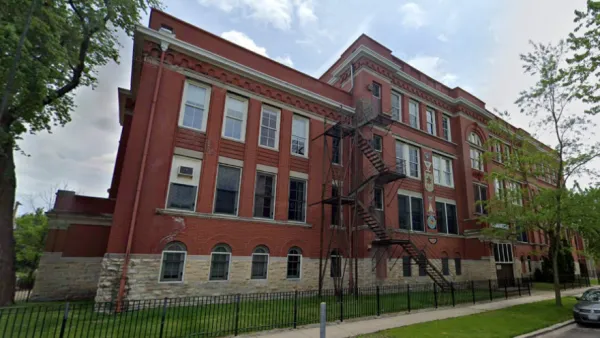
Historic Chicago School Building to Become Affordable Housing
The adaptive reuse project will create 50 income-restricted housing units and community amenities.
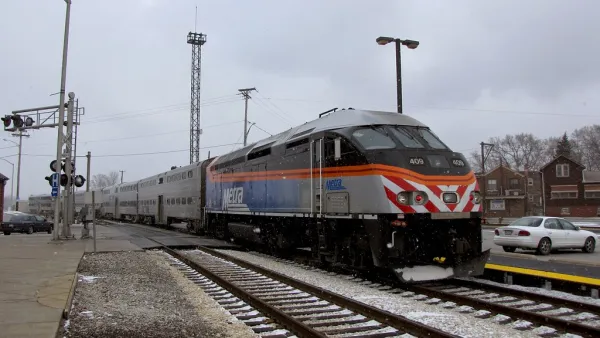
Opinion: Improved Commuter Rail Services Would Better Serve Chicago’s South Side Residents
The city’s South Side residents need more transit options, but an extension of the Chicago Transit Authority’s Red Line would be a costly and less effective alternative.
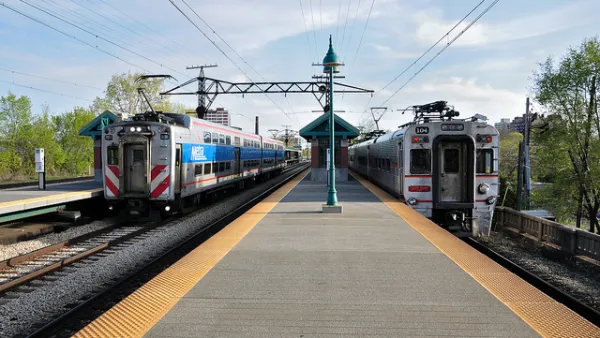
Chicago's Metra Will Build a 95th Street Station
Metra’s Electric line is one of the few places where Chicago’s commuter rail owns the tracks. Transit advocates have lobbied for years for the service to be run more like traditional public transit.

Desperate measures: Advocates weigh draining Lake Powell to fill Colorado River
Draining the reservoir could reduce evaporation losses by a couple hundred thousand acre-feet.

Eastern Nebraska is running out of electricity
Data centers and electrification are straining eastern Nebraska’s grid, throttling economic development.

Move over, LA: St. Louis gears up for Olympics, invests millions in downtown redevelopment
The Missouri city will host the 2028 Olympic soccer group stage and knockout matches.

Mass. votes against statewide minimum lot size for single-family homes
Over 2 million residents voted on Question 7; it was decided by just over 30,000 votes.

Maryland’s $15 billion bridge project gains key approval
The Maryland Transit Authority said the project will create over 60,000 jobs and add $23 billion to the local economy.

‘No clear next steps’ for Chicago's permanent festival grounds
Eleventh Ward Ald. Nicole Lee has suggested Soldier Field as a possible location for the permanent event space.

FREE Course: Walkable City 1: Why Walkability?
After describing his path towards focusing on walkability as the essence of good planning, Jeff Speck marches through his five principal reasons for making more walkable places.
Reinventing Malls: Planning Alchemy—Turning Gray Fields Into Gold
The course focuses on the opportunities and imperatives that shape reinvention of mall sites.

City of Rosemead
Rutgers University, Edward J. Bloustein School of Planning and Public Policy
One Hundred Miles
University of Michigan School for Environment and Sustainability (SEAS)
Hunter College, City University of New York (CUNY)
The Architects Foundation
City of Cambridge
The Pocatello Development Authority
The Urban Renewal Agency of the City of Pocatello