Nathan Norris continues his series on municipal placemaking mistakes. This time: failure to understand the big picture and its order of operations.


"It's not uncommon that communities, or individuals within them, have growth and development ambitions that could be characterized as placemaking. These are a crucial part of municipal stewardship but it's important to realize that placemaking, in and of itself, is not an end goal. It's a contributing factor towards larger ambitions. It's not the big picture. It's a piece of the big picture."
Nathan Norris goes on to explain the importance of planning for outcomes, and not planning as the outcome. To get it right, the order is crucial: vision first, regulations second, and implementation last.
"Before launching efforts to create a better place, understand where such efforts plug in. Identify how placemaking can help you - and city leaders - reach larger municipal goals, then help key decision-makers see what you can see. With their support, you'll be free to embark on a comprehensive and meaningful effort. And proceed in the right order."
Thanks to Hazel Borys
Read the full story: Municipal Placemaking Mistakes 02: Context and Sequencing FAIL

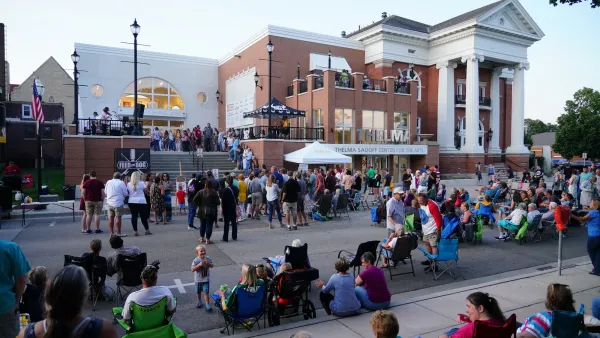
How Placemaking Lost its Way — And How it Can Get Back on Track
The term has often become diluted, getting attached to projects that don’t live up to its lofty aspirations.

String Lights are Secular! The Holiday Case for Year-round Placemaking
The holidays make streets and spaces warm, cozy, and welcoming. Why don’t we do that year round?
“Leveraging Place”: A Toolkit for Staying Loyal to the Places We Shape
Place speaks before we plan. We need to listen.

Planetizen Federal Action Tracker
A weekly monitor of how Trump’s orders and actions are impacting planners and planning in America.

California plans to bury El Niño’s downpour
If the state plays its cards right, it may be able to store a billion acre-feet of El Niño’s water in aquifers.

Desperate measures: Advocates weigh draining Lake Powell to fill Colorado River
Draining the reservoir could reduce evaporation losses by a couple hundred thousand acre-feet.

California city breaks ground on transit connector
The project includes three mobility hubs and a pedestrian bridge.

After public outcry, Massachusetts city releases housing development tracker
Cambridge’s tracker currently shows 250 housing projects in various stages of development.

40 years after approval, Chicago breaks ground on new park
The park honors Jean Baptiste Point du Sable, the city’s first permanent non-native settler.

FREE Course: Walkable City 1: Why Walkability?
After describing his path towards focusing on walkability as the essence of good planning, Jeff Speck marches through his five principal reasons for making more walkable places.
Reinventing Malls: Planning Alchemy—Turning Gray Fields Into Gold
The course focuses on the opportunities and imperatives that shape reinvention of mall sites.

City of Rosemead
Rutgers University, Edward J. Bloustein School of Planning and Public Policy
One Hundred Miles
Hunter College, City University of New York (CUNY)
The Architects Foundation
University of Cincinnati Online
City of Cambridge
Montrose County
The Pocatello Development Authority