Last week, Oxford Properties Group released plans by Foster + Partners for redeveloping Toronto's Convention Centre and the surrounding area. With 7.35 million square feet proposed, the project is one of North America's largest redevelopment efforts.


Featuring four new residential, office, and hotel towers, a revitalized and expanded convention centre, and 5.5-acre park, the centerpiece of the proposed $3 billion "Oxford Place" development is a controversial casino. According to he entire plan is contingent on the approval of a casino in the downtown core."
Writing in the Toronto Star, Christopher Hume is excited by everything about the redevelopment plan - except the casino. "Most casinos in most cities are dreary and depressing places that wear out their appeal in short order," says Hume.
"Oxford may have done the right thing for the wrong reason. It has
identified an opportunity but failed to understand it. The idea that the
casino represents some sort of civic saviour has been debunked many
times. It's not just the moralists who want them kept away; casinos are
equally offensive to the public realm."
"The deep thinkers at Oxford have taken the plan as far as the casino allows them, now it's time to go the rest of the way," he concludes.
Read the full story: Oxford Announces Major Redevelopment of Convention Centre
'Echo Boomers' Transform Toronto
A new report documents the tremendous growth of Toronto's core, as it outpaces the surrounding suburbs. Downtown's growth is welcome news, but it won't come without substantial challenges.
Cuomo's Convention Center Plan Goes Poof
Thomas Kaplan and Danny Hakim report on the collapse of New York Gov. Andrew M. Cuomo's $4 billion plan to create the country’s largest convention center and a casino in Queens.
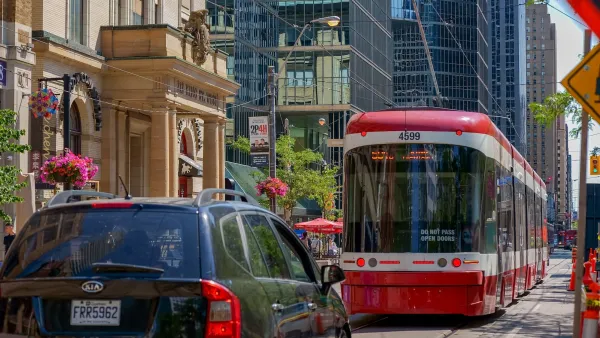
Toronto Man Beats Streetcar on Foot to Highlight Traffic Delays
Runner Mac Bauer says he hopes his project spurs the city to improve transit speed and reliability.

Planetizen Federal Action Tracker
A weekly monitor of how Trump’s orders and actions are impacting planners and planning in America.

California plans to bury El Niño’s downpour
If the state plays its cards right, it may be able to store a billion acre-feet of El Niño’s water in aquifers.

Desperate measures: Advocates weigh draining Lake Powell to fill Colorado River
Draining the reservoir could reduce evaporation losses by a couple hundred thousand acre-feet.

Los Angeles just elected an urban planner as its mayor
Transportation analysts are optimistic that Raman will be more aggressive in addressing transit issues than Bass.

Mamdani’s pied-à-terre tax survives legal challenge
A panel of judges found that the plaintiffs failed to demonstrate injury as a result of New York City's implementation of the tax.

Eastern Nebraska is running out of electricity
Data centers and electrification are straining eastern Nebraska’s grid, throttling economic development.

FREE Course: Walkable City 1: Why Walkability?
After describing his path towards focusing on walkability as the essence of good planning, Jeff Speck marches through his five principal reasons for making more walkable places.
Reinventing Malls: Planning Alchemy—Turning Gray Fields Into Gold
The course focuses on the opportunities and imperatives that shape reinvention of mall sites.

City of Rosemead
Rutgers University, Edward J. Bloustein School of Planning and Public Policy
One Hundred Miles
University of Michigan School for Environment and Sustainability (SEAS)
Hunter College, City University of New York (CUNY)
The Architects Foundation
City of Cambridge
Montrose County
The Pocatello Development Authority