Kelly Smith looks at a host of technologies - from thermoplastics to video sensing systems - that local leaders in Minnesota are hoping can make crosswalks safer for pedestrians amid rising incidences of fatalities.


More bikers and walkers on the streets of Minnesota's cities are conspiring to make 2012 the state's deadliest year for pedestrians in the last five. As a result, cities across the state are experimenting with ways to reduce pedestrian and vehicular accidents at intersections.
"'In the last three to five years, there's been a tremendous amount of
work done on crosswalk safety,' said Wayne Houle, Edina's engineering
director, adding it's spurred by more bikers and walkers using streets. 'It's the trend of people getting out of their cars and walking and
biking ... they're kind of demanding it.'"
Some, however, question if some of the new technologies are truly effective in improving safety. "'Right now, they're new and different and eye-catching,'
said Sue Groth, state traffic engineer [of pavement marking technology]. 'But are the motorists going to
be looking at the pavement markings and not at pedestrians? Are they
more effective is the question that needs to be answered.'"
Read the full story: Minnesota cities upgrade to address crosswalk danger
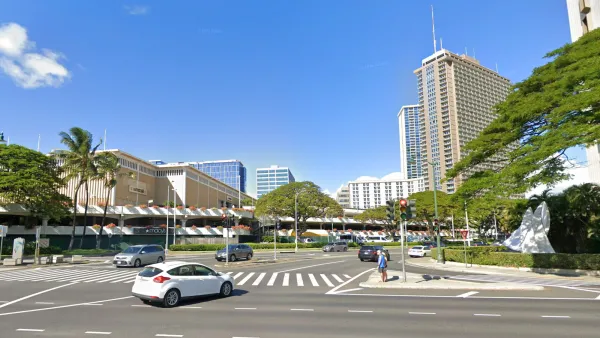
Hawaii DOT takes action after reporters call attention to dangerous crosswalk
The state made changes to a treacherous intersection after reporting revealed that traffic light timing was posting a threat to pedestrians.
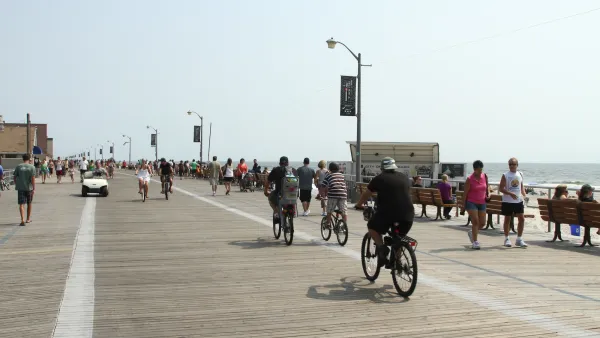
Long Beach, New York pledges $600K for pedestrian safety
The city will use $500,000 in community block development grant funding to improve pedestrian infrastructure.
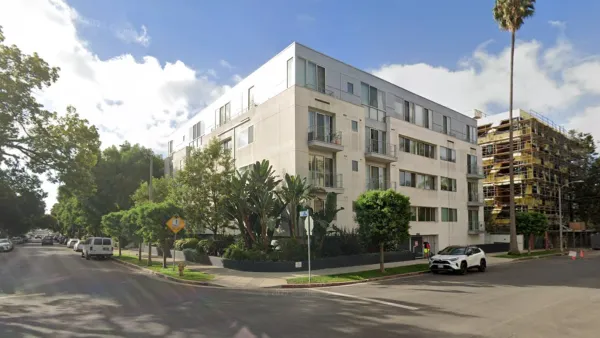
LA Cites Guerilla Crosswalk Painter With Vandalism
The LA Police Department stopped a group of volunteers who was painting missing crosswalks in a Westwood intersection.

Planetizen Federal Action Tracker
A weekly monitor of how Trump’s orders and actions are impacting planners and planning in America.

California plans to bury El Niño’s downpour
If the state plays its cards right, it may be able to store a billion acre-feet of El Niño’s water in aquifers.

Desperate measures: Advocates weigh draining Lake Powell to fill Colorado River
Draining the reservoir could reduce evaporation losses by a couple hundred thousand acre-feet.

Mamdani’s pied-à-terre tax survives legal challenge
A panel of judges found that the plaintiffs failed to demonstrate injury as a result of New York City's implementation of the tax.

Eastern Nebraska is running out of electricity
Data centers and electrification are straining eastern Nebraska’s grid, throttling economic development.

Seattle passes record-breaking transit services expansion
Proposition 1 will double the city’s transit tax to add 95,000 more bus trips and preserve 180,000 bus trips annually.

FREE Course: Walkable City 1: Why Walkability?
After describing his path towards focusing on walkability as the essence of good planning, Jeff Speck marches through his five principal reasons for making more walkable places.
Reinventing Malls: Planning Alchemy—Turning Gray Fields Into Gold
The course focuses on the opportunities and imperatives that shape reinvention of mall sites.

City of Rosemead
Rutgers University, Edward J. Bloustein School of Planning and Public Policy
One Hundred Miles
University of Michigan School for Environment and Sustainability (SEAS)
Hunter College, City University of New York (CUNY)
The Architects Foundation
City of Cambridge
Montrose County
The Pocatello Development Authority