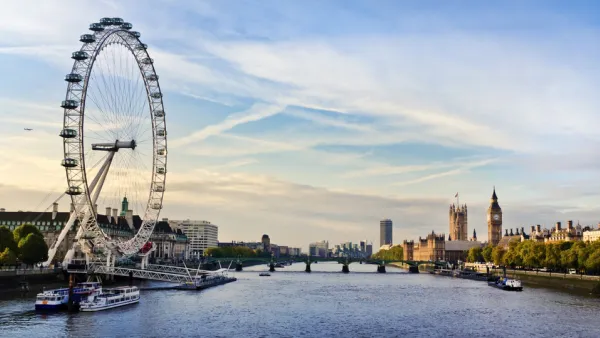
The centerpiece of a proposed $500 million retail and hotel project that aims to "bring new life and economic opportunity" to Staten Island, plans for the 625-foot New York Wheel were announced by Mayor Michael Bloomberg this week.


Speaking with his trademark understatement, Bloomberg declared on Thursday that, "The New York Wheel will be an attraction unlike any other in New York
City – even unlike any other on the planet." But will it be enough to get tourists to set foot on Staten Island?
According to Henry Goldman and Esmé E. Deprez, reporting in Bloomberg, in addition to the Wheel, which be designed and manufactured by the team that built the London Eye, "BFC Partners, a Brooklyn-based developer, will construct
Harbor Commons, a 350,000-square-foot retail complex featuring
100 designer outlets and restaurants and a 200-room, 120,000-
square-foot hotel south of the [adjacent minor league] ballpark, where an affiliate of
the New York Yankees plays."
"The complex will generate $480 million in private
investment and create more than 1,200 construction jobs and
1,100 permanent ones, the mayor's office said."
Read the full story: New York Wheel: World's largest Ferris wheel proposed for NYC
Staten Island Ferris Wheel Back From the Dead
With much of the infrastructure for the failed, 630-foot Ferris wheel project partially in place, investors are looking for ways to bring the New York Wheel back to life.
The World's Largest Ferris Wheel Finds its Footing on Staten Island
The foundation is being laid for the world's largest Ferris wheel on State Island. Will it succeed where so many efforts to bring tourists to the Fifth Borough have failed?
The New York Wheel Stops Spinning
Actually, the New York Wheel never started spinning, but now the project is permanently dead so it will never get the chance.

Planetizen Federal Action Tracker
A weekly monitor of how Trump’s orders and actions are impacting planners and planning in America.

Washington state to charge fee to drivers with fuel-efficient cars
Revenue from the fee will go towards supporting the state’s highways.

Illinois considers spending $1 billion in taxpayer money on data center
A quantum computing campus and data center are currently under construction in Chicago.

Did data centers change how voters cast their ballots?
Texas, Ohio, and Georgia all flipped party control. But in rural counties, the effect of local data centers was mixed.

Amtrak invests in eight new Airo trainsets
The new trainsets will begin serving passengers in 2031.

HUD to end aid for mixed-immigration-status households
The new rule is projected to impact 80,000 people, nearly half of whom are children.

FREE Course: Walkable City 1: Why Walkability?
After describing his path towards focusing on walkability as the essence of good planning, Jeff Speck marches through his five principal reasons for making more walkable places.
Reinventing Malls: Planning Alchemy—Turning Gray Fields Into Gold
The course focuses on the opportunities and imperatives that shape reinvention of mall sites.

City of Charlotte
City of Rosemead
Rutgers University, Edward J. Bloustein School of Planning and Public Policy
University of Michigan School for Environment and Sustainability (SEAS)
Hunter College, City University of New York (CUNY)
The Architects Foundation
University District Partnership