William Heisel kicks of a series examining the infectious disease more common than AIDS, hepatitis, or Lyme disease. What environmental elements are contributing to its spread and what can planners and public health officials do to respond?


This past weekend, ReportingonHealth.org launched Just One Breath, an initiative of the California Endowment Health Journalism Fellowships
at USC's Annenberg School for
Communication and Journalism that is designed to investigate and publicize the infectious disease called "Valley Fever."
Heisel, project manager for the team of reporters, editors, photographers, and graphic artists working on the initiative, puts the rising prevalence of Valley Fever in the context of other, highly publicized diseases such as Whooping Cough and West Nile virus.
"On Saturday," says Heisel, "the team started the series by detailing the rise in cases. They followed up with a story on Sunday that examined whether climate change is expanding the disease's reach."
"In the coming weeks, the team will explore the long history of
inaction by government agencies, the tricky science of studying the
disease, the high costs to patients and taxpayers, and the lack of
interest in funding treatments and vaccines."
Thanks to Chris Steins
Read the full story: Just One Breath: Valley Fever Harms More People Every Day than the Diseases that Make Headlines

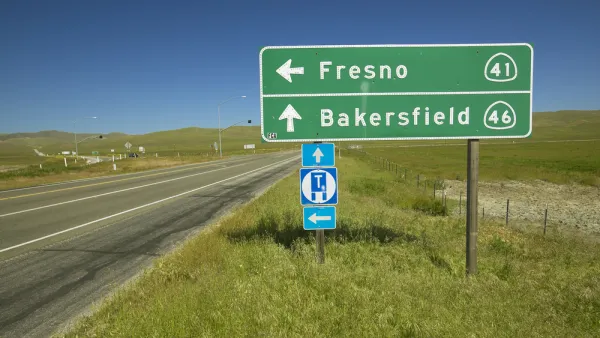
Urban Planning for Public Health in California’s San Joaquin Valley
The American Lung Association is making an “urban planning push” in three San Joaquin Valley counties, according to a recent article in Associations Now. The idea behind the efforts to reduce public health risks: promote walkable communities.
As Texans face soaring electricity costs, a public health crisis looms
Demand for electricity in Texas is surging, largely driven by data centers and other industries, and residential customers are footing the bill.

America faces a 'fun shortage'
The United States has lost nearly a third of its bowling alleys and a fifth of its movie theaters since 2001.

Planetizen Federal Action Tracker
A weekly monitor of how Trump’s orders and actions are impacting planners and planning in America.

California plans to bury El Niño’s downpour
If the state plays its cards right, it may be able to store a billion acre-feet of El Niño’s water in aquifers.

Chicago breaks ground on $3 billion megadevelopment
The new neighborhood, titled Foundry Park, will one day host 3,700 residences.

One of Denver’s busiest corridors to gain BRT
The project will span 18 miles and contain 74 bus rapid transit stations.

275,000 bus trips are at stake on Seattle's ballot
If passed, the Seattle Transit Measure would trigger a 0.3% sales tax and raise an average of $138 million per year to maintain and expand Seattle’s bus services.

Texas may pay Israeli company billions to ease water woes
Texas awarded IDE Technologies the contract for its Harbor Island project, which is slated to become the Western Hemisphere's largest desalination plant.

FREE Course: Walkable City 1: Why Walkability?
After describing his path towards focusing on walkability as the essence of good planning, Jeff Speck marches through his five principal reasons for making more walkable places.
Reinventing Malls: Planning Alchemy—Turning Gray Fields Into Gold
The course focuses on the opportunities and imperatives that shape reinvention of mall sites.

City of Rosemead
Rutgers University, Edward J. Bloustein School of Planning and Public Policy
One Hundred Miles
Hunter College, City University of New York (CUNY)
The Architects Foundation
University of Cincinnati Online
City of Cambridge
Montrose County
The Pocatello Development Authority