A contentious new ordinance gives Louisville's Metro Council final say in the city's landmarks decisions. Some are blaming a recent preservation victory for spurring what could be a major setback for historic preservation in Derby City.


Branden Klayko reports on the Louisville Metro Council's recent passage of, "new rules giving the legislative body final say over all landmarks decisions," overriding a veto by Mayor Greg Fischer.
"[S]purred by the four-year-old landmark designation of Colonial Gardens, a former beer garden built in 1902 alongside one of the city's Olmsted parks," which remains vacant and deteriorating, the new ordinance has preservationists concerned that "the authority of the Historic Landmarks and Preservation Districts Commission, an appointed panel of volunteer experts, can be overturned by a political body untrained in historic preservation practices."
"Preservationists maintain that giving a political body the final say over the landmarks process unduly politicizes the process and could lead to illicit campaign contributions from developers," writes Klayko.
Read the full story: Preserving Power

In Memoriam: Branden Klayko, 'Broken Sidewalk' Blogger
The tributes to Branden Klayko, one of the hardest working and influential writers on the subjects of urbanism, have been steady and heartfelt.
What's Wrong With Removing Sidewalks in the Name of Pedestrian Safety?
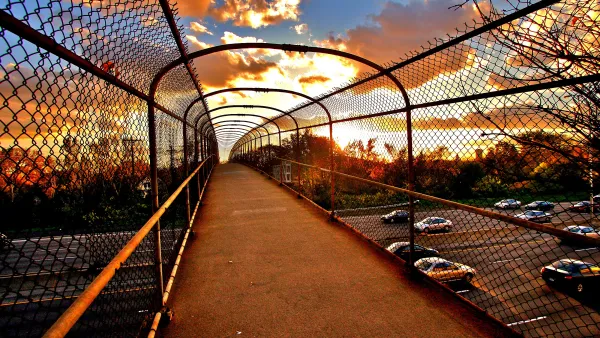
Broken Sidewalk analyzes an example of the kind of street design decisions continuing to encroach on pedestrian infrastructure around the country. The case study: Ninth Street in Louisville.
How a Historic Business Will Anchor a New Cultural District in Louisville
A historic corner of Louisville is getting a makeover as a cultural district for the 21st century. The $28 million already has preliminary approval for $7.2 million state tourism tax credits.

Planetizen Federal Action Tracker
A weekly monitor of how Trump’s orders and actions are impacting planners and planning in America.

Chicago breaks ground on $3 billion megadevelopment
The new neighborhood, titled Foundry Park, will one day host 3,700 residences.
This MA town is drowning in its own sewage — and residents like it that way
Susan Murcott, a waste water expert, said if Carlisle didn't address their leaking sewage, the problem could turn “deadly.”

Iowa taxpayers are paying thousands to clean manure out of their water
While the Clean Water Act makes states responsible for regulating factory farms that discharge pollutants, Iowa has turned a blind eye to the polluting farms.

Amtrak cuts ribbon on Seattle Airo maintenance facility
The $250 million, nearly 100,000-square-foot building can house an entire Cascades Airo trainset.

To power data centers, Google seeks autonomous control of thousands of homes’ electricity
The tech company has signed a deal to indirectly pay Mid-Atlantic residents to reduce their power demand when the grid is strained.

FREE Course: Walkable City 1: Why Walkability?
After describing his path towards focusing on walkability as the essence of good planning, Jeff Speck marches through his five principal reasons for making more walkable places.
Reinventing Malls: Planning Alchemy—Turning Gray Fields Into Gold
The course focuses on the opportunities and imperatives that shape reinvention of mall sites.

City of Rosemead
Rutgers University, Edward J. Bloustein School of Planning and Public Policy
One Hundred Miles
The Architects Foundation
University of Cincinnati Online
Montrose County
The Pocatello Development Authority
The Urban Renewal Agency of the City of Pocatello