To the tune of at least $4 billion in tax exemptions, America's taxpayers have collectively subsidized the construction of sports venues across the country, for the benefit of sports owners' bottom line. Are we getting our money's worth?


Aaron Kuriloff and Darrell Preston investigate the dozens of wealthy owners whose big-league teams have benefited from millions of dollars in tax-free borrowing that have gone towards the construction of new stadiums. This borrowing occurred despite Congressional efforts in 1986, "to bar cities and
states from building stadiums with tax breaks originally set up to help
local governments cut their borrowing costs for building roads, sewers
and schools."
"During the past decade, studies by Grant Long; Robert Baade of Lake
Forest College near Chicago; Victor Matheson, an economist at College of
the Holy Cross in Worcester, Massachusetts; and others have found
that stadiums are poor municipal investments," note Kuriloff and Preston. "Nonetheless, political
leaders are still willing to offer taxpayer-funded aid to team owners --
including muni-bond financing -- to lure or avoid losing a franchise
and the civic pride and event-related jobs that go with it."
Read the full story: In Stadium Building Spree, U.S. Taxpayers Lose $4 Billion

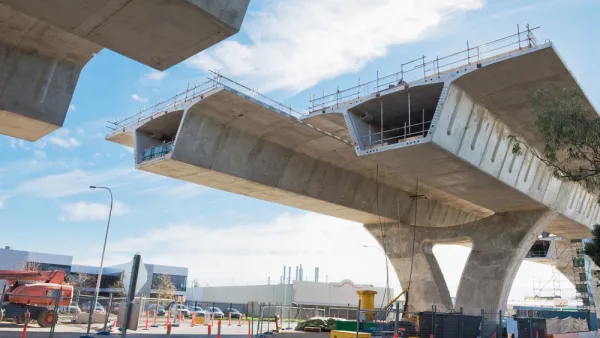
GOP Tax Plan Eliminates Critical Infrastructure-Funding Bond Program
The Tax Cut and Jobs Act would have a deleterious effect on major infrastructure proposed by the private sector. The loss of Private Activity Bonds would hike borrowing rates for road, transit, stadium, and even affordable housing projects.
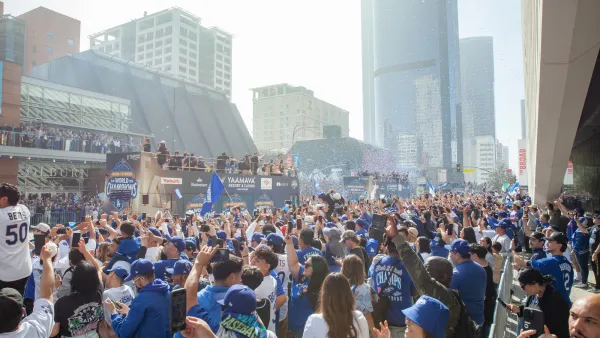
America’s urban FIFA stars won’t be stadiums — it will be our downtowns. Let’s not blow it.
When the World Cup visits cities across America this summer, it’s a rare chance to shift the perception of our downtowns on the global stage. The secret? What makes downtowns great for FIFA makes them great for everyone, all the time.
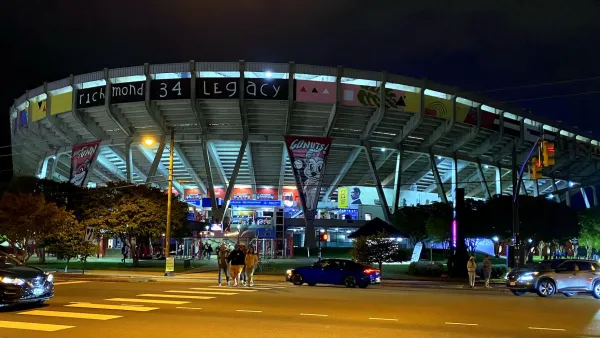
Richmond's new 'stadium district' will include hundreds of homes, offices, jobs
The city is planning for a neighborhood revival in the area around a new baseball stadium.

Planetizen Federal Action Tracker
A weekly monitor of how Trump’s orders and actions are impacting planners and planning in America.

California plans to bury El Niño’s downpour
If the state plays its cards right, it may be able to store a billion acre-feet of El Niño’s water in aquifers.

Chicago breaks ground on $3 billion megadevelopment
The new neighborhood, titled Foundry Park, will one day host 3,700 residences.

Satanic Place Names
From streams and lakes to valleys and canyons, I mapped more than 1,000 places named after the Devil.

California High-Speed Rail Authority CEO resigns after $600,000 scandal
Under Ian Choudri, the authority used taxpayer dollars to fund first class flights and trips to nightclubs.

Want to study the Missouri River? Soon, you may need unanimous approval from 10 states
Legislation would require 10 governors’ permission to study or build projects moving water outside the basin.

FREE Course: Walkable City 1: Why Walkability?
After describing his path towards focusing on walkability as the essence of good planning, Jeff Speck marches through his five principal reasons for making more walkable places.
Reinventing Malls: Planning Alchemy—Turning Gray Fields Into Gold
The course focuses on the opportunities and imperatives that shape reinvention of mall sites.

City of Rosemead
Rutgers University, Edward J. Bloustein School of Planning and Public Policy
One Hundred Miles
Hunter College, City University of New York (CUNY)
The Architects Foundation
University of Cincinnati Online
City of Cambridge
Montrose County
The Pocatello Development Authority