Ian Lovett looks at efforts to reform CEQA, California's landmark environmental law. Decried as easily abused, and an impediment to economic development, bipartisan attempts to reform the law are making enemies out of allies.


In the 40-plus years since the California Environmental Quality Act was passed in 1970, what was "once a source of pride to many Californians and environmentalists across
the country, has turned into an agonizing test in the struggle to
balance environmental concerns against the need for jobs and economic
growth," observes Lovett.
Used as a tool to thwart development (occasionally on dubious grounds), and even to stop plans by the City of San Francisco to paint bicycle lanes, Democrats are joining Republicans in recognizing flaws with the law that allow abuse.
"Lawmakers have managed only relatively minor changes to the law so far," notes Lovett.
"Last year, Mr. Brown signed legislation to fast track a proposed
football stadium in downtown Los Angeles. Another bill, which would
exempt striping bicycle lanes from the Environmental Quality Act, now
awaits his signature."
Last month a bill introduced in the State Senate by Democrat Michael J. Rubio that
would have overhauled CEQA enforcement was killed within 24 hours.
According to Lovett, the power of the environmental lobby and the importance of environmental issues to California's voters, means that "any major changes to the law remain a tall order in Sacramento."
Read the full story: Critics Say California Law Hurts Effort to Add Jobs
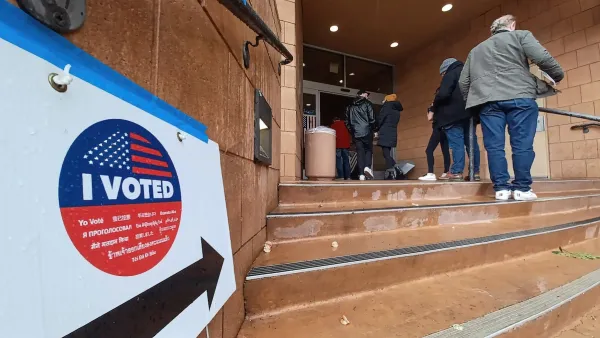
California appears to reject Prop. 45
The proposition would have expanded the projects that qualify for a streamlined environmental review, effectively paring down the California Environmental Quality Act.
Will sprawl save California?
California residents will vote on Proposition 45 in November, which would make it easier to build large housing developments on the outskirts of the state’s cities.

SF residents can no longer use potential shadows to block housing developments
The SHADE act also halves the allotted time for certain appeals before projects can progress.

Planetizen Federal Action Tracker
A weekly monitor of how Trump’s orders and actions are impacting planners and planning in America.

California plans to bury El Niño’s downpour
If the state plays its cards right, it may be able to store a billion acre-feet of El Niño’s water in aquifers.

Desperate measures: Advocates weigh draining Lake Powell to fill Colorado River
Draining the reservoir could reduce evaporation losses by a couple hundred thousand acre-feet.

Chicago voters approve permanent festival grounds, penalty for vacant property owners
Currently, major summer and fall festivals take over public parks for weeks at a time, drawing criticism from nearby residents

NYC votes to cut outdoor dining red tape, speed up permitting
New York City also voted to allow the Department of Transportation to begin work on urgent projects before notifying elected officials.

California appears to reject Prop. 45
The proposition would have expanded the projects that qualify for a streamlined environmental review, effectively paring down the California Environmental Quality Act.

FREE Course: Walkable City 1: Why Walkability?
After describing his path towards focusing on walkability as the essence of good planning, Jeff Speck marches through his five principal reasons for making more walkable places.
Reinventing Malls: Planning Alchemy—Turning Gray Fields Into Gold
The course focuses on the opportunities and imperatives that shape reinvention of mall sites.

City of Rosemead
Rutgers University, Edward J. Bloustein School of Planning and Public Policy
One Hundred Miles
Hunter College, City University of New York (CUNY)
The Architects Foundation
University of Cincinnati Online
City of Cambridge
Montrose County
The Pocatello Development Authority