A program that allows undercover inspectors to keep 80 percent of any fines proves (un)remarkably effective.


Chinese cities, like cities anywhere, are under constant pressure to find revenue sources for municipal services, with human nature rendering traffic offenses a predictably reliable source. One Chinese city came under fire this week for doing so with an exceptional degree of vigor.
The Xiaoxiang Morning Post reported that Shaoyang City had hired some 1,000 plainclothes inspectors to issue traffic citations, with the inspectors pocketing 80% of any fines charged. Not surprisingly, the investigation found inspectors citing even trivial offenses, such as straying into a pedestrian zone while stopped at an intersection.
"The program is one of many that have cropped up across China, ranging from heavy fines on business owners for arbitrary infringements, to garnishing the wages of teachers, that local governments are using to prop up their finances," notes reporter Annie Wu.
Thanks to Rachel Proctor May
Read the full story: 'Traffic Fines' Used to Plug Hole in Chinese City Budget


Waymo’s Ojai robotaxis from China now able to pick up all riders
Steep tariffs and tight federal laws haven’t stopped Waymo from purchasing over 3,200 vehicles from Zeekr, a Chinese manufacturer.
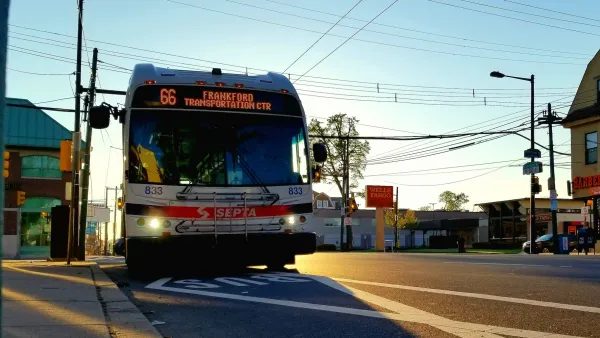
SEPTA's bus-mounted lane enforcement cameras cut travel times by up to 6%
The AI-assisted cameras have issued nearly 200,000 citations to drivers blocking bus lanes.
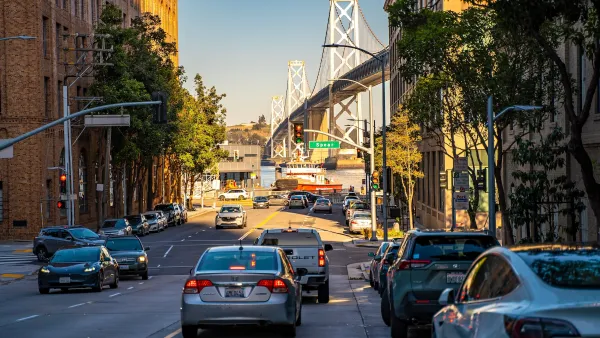
After San Francisco installed traffic cameras, speeding dropped by 80%
The city was allowed to install speed cameras as part of a five-year pilot program approved by California in 2023.

Planetizen Federal Action Tracker
A weekly monitor of how Trump’s orders and actions are impacting planners and planning in America.

California plans to bury El Niño’s downpour
If the state plays its cards right, it may be able to store a billion acre-feet of El Niño’s water in aquifers.

Chicago breaks ground on $3 billion megadevelopment
The new neighborhood, titled Foundry Park, will one day host 3,700 residences.

Want to study the Missouri River? Soon, you may need unanimous approval from 10 states
Legislation would require 10 governors’ permission to study or build projects moving water outside the basin.

Desperate measures: Advocates weigh draining Lake Powell to fill Colorado River
Draining the reservoir could reduce evaporation losses by a couple hundred thousand acre-feet.

This road in NYC is infamously dangerous — and Mamdani can't fix it
New York City's Ocean Parkway is known for reckless driving, but the power to implement safety measures lies with the state rather than the city.

FREE Course: Walkable City 1: Why Walkability?
After describing his path towards focusing on walkability as the essence of good planning, Jeff Speck marches through his five principal reasons for making more walkable places.
Reinventing Malls: Planning Alchemy—Turning Gray Fields Into Gold
The course focuses on the opportunities and imperatives that shape reinvention of mall sites.

City of Rosemead
Rutgers University, Edward J. Bloustein School of Planning and Public Policy
One Hundred Miles
Hunter College, City University of New York (CUNY)
The Architects Foundation
University of Cincinnati Online
City of Cambridge
Montrose County
The Pocatello Development Authority