A quick look at some of Brooklyn's demographic data illustrates a dramatic divide between the Borough's most wealthy and most poor - economic segregation at its extreme in America.


In Brooklyn, New York City's wealthiest and poorest often live in close proximity. Elena Milin and Lore Croghan report, "[n]ow more than ever, Brooklyn has become a tale of two boroughs, with rich and poor in parallel worlds."
"We have more poor people in Brooklyn than the entire population of Detroit; we have more people on food stamps than the entire population of Washington, D.C.," Marilyn Gelber, president of the Brooklyn Community Foundation said. "Yet there are more wealthy people than in Greenwich, Conn."
Statistics compiled by Milin and Croghan paint a contrasting picture:
- Sixty-nine people have been shot this year in Brownsville. Four miles away, a mansion at 70 Willow St. in Brooklyn Heights sold for the borough's highest-ever home price of $12.5 million.
- Brooklyn sent five athletes to the Olympics but one in four borough residents is obese.
- Brooklyn has 113 colleges and universities but only 29% of borough residents have college degrees.
Read the full story: Tale of two worlds: Statistics paint picture of extremes of wealth and poverty that exist side by side in Brooklyn
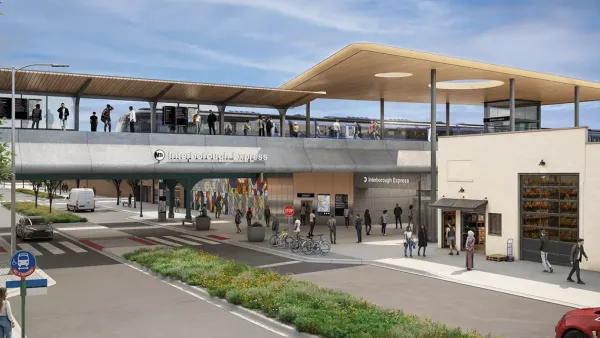
NYC releases new renderings for $5.5 billion Interborough Express
The slated stations will have a modern look, enhanced lighting and improved audio announcements.
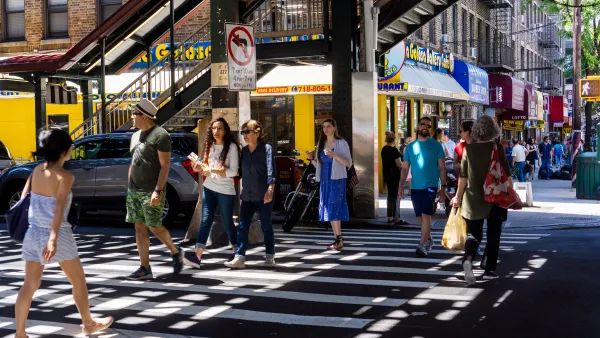
NYC needs 700,000 new homes to resolve housing crisis, report states
The report gave every neighborhood a non-binding development target.
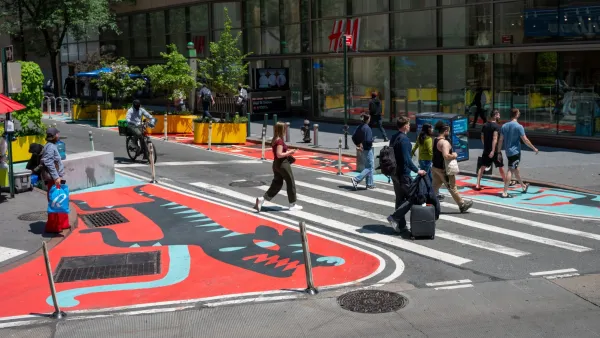
See Downtown Brooklyn’s Dramatic Complete Streets Transformation
A streetscape redesign spearheaded by the Downtown Brooklyn Partnership has quickly made many of Brooklyn’s streets unrecognizable.

Planetizen Federal Action Tracker
A weekly monitor of how Trump’s orders and actions are impacting planners and planning in America.

Eastern Nebraska is running out of electricity
Data centers and electrification are straining eastern Nebraska’s grid, throttling economic development.

Move over, LA: St. Louis gears up for Olympics, invests millions in downtown redevelopment
The Missouri city will host the 2028 Olympic soccer group stage and knockout matches.

Dallas releases zoning code overhaul to officials
The drafted overhaul is over 400 pages long.

NYC renovations for dangerous, ‘mercilessly crammed’ street delayed until 2027
Construction was supposed to begin this fall.

San Diego’s Midway Rising project gets greenlight from city council
The project looks to become the largest affordable housing development in California's history.

FREE Course: Walkable City 1: Why Walkability?
After describing his path towards focusing on walkability as the essence of good planning, Jeff Speck marches through his five principal reasons for making more walkable places.
Reinventing Malls: Planning Alchemy—Turning Gray Fields Into Gold
The course focuses on the opportunities and imperatives that shape reinvention of mall sites.

City of Rosemead
Rutgers University, Edward J. Bloustein School of Planning and Public Policy
One Hundred Miles
University of Michigan School for Environment and Sustainability (SEAS)
Hunter College, City University of New York (CUNY)
The Architects Foundation
City of Cambridge
The Pocatello Development Authority
The Urban Renewal Agency of the City of Pocatello