From Atlanta to Kansas City to Los Angeles, cities across the country are welcoming a return of streetcars to their downtowns in the hopes of boosting economic growth and improving circulation. Some see the cars as just the latest urban planning fad.


Spurred by opportunities for federal financing, and the desire by cities to enliven their downtowns for a new generation of city-dwellers, streetcars are making a return to America's cities en masse, reports Caroline Porter.
Portland, Oregon's streetcar, which is credited with spurring the construction of more than 10,000 new housing
units and 5.4 million square feet of office, institutional, retail and
hotel construction since its first leg opened in 2001, is the gold standard for demonstrating what such projects can provide. Examples of less successful streetcar projects, however, can be found in Tampa and Little Rock.
Streetcar critic Randal O'Toole, a senior fellow with the Cato Institute, argues that Portland's success was driven more by city business incentives than the return of a vintage means of transport. "Putting 125-year-old technology into modern cities is going to create
more congestion, dangerous situations for pedestrians and divert
taxpayers' money from transit that people really need to transit that is
silly," Mr. O'Toole said.
Read the full story: Streetcar Plans Plow Ahead

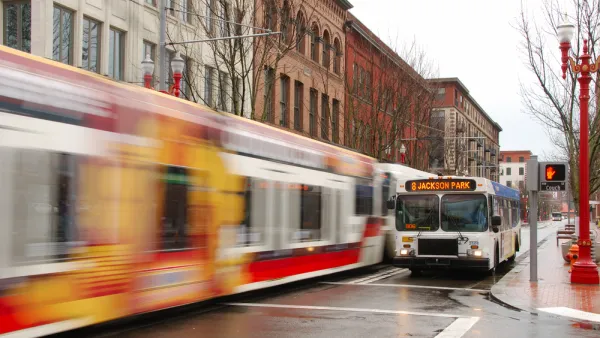
Rail Transit: You Get What You Pay For
Seattle Transit blog compares rail investments from five cities around the country.
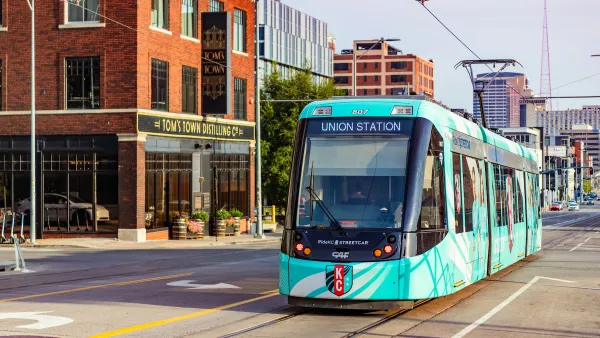
Kansas City completes riverfront streetcar extension
The streetcar line carries a third of the region's transit riders.
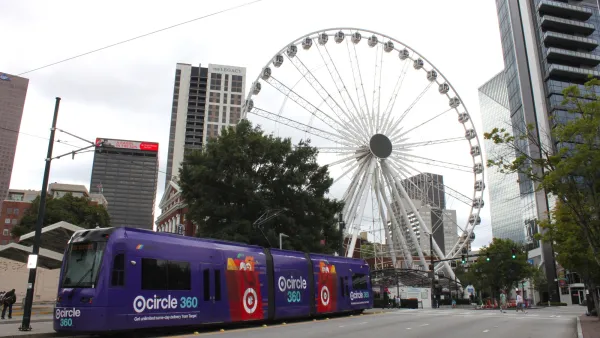
MARTA Streetcar Returns February 3
Streetcar service in Atlanta was suspended for five months for repairs and upgrades.

Planetizen Federal Action Tracker
A weekly monitor of how Trump’s orders and actions are impacting planners and planning in America.

Amtrak, CN end decades-long dispute with eight-year agreement
The new operating agreement establishes an updated framework for the companies to work together, including processes to resolve disputes.

Judges permit Denver to divert 77,000 acre feet from the Colorado River for reservoir expansion
Overuse and climate change have caused the Colorado River’s water levels to plummet.

NYC DOT wants faster, more permanent street upgrades
The city is examining ways to build more concrete infrastructure without getting entangled in 'decades-long' projects.

'Something we’ve never seen before:' rising utility rates could strain city finances nationwide
Data centers, climate change and other factors have caused utility rates in the United States to increase by 38% since 2020.

Trump to overrule local leaders, lease millions of acres of America’s Pacific Island territories’ seafloors to mining companies
International law says that the Indigenous people of America’s territories have a right to prior and informed consent regarding projects that impact their countries.

FREE Course: Walkable City 1: Why Walkability?
After describing his path towards focusing on walkability as the essence of good planning, Jeff Speck marches through his five principal reasons for making more walkable places.
Reinventing Malls: Planning Alchemy—Turning Gray Fields Into Gold
The course focuses on the opportunities and imperatives that shape reinvention of mall sites.

Harvard University Graduate School of Design
KFH Group Inc.
Greater Baltimore Committee
The Architects Foundation
University of Cincinnati Online
The Pocatello Development Authority
The Urban Renewal Agency of the City of Pocatello