Once seen as the vanguard of hip and cutting-edge, Facebook is either bucking the trend once again or being left behind with their plans to bring the city to its suburban Menlo park campus to lure employees.


Jessica Guynn explores Facebook's construction of a "Main Street" through its sprawling campus on the outskirts of Menlo Park. Seen as the next level in the Silicon Valley's "escalating race to pamper employees," what some are calling a "21st century company town" will reportedly include a bike shop, barbershop, and health clinic, in addition to a myriad of dining establishments.
According to Guynn, "Facebook had to come up with new carrots when it moved its headquarters a
few months ago to a suburban outpost at the edge of tidal mud flats and
salt marshes cut off from the rest of Menlo Park by a six-lane highway.
It's so isolated that when former tenant Sun Microsystems occupied it,
the campus was nicknamed 'Sun Quentin.'"
Facebook's plans stand in sharp contrast to other Bay Area tech companies such as Twitter, Zynga, Pinterest and Pulse, who are decamping for San Francisco.
Read the full story: Call it Zucker Burg: Facebook campus gets its own Main Street
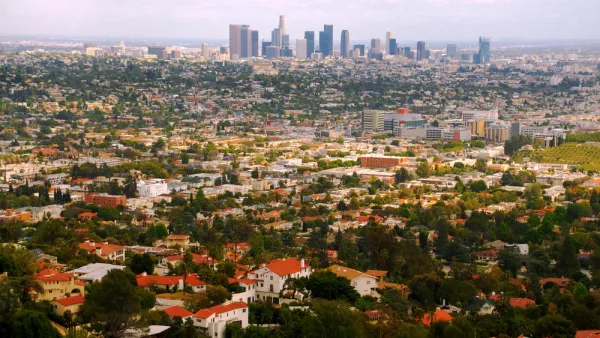
City of Los Angeles Tops 4 Million in Latest State Population Report
As usual, California's fastest growing counties were inland, far from coastal job centers. The big surprise was that the fastest growing city was an affluent Silicon Valley suburb that had been sued in 2012 by affordable housing advocates.
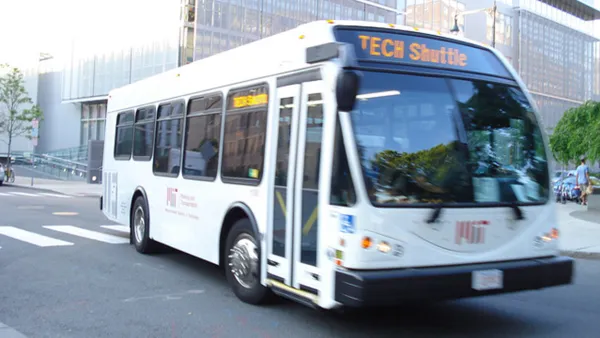
Better to Appease Irate Neighbors Than Decrease Car Commuting
A San Francisco Chronicle editorial supports the decision by the Municipal Transportation Agency to 'bow' to complaints from residents about the large tech buses by reducing their stops in their neighborhoods even if it means increasing car trips.
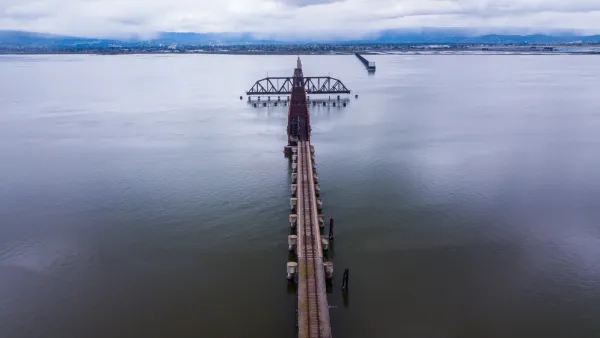
Meta’s Plans to Revive an Old Rail Bridge Halted During the Pandemic
The company formerly known as Facebook’s once planned to revive the Dumbarton Rail Bridge across the San Francisco Bay. Those plans are as derelict as the bridge.

Planetizen Federal Action Tracker
A weekly monitor of how Trump’s orders and actions are impacting planners and planning in America.

California plans to bury El Niño’s downpour
If the state plays its cards right, it may be able to store a billion acre-feet of El Niño’s water in aquifers.

Desperate measures: Advocates weigh draining Lake Powell to fill Colorado River
Draining the reservoir could reduce evaporation losses by a couple hundred thousand acre-feet.

Mamdani’s pied-à-terre tax survives legal challenge
A panel of judges found that the plaintiffs failed to demonstrate injury as a result of New York City's implementation of the tax.

Eastern Nebraska is running out of electricity
Data centers and electrification are straining eastern Nebraska’s grid, throttling economic development.

Seattle passes record-breaking transit services expansion
Proposition 1 will double the city’s transit tax to add 95,000 more bus trips and preserve 180,000 bus trips annually.

FREE Course: Walkable City 1: Why Walkability?
After describing his path towards focusing on walkability as the essence of good planning, Jeff Speck marches through his five principal reasons for making more walkable places.
Reinventing Malls: Planning Alchemy—Turning Gray Fields Into Gold
The course focuses on the opportunities and imperatives that shape reinvention of mall sites.

City of Rosemead
Rutgers University, Edward J. Bloustein School of Planning and Public Policy
One Hundred Miles
Hunter College, City University of New York (CUNY)
The Architects Foundation
University of Cincinnati Online
City of Cambridge
Montrose County
The Pocatello Development Authority